
Rooted in Vietnam’s culinary traditions, bò kho has humble beginnings as a peasant dish. It was initially created as a way to make tougher cuts of beef tender and flavorful through slow stewing; the dish gained its signature flavor from the abundant spices and herbs available in Vietnam. Whether enjoyed with a crusty baguette, a bowl of rice, or a side of noodles, bo kho is a dish that tells a story of heritage, warmth, and culinary finesse. Over the years, it’s become a beloved staple, enjoyed by families across Vietnam at any time of day—breakfast, lunch, or dinner.
French Influence and the Baguette Connection
At its core, bò kho is a testament to Vietnam’s resourcefulness and ability to blend local and foreign influences into something unique. From its humble beginnings to its place as a cultural icon, bò kho is more than just a meal—it’s a connection to the past, a showcase of Vietnamese flavors, and a warm reminder of home.
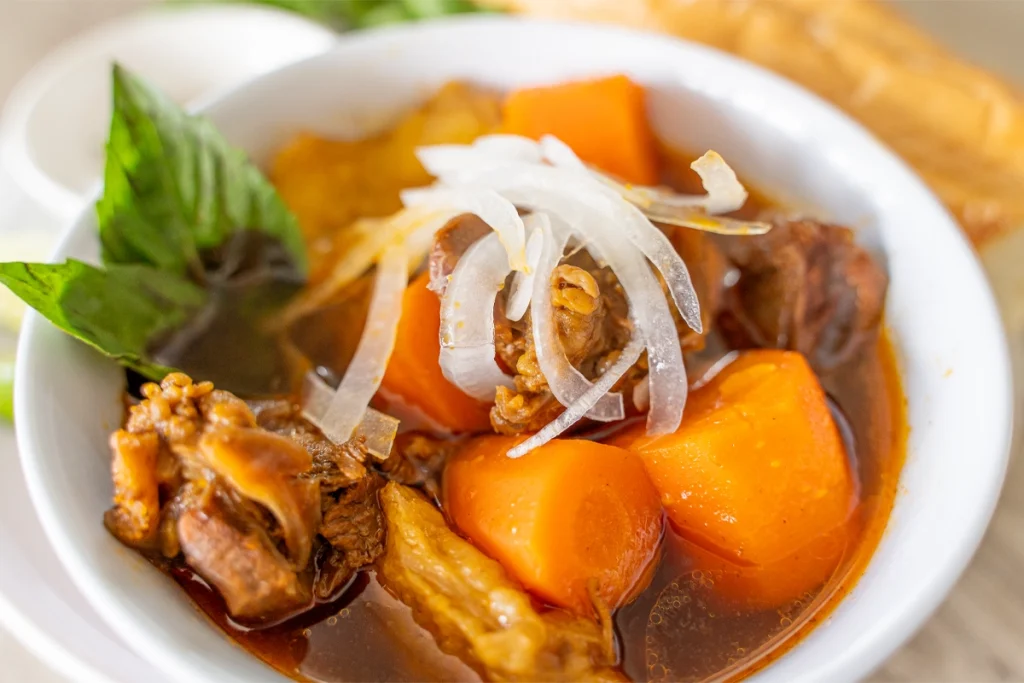
The French colonial period (mid-19th century to 1954) left a significant imprint on Vietnamese cuisine. One notable contribution was the introduction of the baguette, which paired beautifully with bò kho. While Vietnamese diners traditionally enjoyed bò kho over rice or rice noodles (hủ tiếu), the crusty French bread offered a new way to enjoy the dish, adding texture and convenience.
Despite this European addition, bò kho has remained unmistakably Vietnamese, thanks to its reliance on native ingredients like fish sauce, star anise, and lemongrass.

The Essential Spices of Bò Kho
What makes bò kho so irresistible? It’s the spices. Each ingredient contributes to a symphony of flavors that are both earthy and aromatic:
- Star Anise: Adds a sweet, licorice-like note that enhances the broth’s depth.
- Cinnamon: Balances the savory and sweet elements of the stew.
- Lemongrass: Provides a citrusy brightness that cuts through the richness of the beef.
- Garlic and Ginger: Offer warmth and a pungent kick, complementing the meat.
- Five-Spice Powder: A blend of fennel, cloves, cinnamon, star anise, and Sichuan pepper that amplifies the complexity of the dish.
- Chili Paste: Adds subtle heat and vibrant color to the broth.
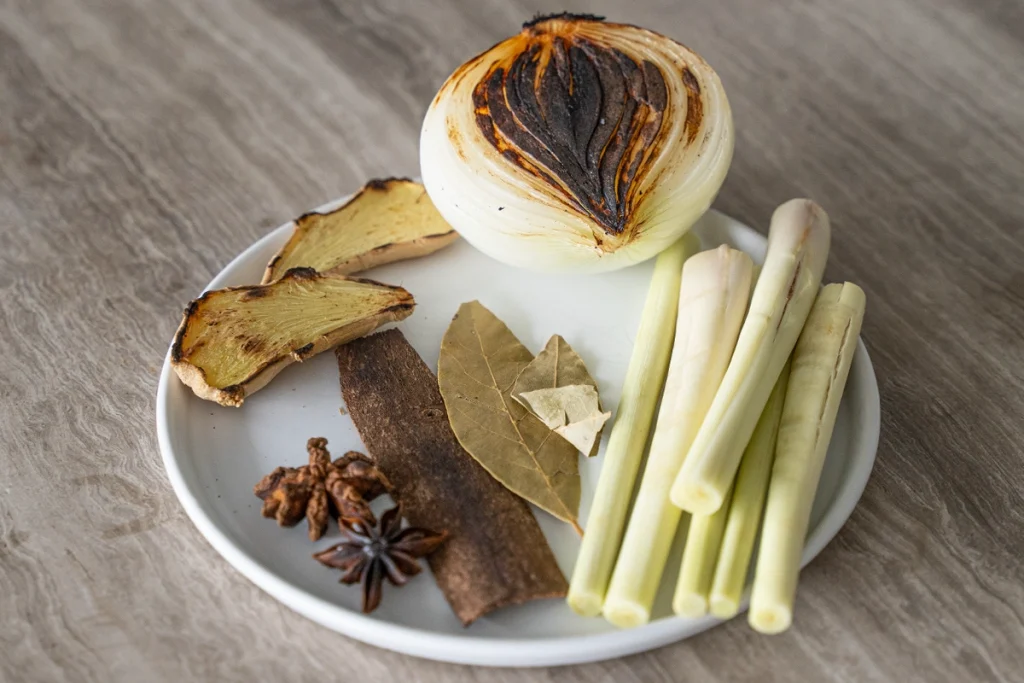
These spices come together to create a broth that’s layered, fragrant, and deeply satisfying.
Why You’ll Love This Recipe
There’s something magical about a pot of bò kho simmering on the stove. Here’s why this recipe is worth making:
Authenticity: This recipe stays true to its roots, using traditional ingredients and techniques to honor the dish’s heritage.
Versatility: Whether you prefer dipping a baguette, pouring it over rice, or tossing it with noodles, bo kho adapts to your cravings.

Make-Ahead Friendly: Like any good stew, bò kho tastes even better the next day as the flavors meld together.
Nutritious Comfort: Packed with protein, veggies, and anti-inflammatory spices, it’s as nourishing as it is flavorful.

Vietnamese Beef Stew / Bo Kho
6-8
servings1
hour30
minutes2
hoursIngredients
4 lbs 4 Beef Shank
2 lbs 2 Beef Tendon
6 6 Vietnamese Baguettes
6 6 -8 Large Carrots
- Beef Shank Marinade:
2 tbsp 2 Bo Kho Seasoning
2 tbsp 2 Soy Sauce
2 tbsp 2 Annatto Seed Oil
1 tsp 1 Salt
- Broth:
3 3 -4quarts Water
2 tbsp 2 Annatto Seed Oil
1 Small 1 Minced Shallot
2 tbsp 2 Minced Garlic
2 tbsp 2 Tomato Paste
12 oz 12 Coco Rico
2 tbsp 2 Soy Sauce
2 tbsp 2 MSG
1 1 inch nub Rock Sugar
2 tbsp 2 Bo Kho Seasoning
3 tbsp 3 Fish Sauce
Corn Starch Slurry (Optional)
- Aromatics:
3 3 Stalks Lemongrass
1/2 1/2 Onion
2 2 inch Nub Ginger
1 1 Cinnamon Stick
2 2 Star Anise
3 3 Bay Leaves
- Garnishes:
White Onion
Thai Basil
- Dipping Sauce:
1/4 tsp 1/4 Salt
1/4 tsp 1/4 Black Pepper
Lime Juice
Directions
- Beef Shank:
- Parboil beef shank in boiling water for 5-10 minutes to reduce odor and remove impurities. Drain and rinse with cold tap water. Cut into 1″ pieces
- Add cut beef shank and marinade with bo kho seasoning, soy sauce, annatto seed oil, and salt in a mixing bowl. Marinate in the fridge covered for a minimum of one hour, but overnight for the best effect
- Beef Tendon:
- Parboil beef tendon in a pot of boiling water for 5-10 minutes. Drain and rinse in cold water. Add the cleaned tendon back to a pot of boiling water with salt and precook the tendon for 60 minutes. Tendon takes longer to cook than the beef shank, so we’ll precook the tendon before adding it to the beef stew. Remove the tendon from the pot, let it cool down, and then cut 1/2-3/4″ inch pieces. Tendon will expand when it cooks, so we want to cut these a little bit smaller than the cuts of beef shank
- Stew:
- In a big pot, add annatto seed oil, and sauté minced shallots and garlic until fragrant
- Add tomato paste, and cook for another 1-2 minutes. Add marinated beef shank and cut tendon to the pot. Add in a whole can of Coco Rico, and then 4-5 quarts of water
- Bring that up to a boil and skim off the impurities, and then lower the heat and simmer covered
- Aromatics:
- Char half an onion, ginger slices, cinnamon stick, and star anise in a dry pan
- Cut stalks of lemongrass in half, remove the woodsy outer layer, and using the blunt end of your knife or cleaver, bruise the lemongrass
- Add charred onion, ginger, cinnamon, star anise, lemongrass, and bay leaves to a spice bag/sachet. Then, add bag of aromatics to the pot
- Seasoning and Final Touches:
- Once you’ve put the aromatics into the pot, add soy sauce, rock sugar, MSG, and more bo kho seasoning. Let this simmer on low for 60-90 minutes or until the beef shank is mostly tender
- Add in peeled and cut carrots, and simmer for another 10-15 minutes, or until the carrots reaches your desired doneness
- At the end, season with fish sauce and adjust any other seasonings to taste
- Serve:
- Ladle bo kho into a bowl. Garnish with white onions and Thai basil. Serve with crusty Vietnamese baguette and dipping sauce
Did you make this recipe?
Tag @feedthepudge on Instagram and hashtag it with #feedthepudge
If you like this recipe, make sure you pin it!


Great recipe, and easy to follow!
I’ve made this a few times already and the recipe never fails. My son LOVES it.
I’m so glad your family enjoys it!
Hi Ken!
Thanks for sharing. We love your recipes. This is the first time trying this recipe, for some reason the broth came out bitter. Any idea why? I would love to give it a try again soon :)!
Hi Carolina,
First off, thank you so much! As for the bitterness, it could come from overtoasting the dried spices or burning the garlic. Mayb next time, after an hour of simmering with the dried spices, remove them from the pot. I hope this helps!