We are officially in the thick of soup season y’all. The Seattle sky has turned wet and gloomy, and every inch of my body and soul wants something hot and brothy in a big bowl (soup season year-round, though). If you love Vietnamese noodle soups as much as I do, you have no shortage of options and variety. You’ve got the classics like pho and bun bo hue. Then you’ve got the underrated ones that deserve way more love than they get, like bun rieu with its tomato and crab broth, or hu tieu nam vang loaded with pork, shrimp, and all the good stuff. Pick any one of them, and you win every time because there are no wrong answers here. But like many people, I don’t always want to slave over a hot stove, making more complicated or labor-intensive soups, and when those days hit, I make something like this banh canh suon heo.

This thick tapioca noodle soup with pork spare ribs keeps things simple in the best possible way. You get a clean, naturally sweet pork broth, ribs that slide right off the bone, and fat, chewy noodles that perfectly complement the soup. A little prep, one big pot, and the stove does most of the work. This is a soup I grew up eating, and it brings me comfort every time I have it as an adult. So today, I’ll show you how I make it in my home, so you can recreate it in yours!
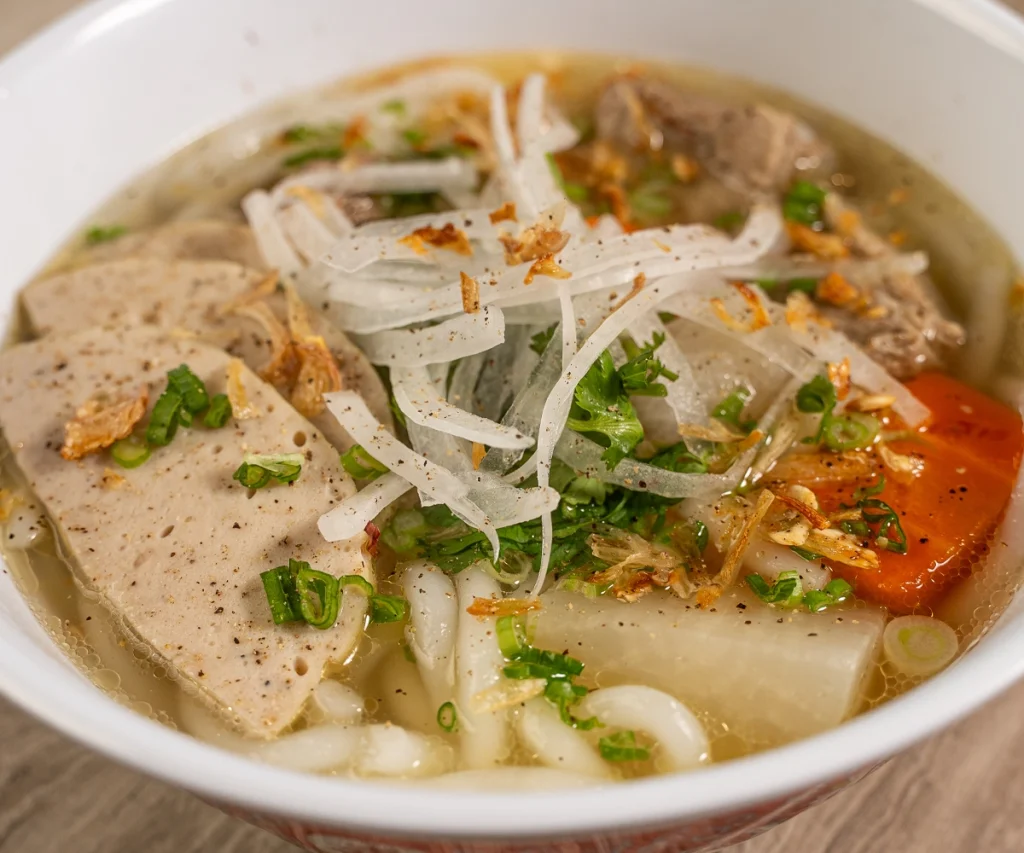
What Is Banh Canh Suon Heo?
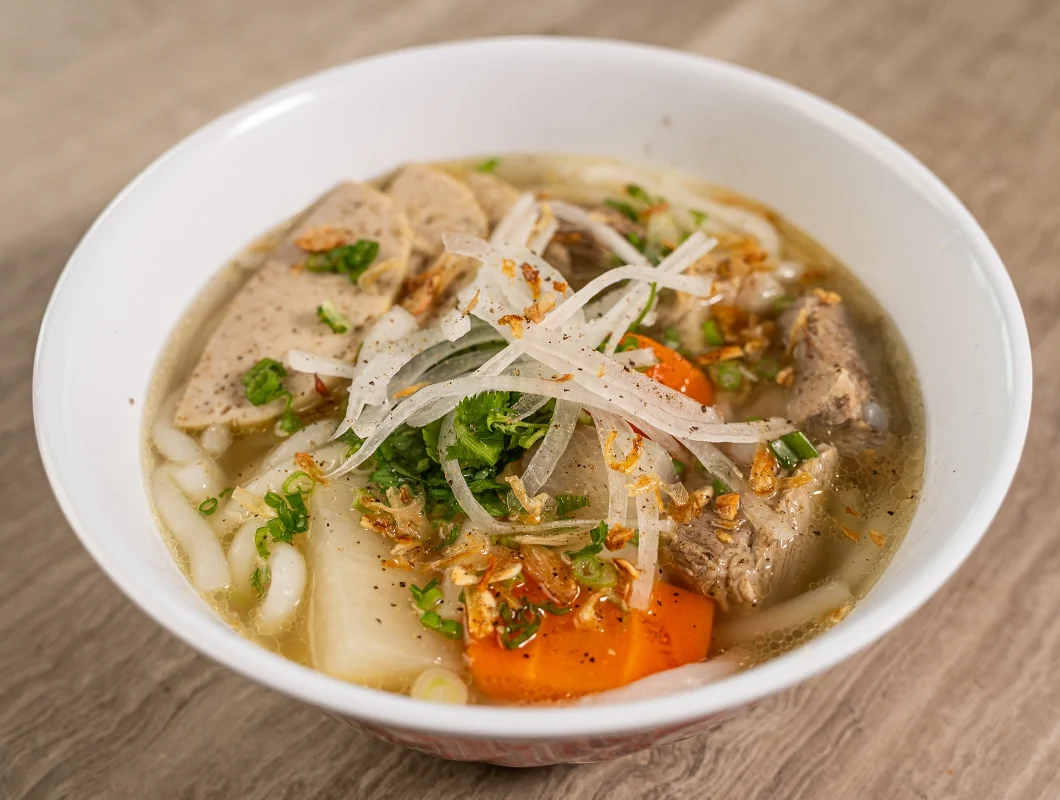
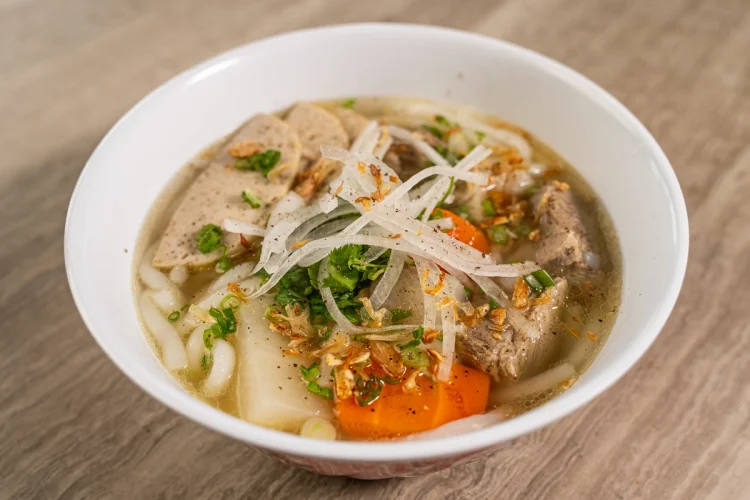
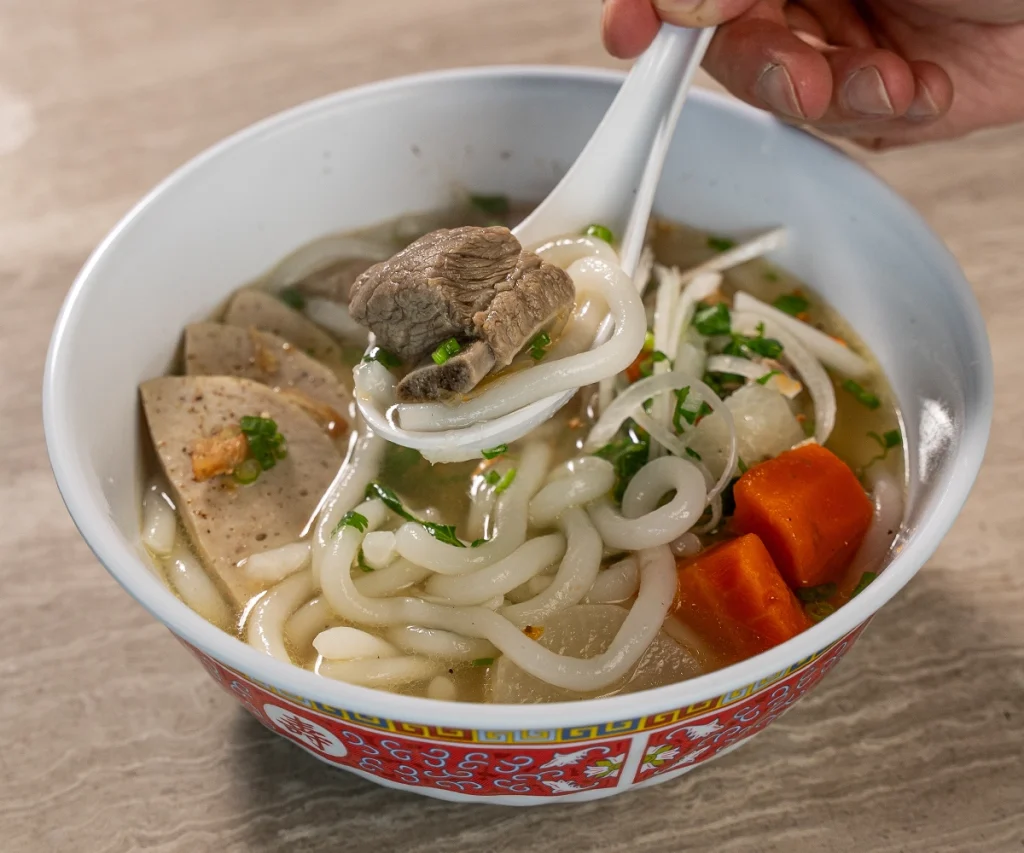
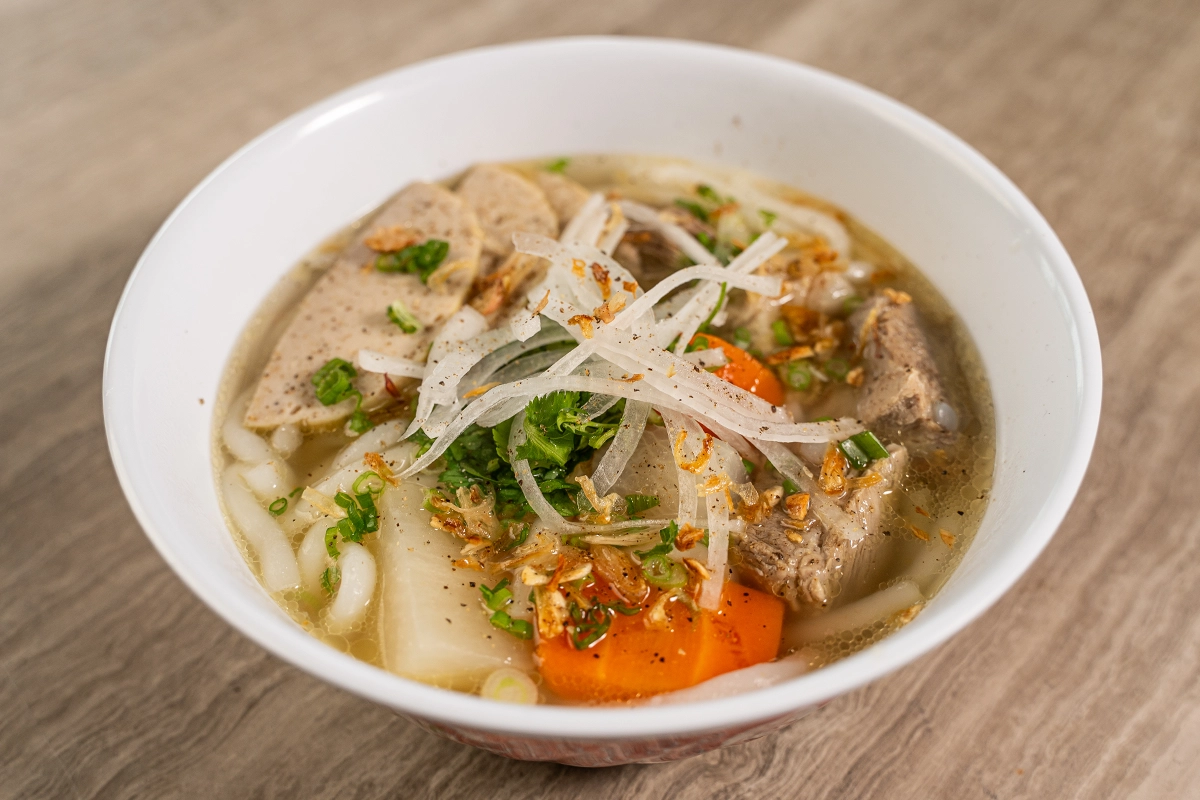
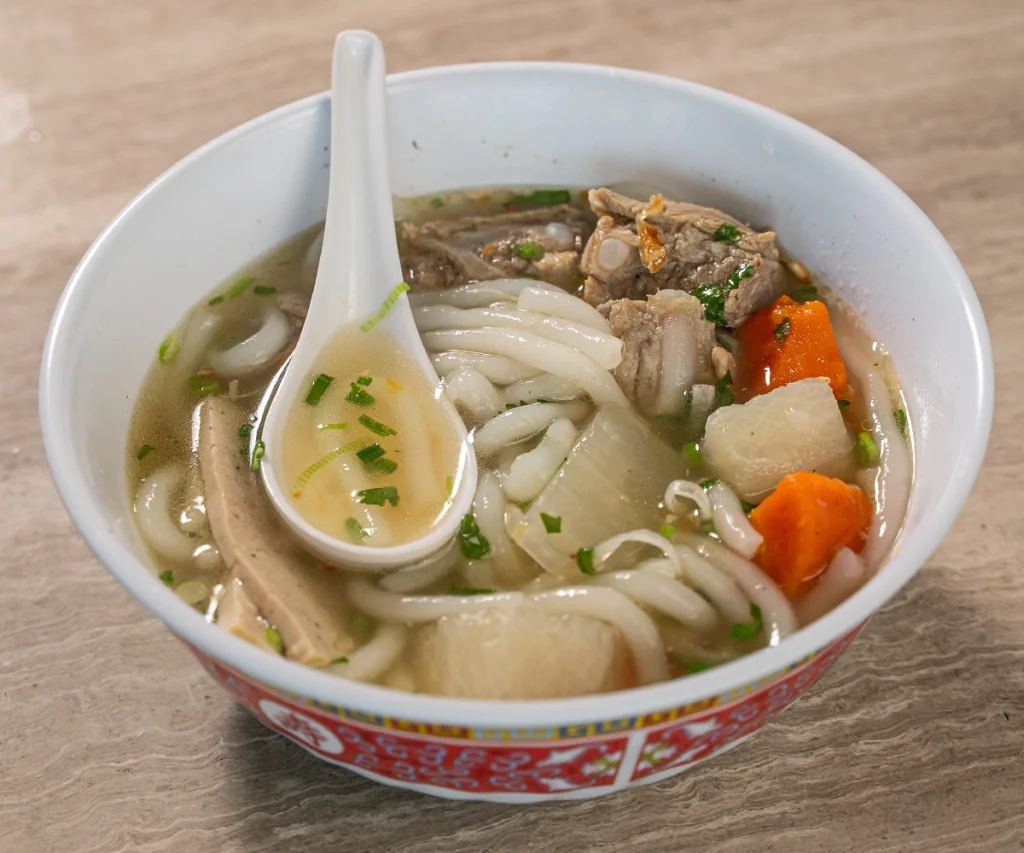
Banh canh means thick tapioca noodle soup, and the name generally refers to the noodle itself. Banh canh noodles usually start with tapioca starch, often blended with rice flour, which gives them that signature chew and a slippery, almost silky bite. They look a lot like udon, and some people might even call it Vietnamese udon, but the texture is softer and bouncier. Suon heo means pork ribs. Put them together, and you get a humble and comforting bowl: tender spare ribs, sweet broth built on daikon and carrot, slices of cha lua, and fresh herbs and fried shallots on top.

How to Make Banh Canh Suon Heo
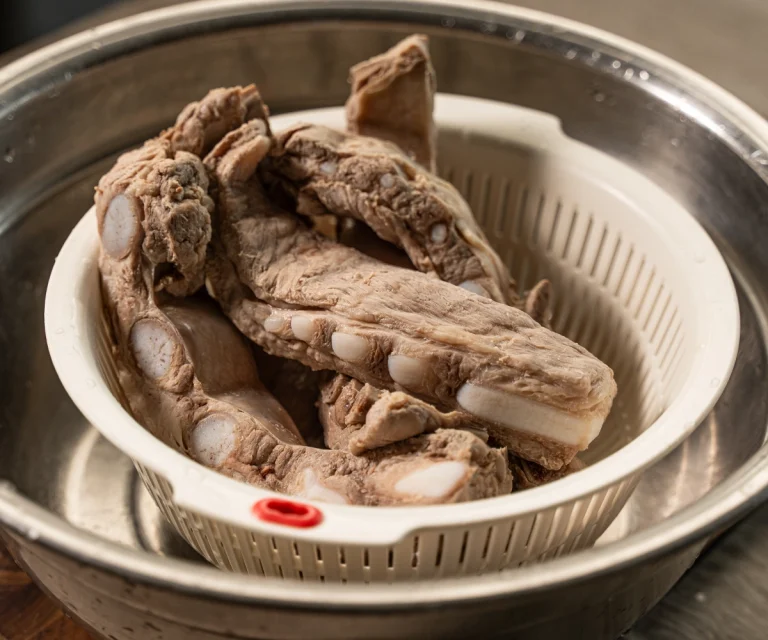
Parboil the pork spare ribs. Place the whole rib slabs in a large stockpot and cover them with cold water. Bring the pot to a rolling boil over high heat and let it boil for about 5 minutes. You’ll see gray foam rise to the top. That’s the blood and impurities coming from the bones, and we want no part of that in our soup. Drain the ribs in a colander, then rinse under cold water to get rid of any remaining bits of debris. Then make sure you clean and scrub out the pot. Don’t skip this step! Parboiling is the single biggest difference between a cloudy broth and a clean, clear one, and the hallmark of an incredible Vietnamese broth is the clarity of the soup itself.
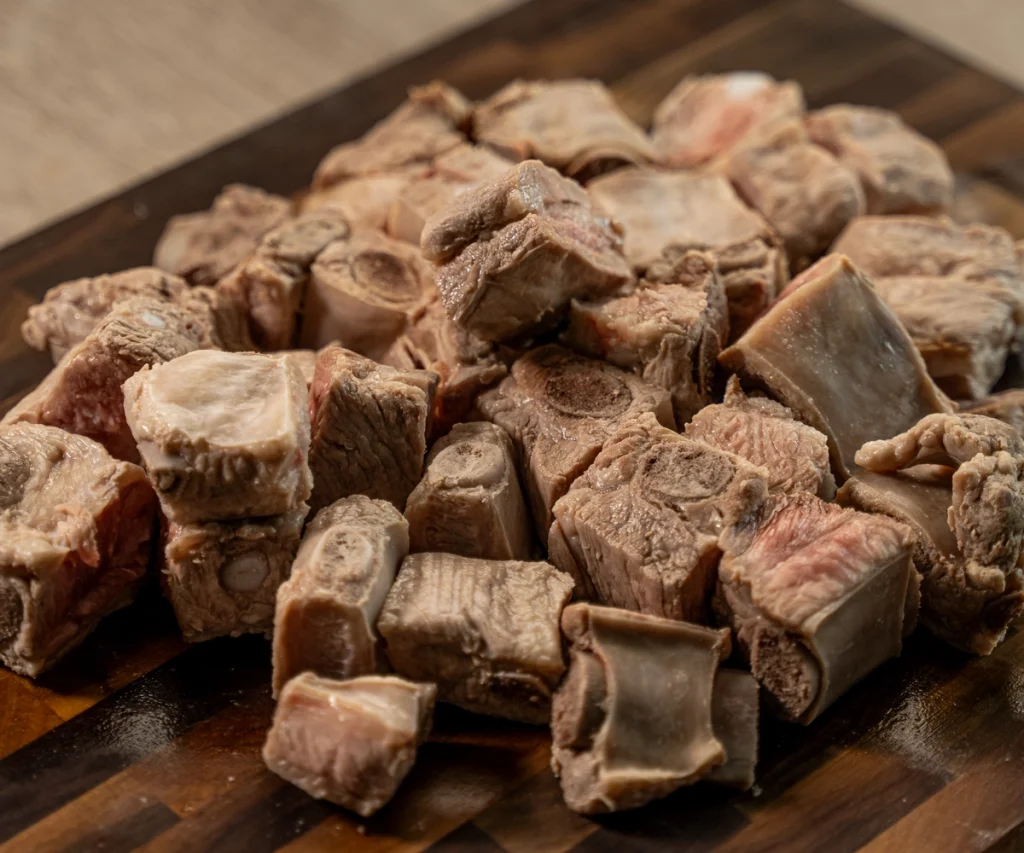
Make the pork broth: Once the ribs cool enough to handle, lay each slab on your cutting board bone side up. Use a sharp chef’s knife to slice down between each bone, separating the slab into individual ribs. Add the pork ribs to a clean pot of boiling water, along with rehydrated dried shrimp, a whole yellow onion, ginger, peeled and cut carrots, and daikon. Bring everything to a boil over high heat, then immediately drop the heat to a gentle simmer. Skim off any foam that rises to the top as necessary.
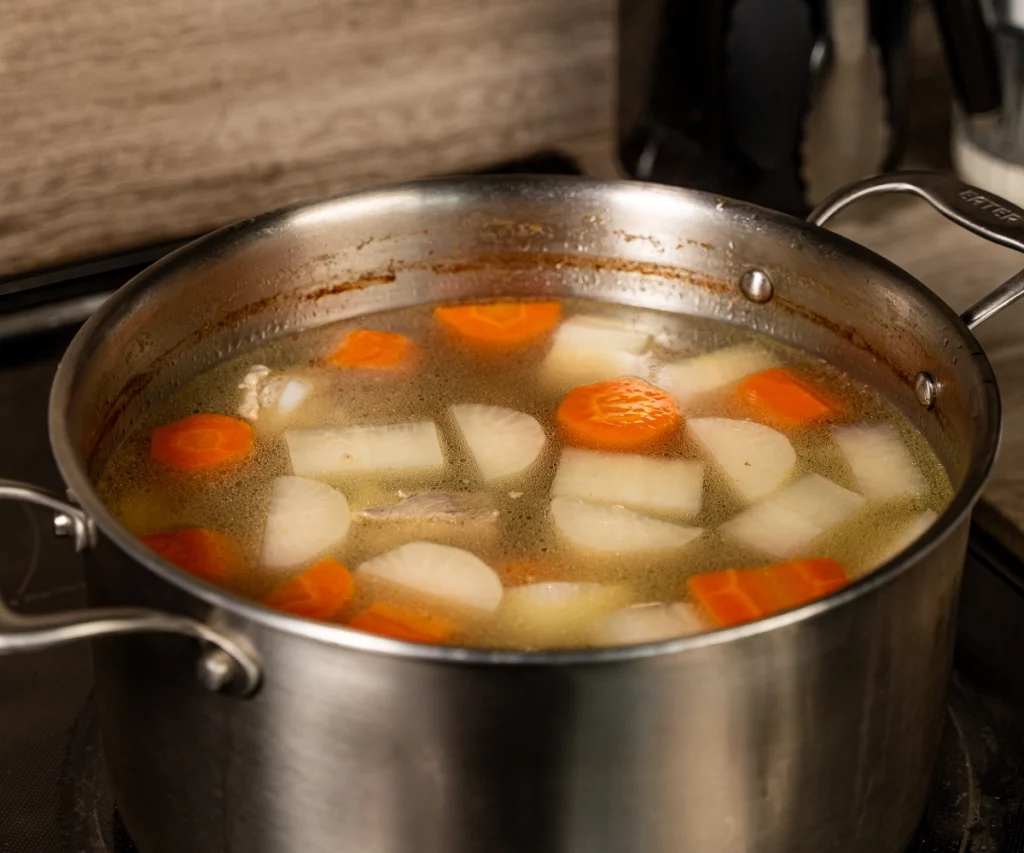
Let the pot simmer, covered with a slight crack, for 60-90 minutes or until the pork spare ribs are tender and just start to pull away from the bone without completely falling off. Remove and discard the onion and ginger. Season with Dear Mam fish sauce and MSG. Give it a taste, and adjust the seasonings as necessary.
Prep your garnishes. While the broth simmers, slice the cha lua into thin rounds or half moons. Shave the white onion paper-thin, and soak it in cold water to help reduce the raw onion bite. Slice the green onions and roughly chop the cilantro.
Cook the noodles in a little broth. Ladle enough broth to cover the noodles into a smaller pot and bring it to a boil. Add the banh canh noodles and cook them according to the package directions; fresh noodles usually need just a couple of minutes. Cooking the noodles in broth instead of water thickens up the soup slightly. Using a smaller pot keeps all that shed starch away from your big pot of stock, so it stays clean and clear. Cook the noodles right before you eat so they stay bouncy. If you like your broth crystal clear in the bowl, cook the noodles in a separate pot of boiling water instead, then drain them well before they go into the bowls.
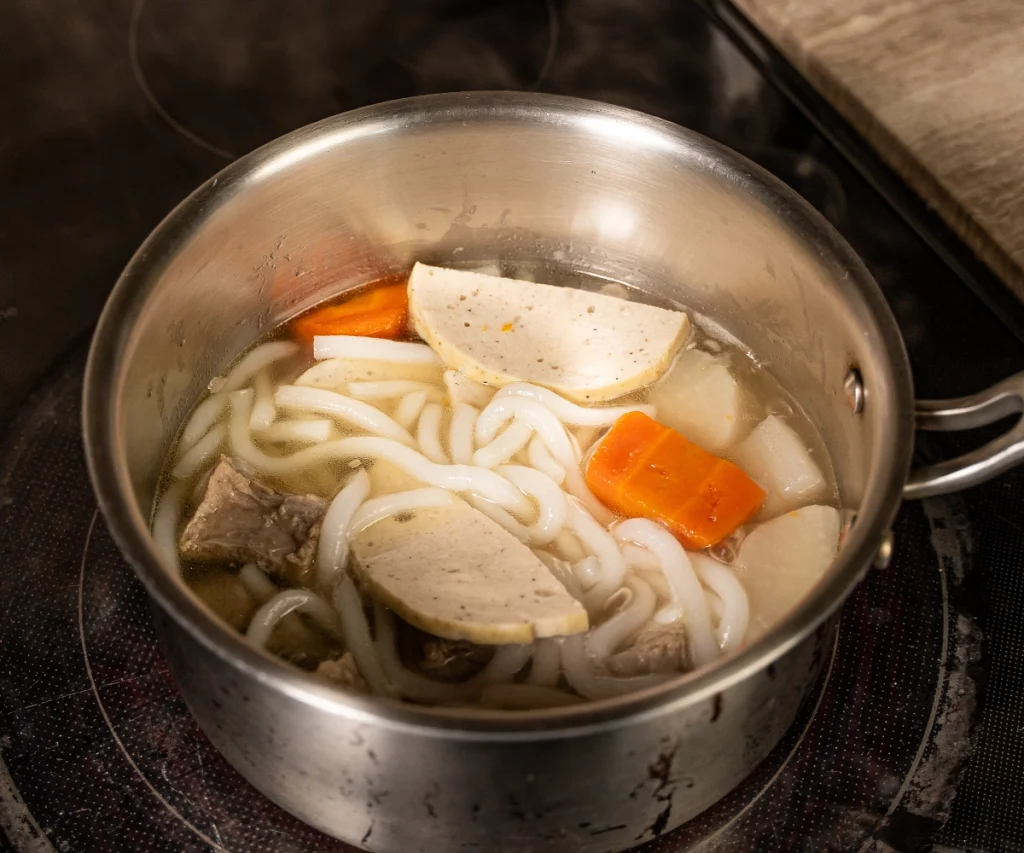
Assemble and serve. Lift the noodles out of the small pot with a spider or tongs and divide them among your bowls. Add the pork spare ribs, a few pieces of daikon and carrot, and some slices of cha lua. Ladle hot broth from the big pot over everything until the noodles sit fully submerged. Top with white onion, green onions, cilantro, a generous handful of fried shallots, and fresh ground black pepper. enjoy!
Banh Canh Suon Heo / Vietnamese Pork Soup with Tapioca Noodles
6-7
servings20
minutes1
hour30
minutesIngredients
- Pork Broth:
3 lbs 3 Pork Spare Ribs
1/3 cup 1/3 Dried Shrimp
5 quarts 5 Water
1 1 Yellow Onion
2 2 inch nub Ginger
2 Large 2 Carrots
1 Medium 1 Daikon Radish
3 tbsp 3 Dear Mam Fish Sauce
1 tbsp 1 MSG
Salt to taste
- Accompaniments and Garnishes:
30 oz 30 Banh Canh Noodles
Cha Lua (Vietnamese Pork Loaf)
White Onion
Green Onions
Cilantro
Fried Shallots
Black Pepper
Directions
- Parboil the whole rib slabs in boiling water for 5 minutes. Drain, rinse the ribs, and clean the pot. Cut the ribs between the bones into individual pieces
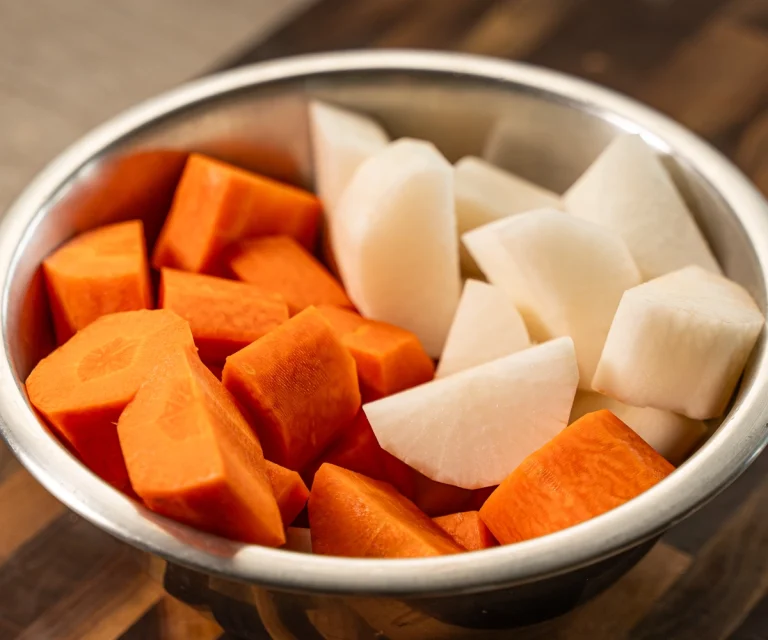
- Peel the onion and leave it whole. Cut the ginger nub in half. Cut the carrots into 2-inch chunks and the daikon into 1-inch rounds or half moons. Soak the dried shrimp in warm water for 5-10 minutes and drain. Slice the cha lua, white onion, green onions, and cilantro for later.
- Add the parboiled pork spare ribs, water, onion, ginger, carrots, daikon, and dried shrimp to the clean pot. Bring to a boil, then lower to a gentle simmer and skim off the impurities. Simmer covered for about 90 minutes, until the ribs turn tender
- Remove the onion and ginger. Season with Dear Mam fish sauce, MSG, and salt to taste
- Ladle enough broth to cover the noodles into a smaller pot and bring it to a boil. Cook the banh canh noodles in it according to the package directions
- Add noodles, ribs, daikon, carrot, and cha lua to bowls. Ladle in hot broth from the big pot and top with white onion, green onions, cilantro, fried shallots, and black pepper. Enjoy!
Did you make this recipe?
Tag @feedthepudge on Instagram and hashtag it with #feedthepudge
If you like this recipe, make sure you pin it!
Frequently Asked Questions
What are banh canh noodles made of? Most banh canh noodles combine tapioca starch and rice flour. The tapioca gives them their chewy, slippery texture.
Where can I buy banh canh noodles? Check the refrigerated or frozen section of a Vietnamese or Asian grocery store. You’ll usually find them labeled “banh canh” or “tapioca noodles.”
Can I use udon instead of banh canh noodles? In a pinch, yes. Udon matches the size, but you lose that signature bouncy chew. If you can find real banh canh, use it.
Why do you parboil the pork ribs? Parboiling pulls out blood and impurities before the real simmer begins. That one step gives you a clean, clear broth instead of a murky one.
Do I have to use MSG? You don’t have to, but I do, and I recommend it. The FDA considers MSG safe, and it gives the broth a savory depth that salt alone can’t touch.
- Garlic Bread Salmon Banh Mi

- Banh Canh Suon Heo / Vietnamese Pork Soup with Tapioca Noodles
- Giovanni’s Shrimp Truck Garlic Shrimp Dupe Recipe