I asked my mom where the name Bún Thang came from, and she responded with, “How did phở get its name? I don’t know; bún thang is just called bún thang because that’s what it is. Don’t ask stupid questions!”
I obviously wasn’t very satisfied with that answer, so I asked chat ChatGPT, and here’s what it said:

“The name “Bún Thang” is believed to refer to the thin, ladder-like strips of egg that float on the surface of the soup. These egg strips are made by whisking eggs and pouring the mixture into a hot pan in a very thin layer, similar to making a crepe. Once the egg is cooked, it is rolled up and thinly sliced, resulting in delicate, elongated strips that resemble the rungs of a ladder. These egg strips not only add visual appeal to the dish but also contribute to its unique texture and flavor.
Therefore, the name “Bún Thang” can be interpreted as “Ladder Noodle Soup,” reflecting the distinctive egg strips that are a hallmark of this traditional Vietnamese dish.”
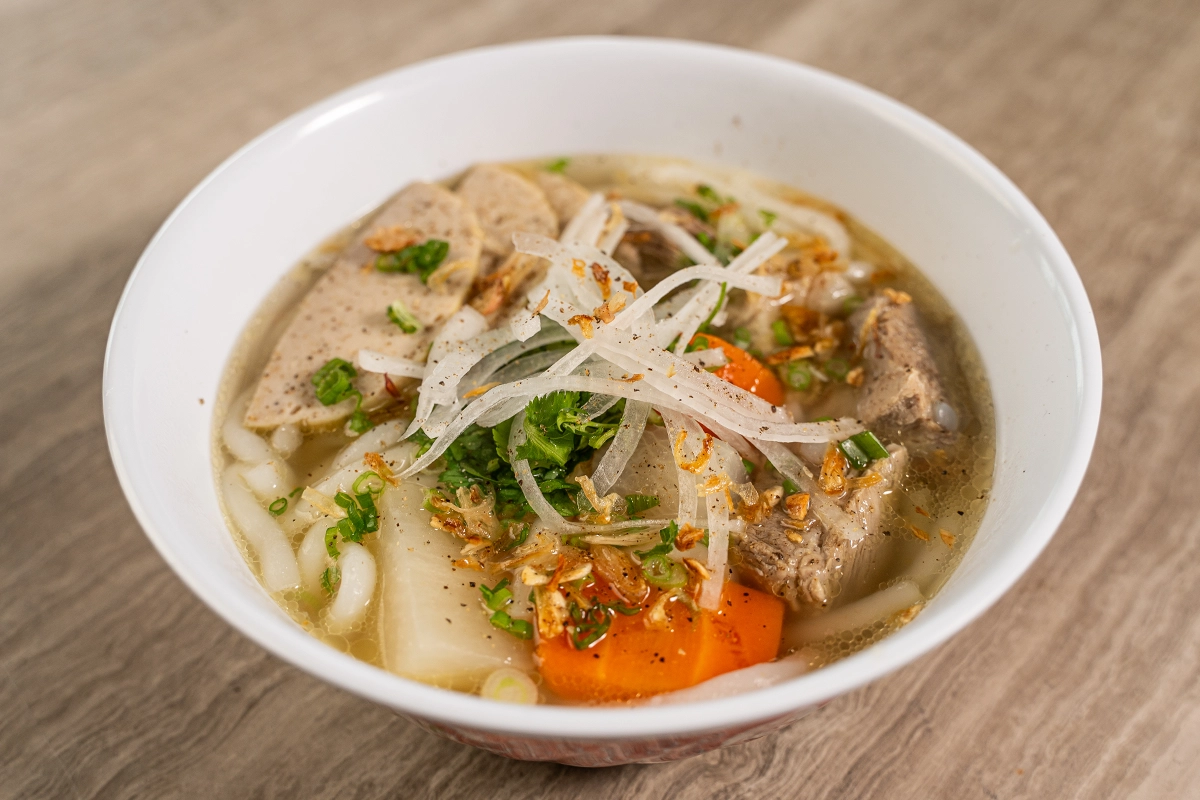
You know what, that actually makes a lot of sense. In my research, I’ve never been able to find a definitive answer until now. Between the julienned egg, Vietnamese ham, and chicken being uniformly cut and resembling ladder rungs, it actually makes perfect sense!
Bún Thang is a harmonious blend of flavors, textures, and colors, reflecting the elegance and complexity of Vietnamese culinary traditions, particularly in the northern region. It’s a dish that showcases the artistry of Vietnamese cuisine, where simplicity meets sophistication.
While this is typically eaten around Lunar New Year, it’s a phenomenal year-round!
*Here is the green onion shredder tool that I used to make the green onion curls for garnish*

Vietnamese Combo Noodle Soup / Bún Thang
6-8
servings1
hour1
hour30
minutesIngredients
- Broth:
6 quarts Water
3 lb Chicken Quarters
1 lb Chicken Breast
1/3 cup Rehydrated Dried Shrimp
1 Yellow Onion
2 inch knob Ginger
1 inch nub Rock Sugar
4 tbsp Fish Sauce
2 tbsp MSG
- Toppings:
6 Eggs
15 oz Chả Lụa (Vietnamese Ham)
- Garnishes:
Green onion
Vietnamese coriander
Shrimp paste
Directions
- Broth:
- Scrub chicken with kosher salt and rinse under cold water to remove chicken odor
- Char aromatics over an open flame, on a dry pan, or in an oven on broil. Then rehydrate dried shrimp in hot water for ten minutes
- Add six quarts of water to a stock pot, then add chicken, rehydrated dried shrimp and charred aromatics
- Bring up to a boil, skim off the impurities, and let simmer for an hour
- Remove aromatics and chicken from the pot, wrapping the chicken in plastic wrap and putting it in the fridge to cool down to slice later
- Season broth with fish sauce, MSG, and rock sugar
- Noodles:
- Bring salted water up to a boil, add rice vermicelli noodles, and cook for 5-6 minutes. Take the pot off the heat, cover it, and let the noodles sit in the pot for another 5-6 minutes. Drain and rinse under cold water to stop the cooking process, and toss in oil to prevent noodles from sticking
- Toppings:
- Whisk eggs in a mixing bowl and season with fish sauce. Then, in a hot pan, add oil and cook the egg omelet on medium. Set aside to cool down and then thinly slice into ribbons
- Cut Vietnamese ham and chicken into similar size and shape
- Garnishes:
- Julienne Vietnamese coriander. Then, use a green onion shredder to cut just the green part of the green onions into strips. Submerge into cold water to curl
- Assembly:
- To serve, add noodles, toppings, broth, and garnishes to a bowl. Add a little bit of shrimp paste for a little extra stank!
Recipe Video
Notes
- Broth can be made with either pork or chicken bones!
Did you make this recipe?
Tag @feedthepudge on Instagram and hashtag it with #feedthepudge
If you like this recipe, make sure you pin it!