This post is sponsored by Alaska Airlines, which hosted my Business Class flight to Seoul. All opinions and this recipe are my own.
Not too long ago, my partner Hanna asked me a simple question: what’s your favorite Korean dish? Simple question. Brutal question. I sat there far longer than I’d like to admit, flipping through a mental menu with endless options. Seaweed soup, the kind Korean mothers make on birthdays. Spicy pork sizzling on a hot plate. A pot of kimchi jjigae bubbling away, sour and fiery and alive. So instead, I changed the question. Forget favorite. What could I eat every single day for the rest of my life and never get tired of? That answer came easy. Dwaeji gukbap. Korean pork soup with rice.
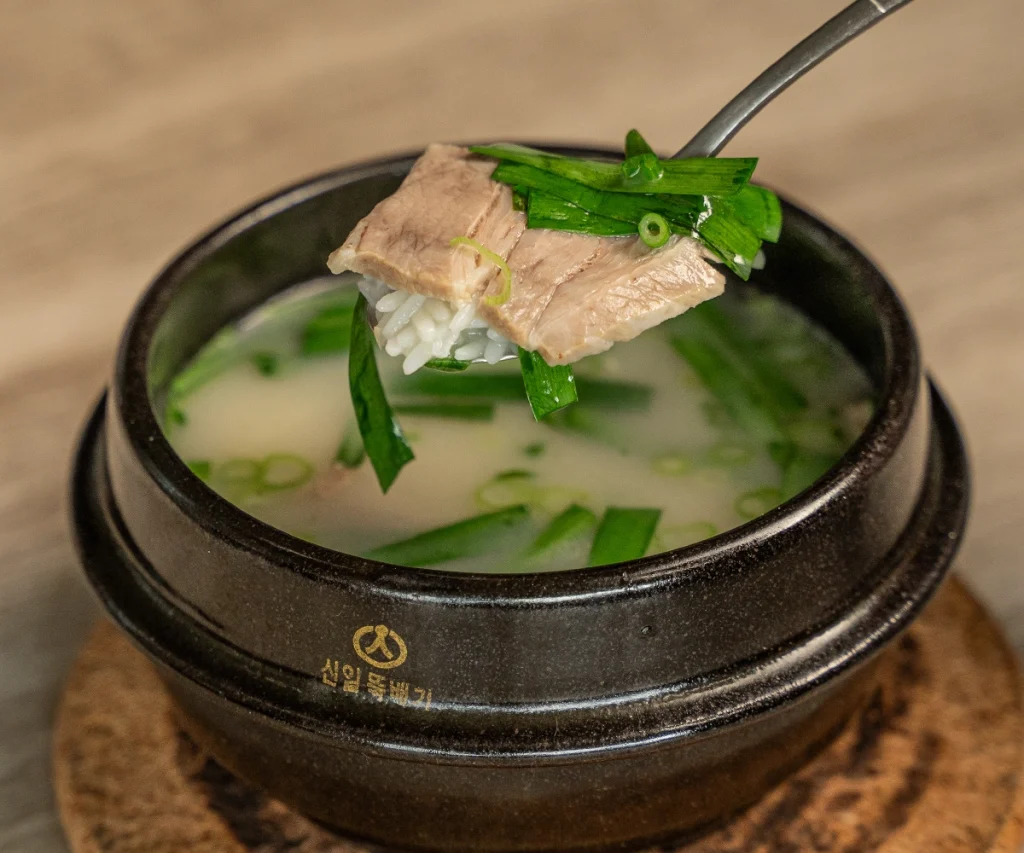
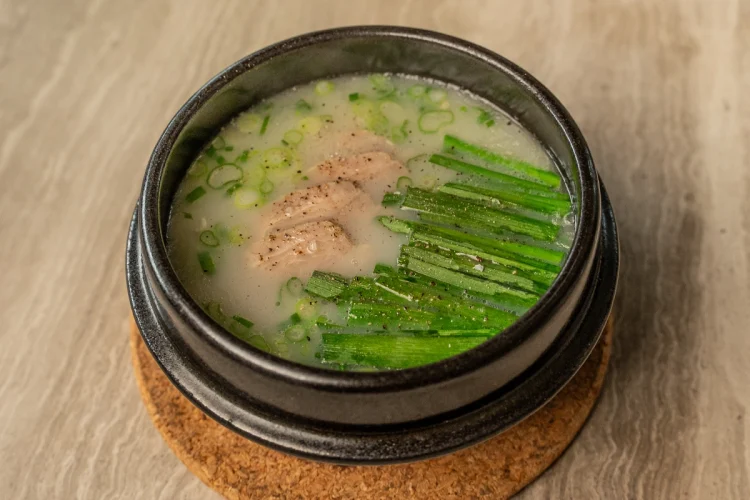
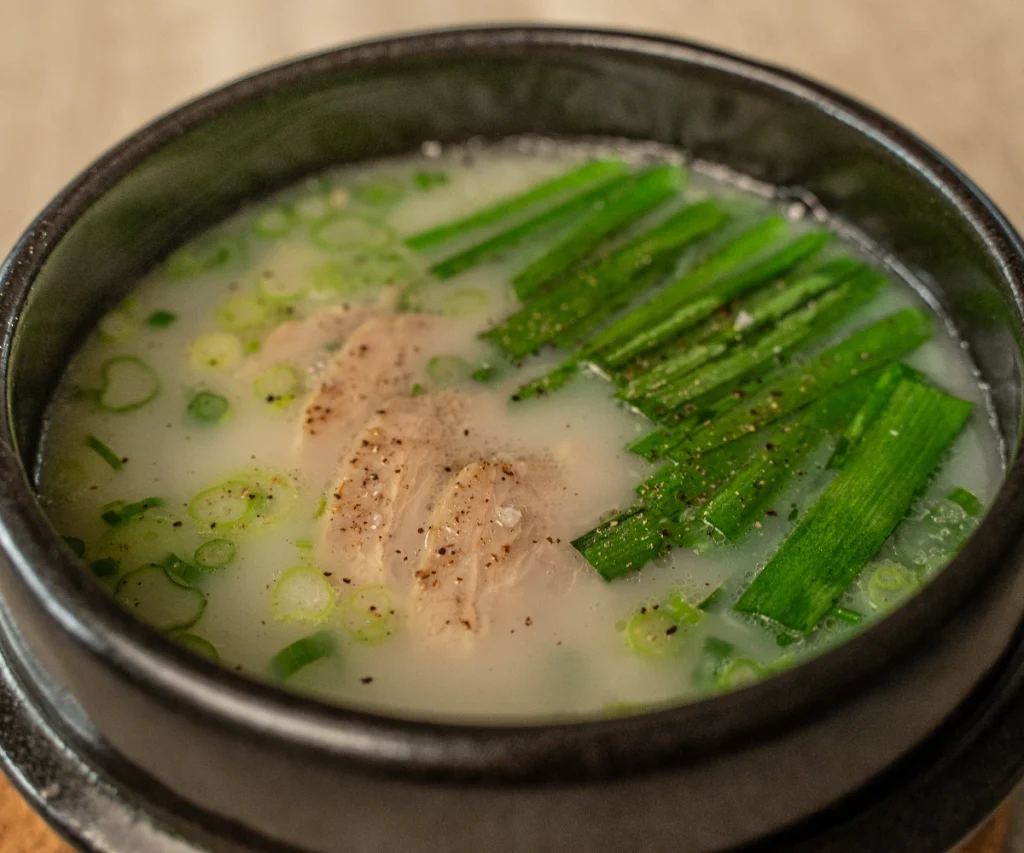
This isn’t fancy food, and it doesn’t pretend to be. It’s working people’s food. It came out of hard times, built on pork bones boiled for hours until they give up everything they have. What you get is a broth so rich and milky it coats your throat, tender slices of pork, a scoop of warm rice, and a handful of green onions and garlic chives for health and color. It’s good at any hour of the day. And it’s especially good the morning after a little too much soju, if you catch my drift. Some bowls feed you. This one nourishes you from the inside out. When I recently flew nonstop from Seattle to Incheon with Alaska Airlines, dwaeji gukbap became my constant companion. I ate it every single day. It was my first meal off the plane and my last meal before I flew home, and weeks later, I still catch myself thinking about that broth at odd hours of the night. So today, we’re making it ourselves. No fuss, no tricks. Just bones, water, time, and a little patience, bringing a piece of Korea home to Seattle and to wherever you’re reading this.
Flying Nonstop from Seattle to Seoul with Alaska Airlines
Creating content has given me a life I never could’ve imagined, and frankly, I don’t always feel like I deserve it. It’s truly been a blessing. It has opened doors, put me at tables with people I’d never have met otherwise and, lately, put me on airplanes bound for places I used to only daydream about. Alaska Airlines is turning Seattle, my own backyard, into a real international hub: Rome, London, Seoul, with Athens and Paris coming in spring 2027. So when they offered me a seat in their new Business Class, nonstop from Seattle to Incheon, I didn’t play it cool. I said yes. Hell yes.

Nothing beats a nonstop flight. No layovers, no sprinting between gates. You board in Seattle and step off in Seoul, ready to eat. Alaska calls its new long-haul experience on the Boeing 787 Dreamliner a curb-to-cabin journey, and that description fits. Dedicated check-in lanes, concierge service, and private security access took me from the curb to the gate calmer than any international departure I can remember.
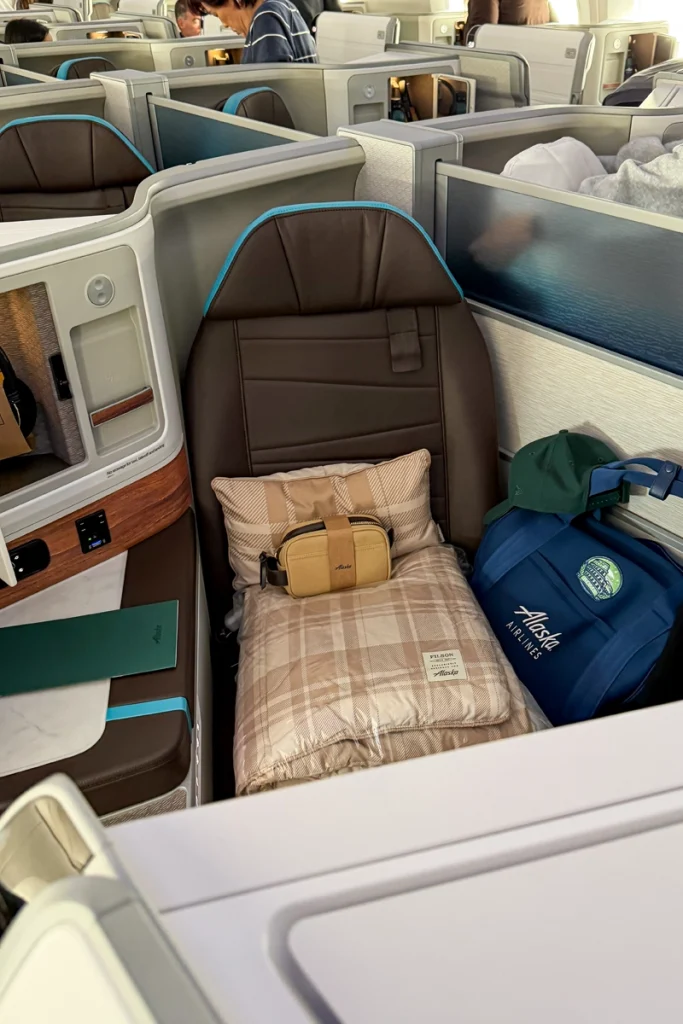
My suite came with a privacy door, direct aisle access, and a lounge-style seat that converts into a fully lie-flat bed. Premium bedding from Filson, a plush amenity kit with Salt & Stone products, a reusable PATH Water bottle, and an 18-inch HD screen with more than 1,500 movies and shows made the hours disappear, and Starlink WiFi arrives soon. But as a recipe developer and someone who just loves eating, the food won me over. Premium wines and charcuterie, chef-driven multi-course dining inspired by your destination, and even a dessert cart. It felt like a warm welcome to Korea before I ever left my seat.
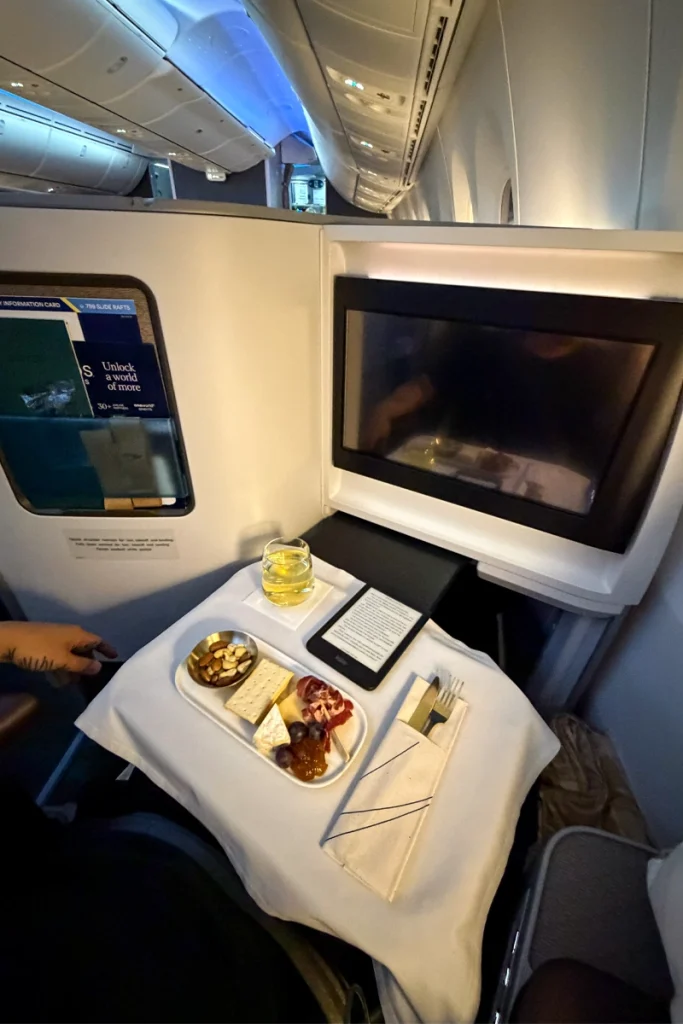
Now, I’m generally suspicious of loyalty programs. Most just treat you like a line on a spreadsheet. This one felt like it was tailored specifically for me. As of October 1, 2026, Atmos Rewards lets members join one of six free Atmos Communities, each built around why you actually travel. I joined Culinary Journeys. Because of course I did. I don’t plan trips around monuments. I plan them around the menu. The market stall at dawn. The hole-in-the-wall with a line out the door and no English on the sign. The chef’s counter where someone slides you something straight off the fire and watches your face. Culinary Journeys rewards exactly that kind of person: exclusive flight deals, 20% off food and wine experiences through Atmos Rewards Unlocked, partner offers, and up to 10,000 bonus and status points for flying to serious food cities like Tokyo, London, New York, and Austin. It’s free. It takes a minute in your Atmos Rewards account. And if you travel to eat, it would be a crime not to let your appetite pay you back.
Ready to taste dwaeji gukbap where it was born? Book your flight to Seoul with Alaska Airlines and fly nonstop from Seattle to Incheon, or connect through Seattle from cities across the West Coast, Alaska, and Hawaii. Trust me, your first bowl of gukbap in Korea will be worth every mile.

What Is Dwaeji Gukbap?
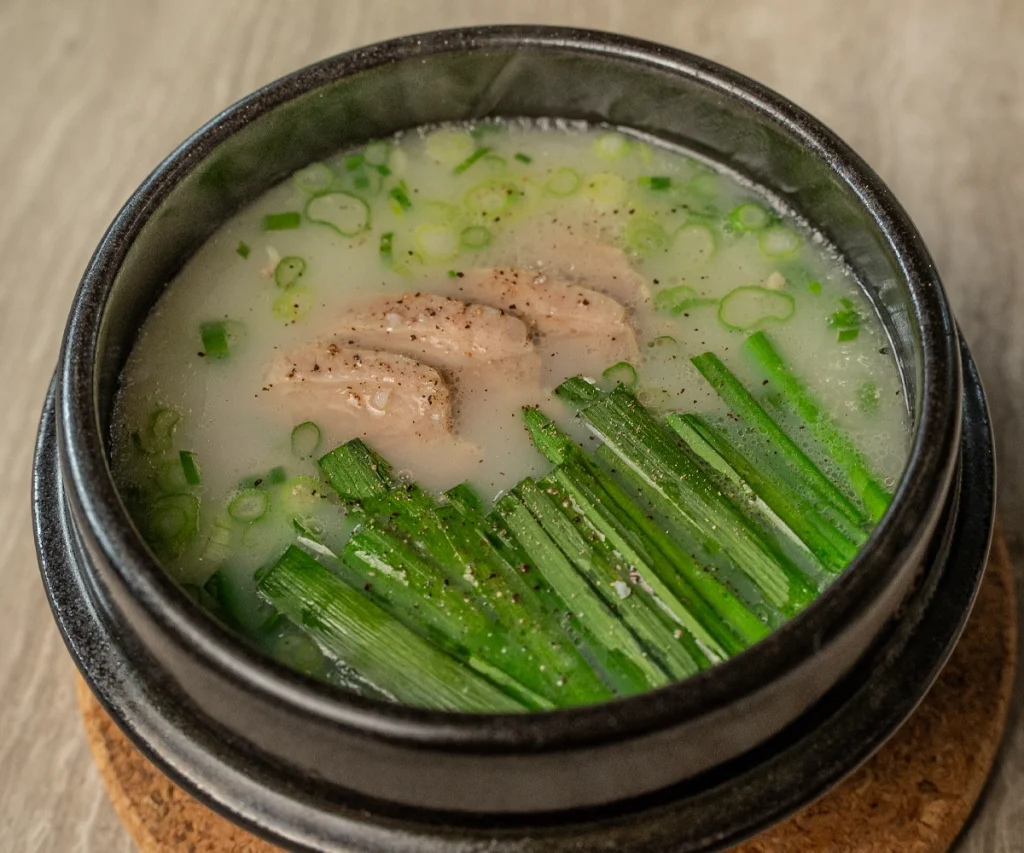
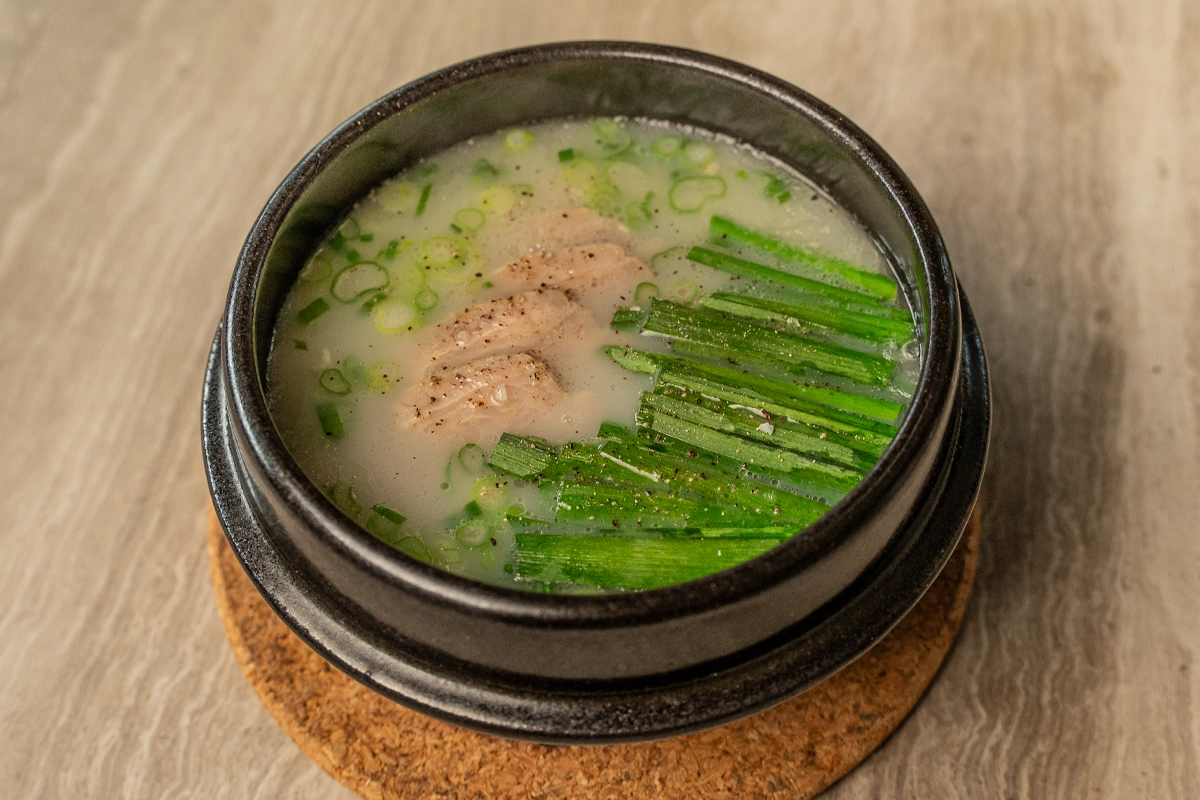
Dwaeji gukbap translates simply to pork (dwaeji), soup (guk), and rice (bap). You boil pork bones for hours until you’ve extracted every little bit from them, and the broth turns cloudy and milky white. Then you add thin slices of boiled pork and serve it with rice. Plenty of people dump the rice straight into the bowl, or you can eat it on the side. Nobody seasons it for you, either. The salt, pepper, and chives sit on the table, and the bowl becomes yours, exactly how you want it. If you know seolleongtang, the beef bone soup, think of dwaeji gukbap as its louder cousin from the port city. Same patient method, same creamy broth. But pork brings more fat, more depth, and a lot more swagger.
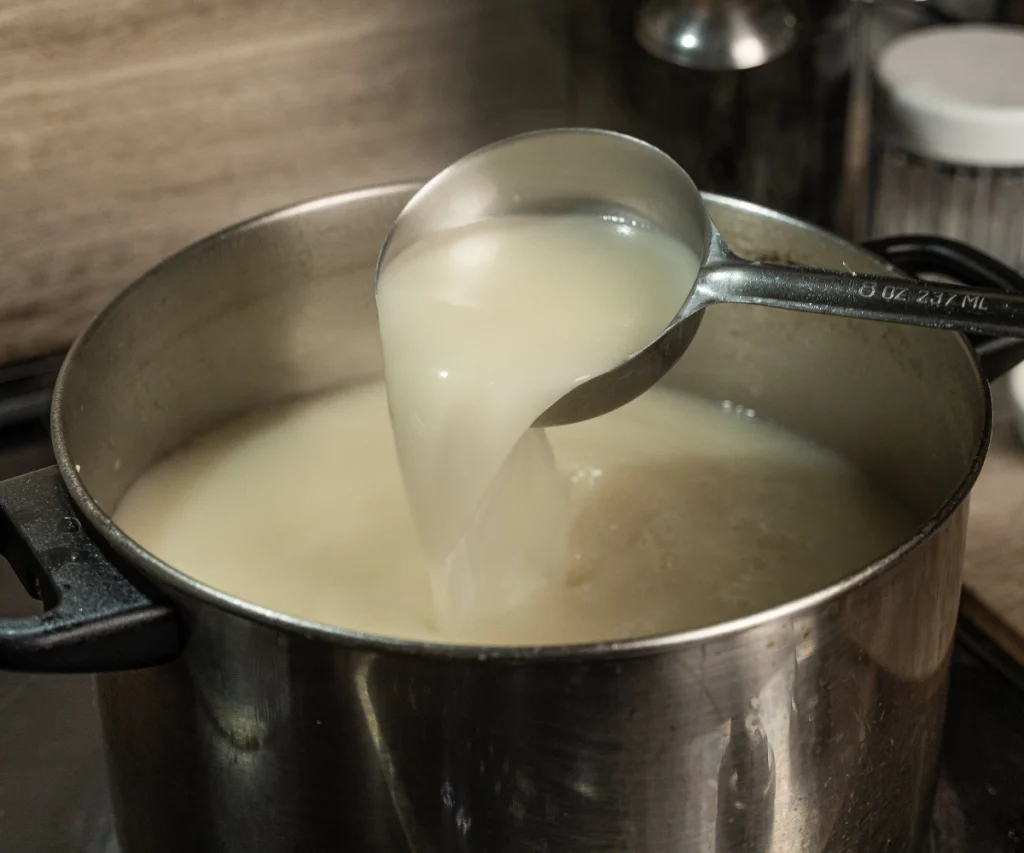
Like most of the world’s great comfort foods, this soup was born of struggle. The story most people tell starts in the early 1950s, during the Korean War, when refugees flooded into Busan, the last major city the North never took. Food was scarce. Nobody had anything to spare. So people did what resourceful, hungry people have always done: they took the cheap cuts nobody else wanted and boiled them into something that could keep a family going. That bowl fed refugees and the dock workers who kept the port running. Seventy years later, Busan still can’t stop talking about it, and good for them. In Seomyeon, locals call one whole stretch Dwaeji Gukbap Alley, where restaurants have ladled out this soup for generations. In 2026, the city held a citywide vote to crown its best gukbap joints, and tens of thousands turned out to argue over broth, and to me, this is the dish that defines the country.
Dwaeji Gukbap / Korean Pork Soup with Rice
6-8
servings30
minutes12
hoursIngredients
5 lbs 5 Pork Bones (Knuckles and Marrow)
2 lb 2 Pork Shoulder
12 quarts 12 Water
1 1 Yellow Onion
2 2 inch knob Ginger
- Accompaniments:
Cooked White Rice
Green Onions
Garlic Chives
Sea Salt
Black Pepper
Directions
- Prep the pork:
- Place the pork bones and pork shoulder in a large pot and cover them with cold water. Bring the pot to a boil, then boil for 10-15 minutes to draw out impurities. Drain the pot and rinse the pork. Scrub each bone under cold running water to remove any remaining debris
- Make the dwaeji gukbap:
- Add the parboiled pork bones and pork shoulder to a clean pot with the 6 quarts of water. Add the onion and ginger. Bring everything up to a boil and skim off any impurities that rise to the top
- Reduce the heat to medium and keep the pot at a steady boil for 1 to 1.5 hours, until the pork shoulder cooks through. Remove the pork shoulder, wrap it tightly in plastic wrap, and chill it in the fridge. Discard the onion and ginger
- Keep boiling the pork bones for 8 to 12 hours, and skim off impurities as needed. Whenever it looks like too much water has evaporated, add more hot water back to the pot roughly to the starting level
- Remove the bones, then strain the broth through a fine-mesh strainer to catch any small bits.
- Serve:
- Slice the chilled pork shoulder thinly and warm the slices in the hot broth. Ladle the broth and pork into bowls and serve with white rice. Garnish with chopped green onions and garlic chive segments, then season with sea salt and black pepper to taste. Enjoy!
Notes
- I started with 6 quarts of water and added another 6 quarts as it evaporated during cooking. A strong, steady boil is what gives this broth its rich, milky body, so keep a kettle of hot water nearby and top up the pot whenever the level drops.
Did you make this recipe?
Tag @feedthepudge on Instagram and hashtag it with #feedthepudge
If you like this recipe, make sure you pin it!
Frequently Asked Questions
What does dwaeji gukbap taste like? It tastes rich, savory, and comforting, with a creamy pork broth, tender pork, and fresh, oniony garnishes. It carries no spice unless you add it.
What is the difference between dwaeji gukbap and seolleongtang? Both are milky bone broth soups served with rice. Seolleongtang uses beef bones, while dwaeji gukbap uses pork bones, which gives it a richer, fuller flavor.
Why is my pork broth not milky? The broth needs a strong, steady boil and plenty of time. If your pot only simmers gently, turn up the heat and let it simmer for a few more hours.
What cut of pork works best for Korean pork soup with rice? Pork knuckles and marrow bones build the broth, and pork shoulder gives you tender, flavorful slices to serve on top.
Latest Posts
- Garlic Bread Salmon Banh Mi

- Banh Canh Suon Heo / Vietnamese Pork Soup with Tapioca Noodles
- Giovanni’s Shrimp Truck Garlic Shrimp Dupe Recipe



can’t wait to try this recipe!