This is one of my favorite Vietnamese noodle soups, and it’s honestly one of the most underrated ones too! Here in the States, mi quang tends to get overshadowed by the more popular pho, bun bo hue, and even bun rieu, and in my opinion, that’s a crying shame. This bowl deserves so much more love, and I hope that my recipe can play its part in introducing it to the masses.
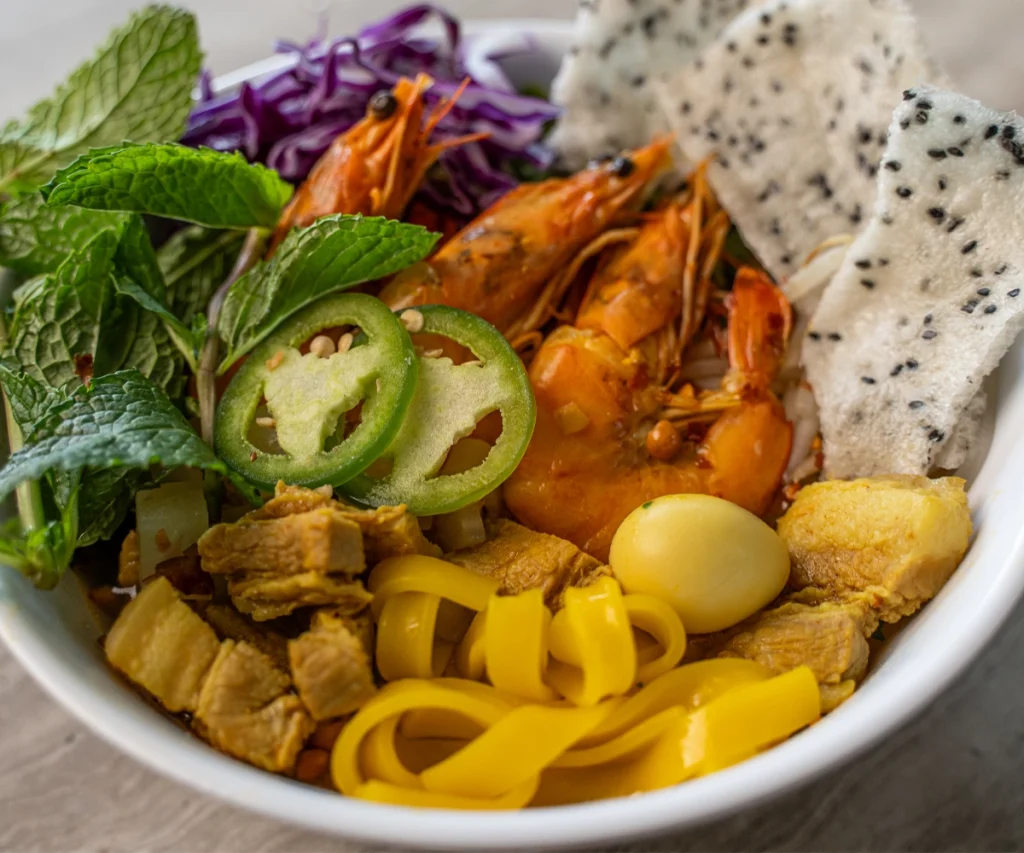
Now, I first had mì Quảng at my oldest sister’s in-laws’ house when I was in middle school. I remember being amazed at how different it was from every other noodle soup I knew. Those thick golden turmeric noodles, the little pool of rich broth, the crunch of peanuts and rice crackers, and a mountain of fresh herbs and vegetables piled high on top. After that first taste, my mom started making it at home for us too, and it quickly became part of our regular rotation. Ever since, mi quang has been one of those dishes that always satisfies my stomach and soul.
What is Mì Quảng?
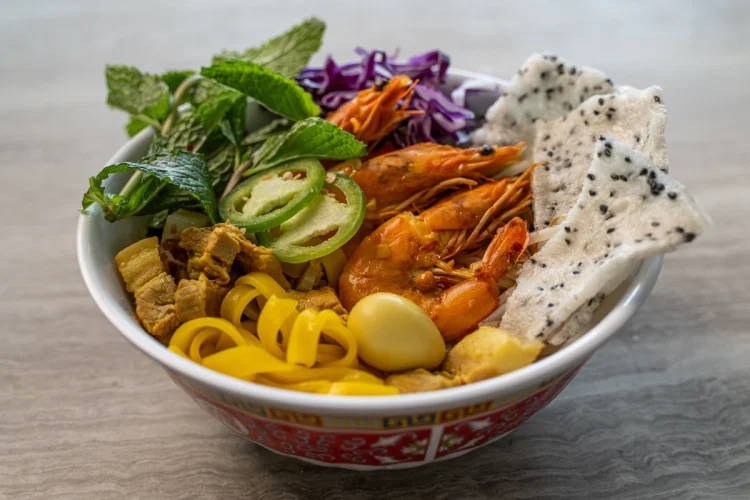
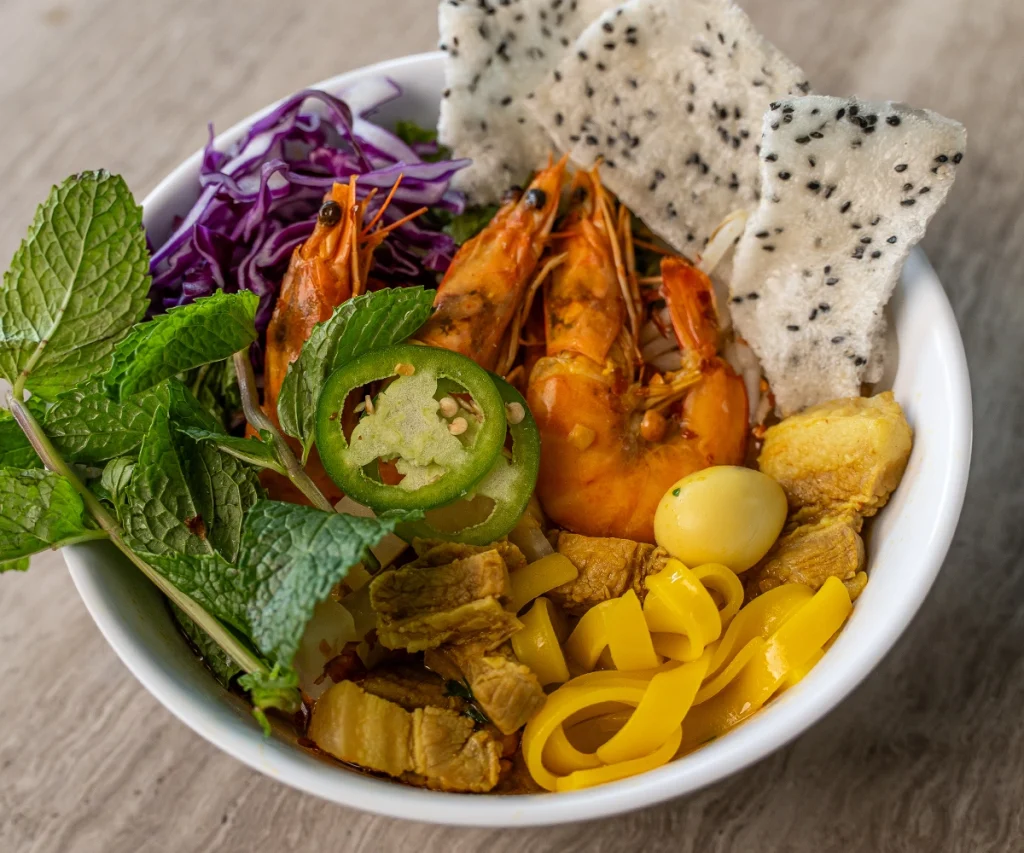
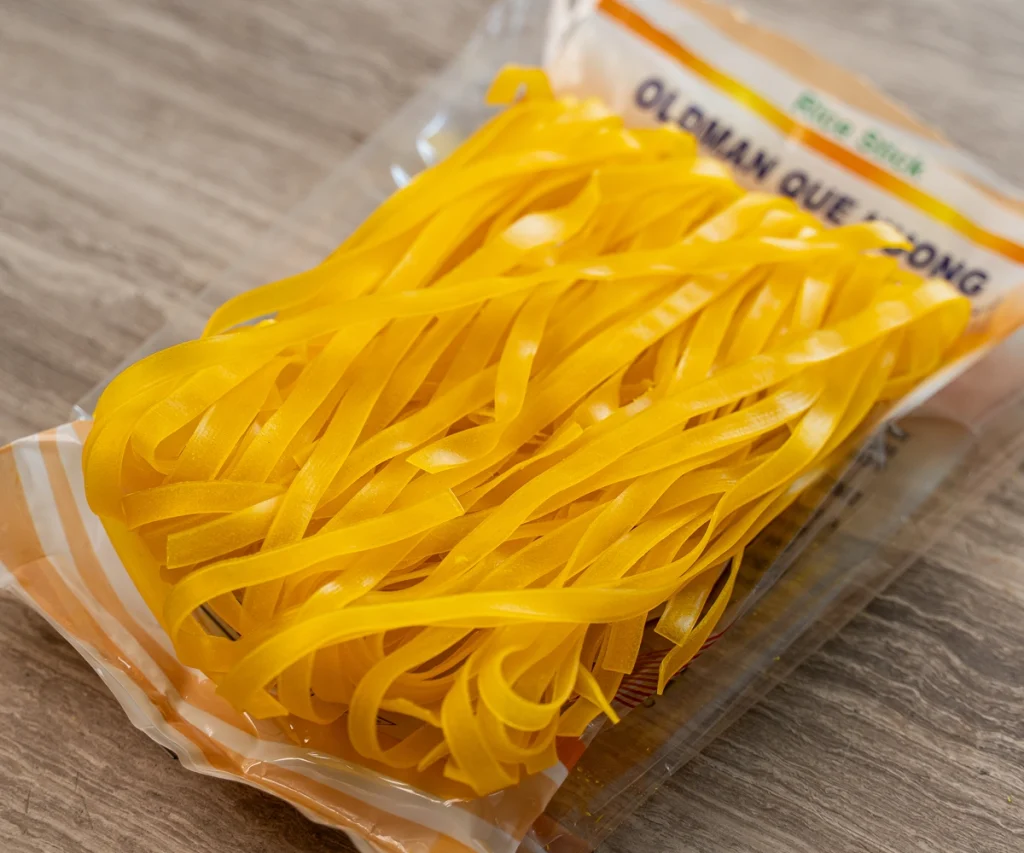
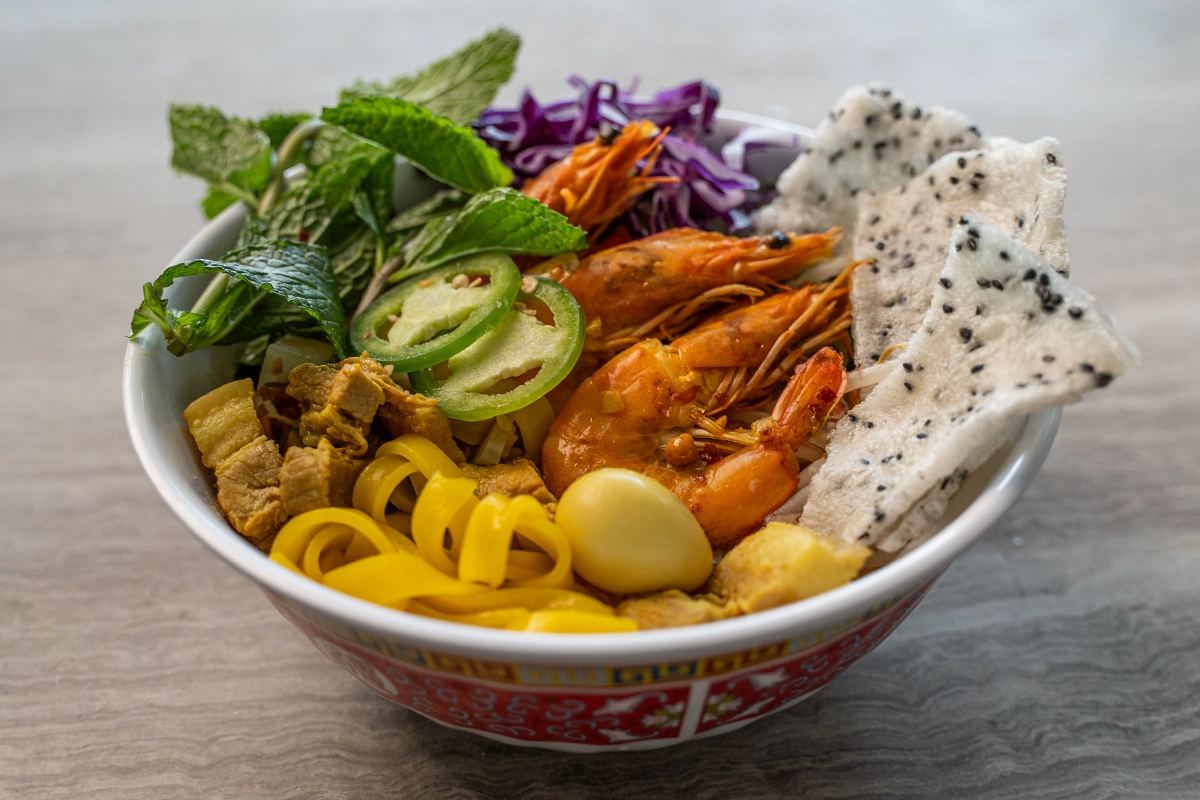
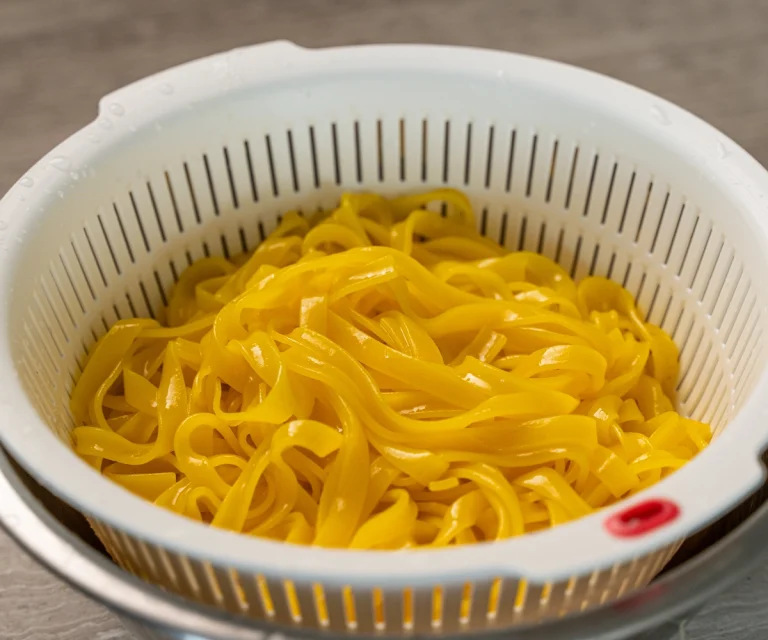
Mì Quảng translates to “Quảng noodles,” named after Quảng Nam province in central Vietnam, where the dish was born. Here’s a fun quirk: in Vietnamese, “mì” usually refers to egg or wheat noodles, but mì Quảng noodles are actually made from rice. They’re wide, flat, and a little chewy, and they get their signature bright yellow color from turmeric.
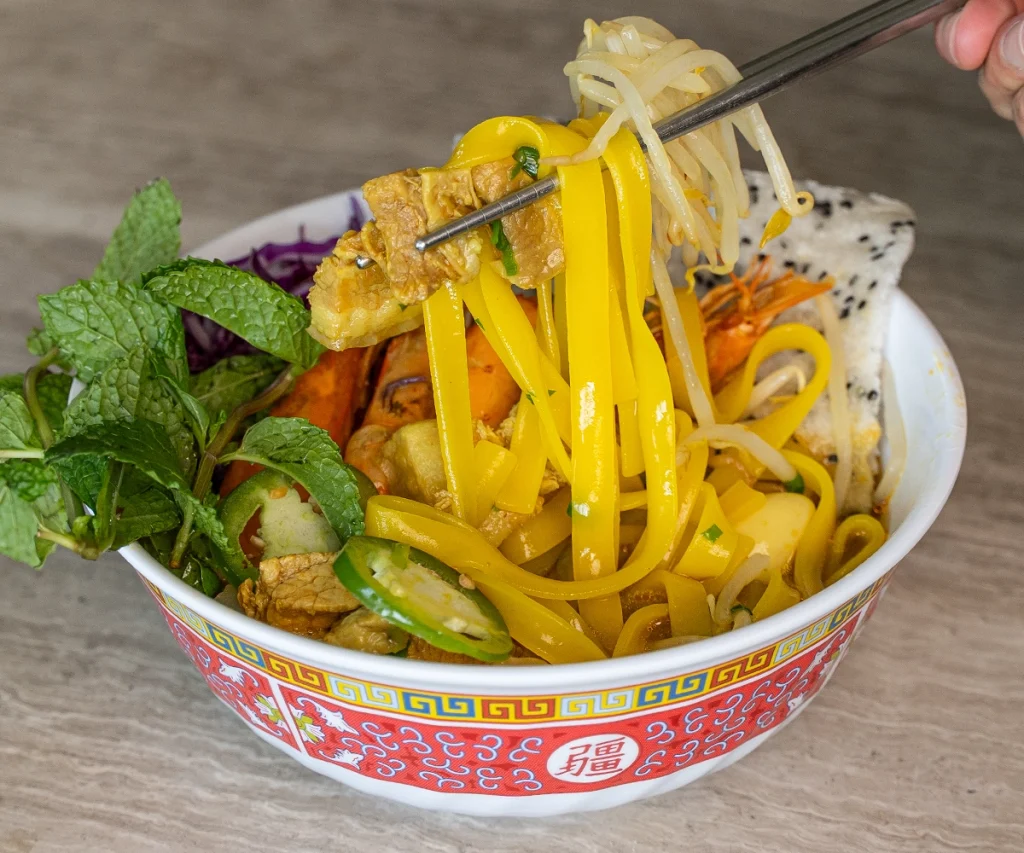
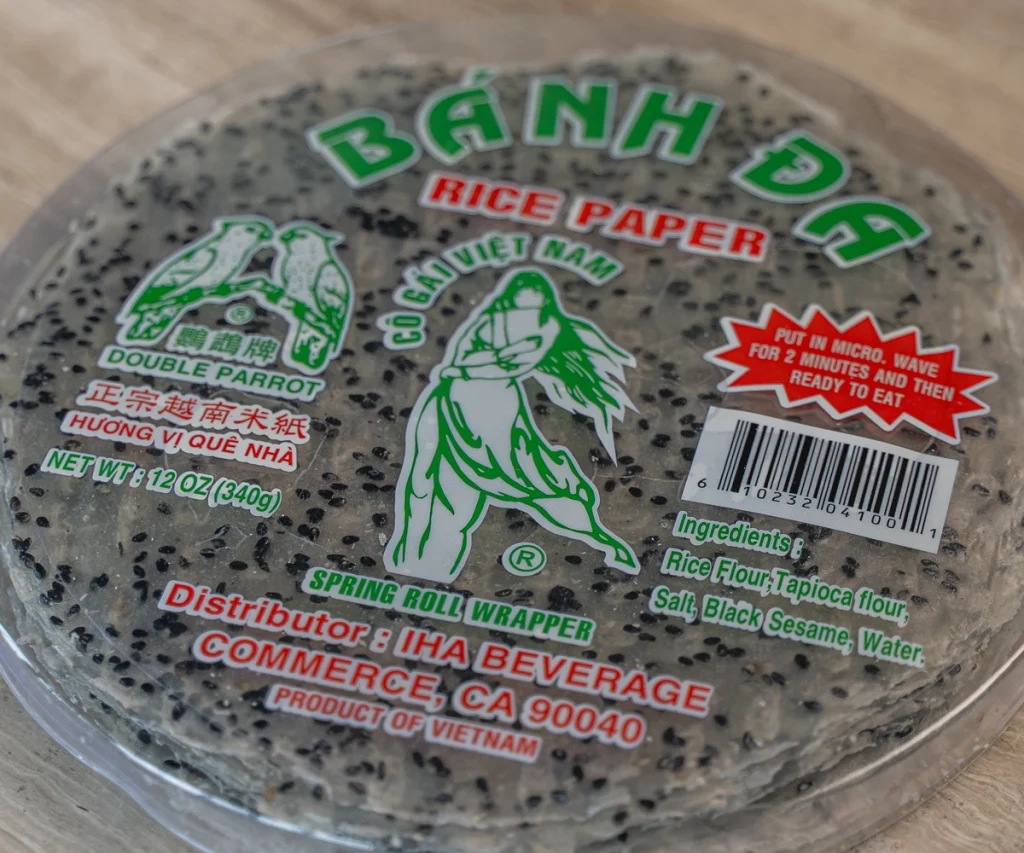
What really sets mi quang apart is that it isn’t quite a soup. Think of it as half soup, half salad, and 100% delicious! Instead of drowning the noodles in broth like other Vietnamese noodle soups, we ladle in a rich, concentrated broth sparingly so it pools at the bottom of the bowl. The classic version is topped with shrimp, pork belly, and quail eggs. Then we top it with handfuls of fresh herbs and greens, crushed roasted peanuts, and a crispy toasted sesame rice cracker (bánh tráng mè) snapped right over the top. Because it’s so flexible, you’ll find countless variations across central Vietnam, with chicken, fish, and even frog or duck taking the place of shrimp and pork.
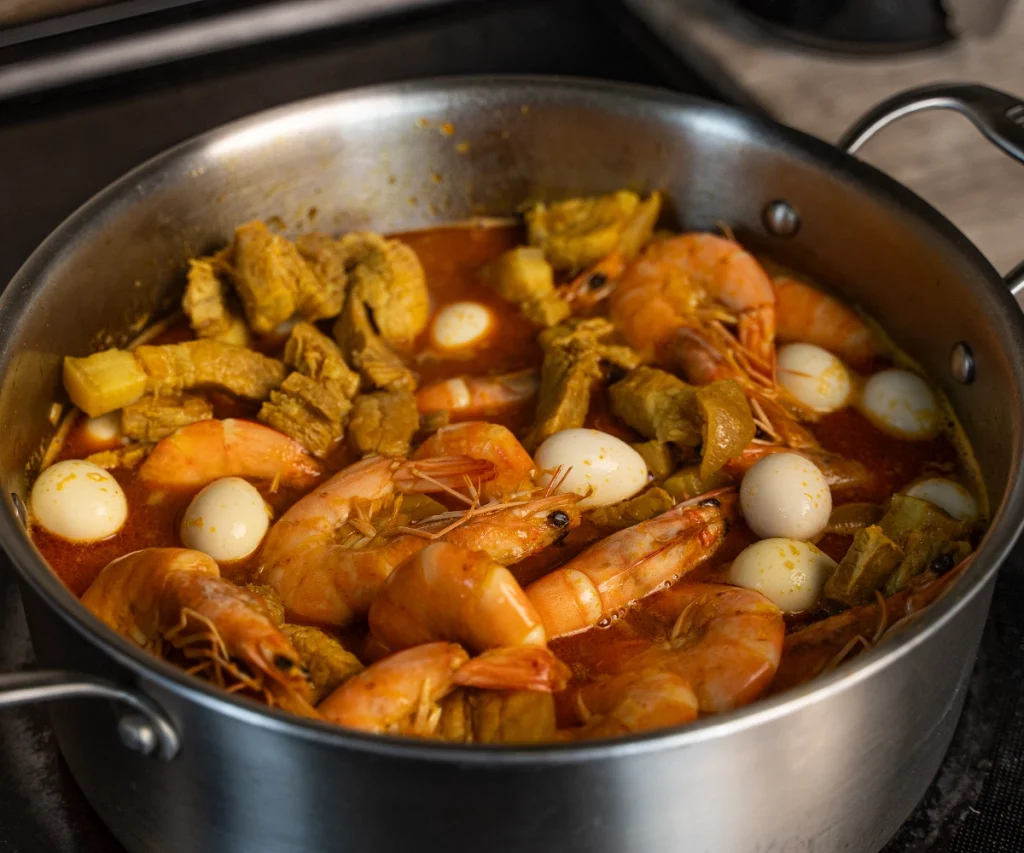
That said, in my household, we prefer our broth a bit lighter and less condensed than what you might find in Vietnam. Typically, you’d find just a little bit of highly concentrated broth, similar to that of a tsukumen compared to ramen. However, we like loading our bowl up with plenty of broth. My mom also never mixed the broth and sauce as a way to let everyone adjust the seasoning to their liking, especially with my dad, as my mom was always looking to control his sodium intake for his health. Most recipes that I’ve come across do blend the two, so if that’s your preference, definitely do that!
The History of Mì Quảng
Mi quang’s story is tied closely to the land it’s named after. Quảng Nam was established in 1471, and its name roughly means “expanding to the South,” a nod to the Vietnamese people’s migration southward into what was once the Champa kingdom. Food historians in Vietnam still debate how the dish came to be, and two main theories remain. The first suggests mi quang emerged around the mid 1500s, as Vietnamese settlers moving south absorbed and adapted elements of Cham cooking. The use of rice and turmeric, and the way the bowl is assembled rather than submerged, all point to those roots.
The second theory places its origins in the 1600s, when the port town of Hội An was a bustling international trading hub. Chinese merchants brought their wheat noodle dishes, and locals adapted them using what they had plenty of: rice. The noodles changed, but the name “mì” stuck around, which is why we still call it that today. Either way, both theories agree that mì Quảng is a true Quảng Nam original, and that it’s been around for roughly four centuries. Many consider the village of Phú Chiêm, along the Thu Bồn River between Hội An and Đà Nẵng, to be home to the most traditional version.
Central Vietnamese Noodle Soup / Mì Quảng
6-8
servings30
minutes1
hour30
minutesIngredients
- Broth:
2 lbs Pork Bones
1/3 cup Dried Shrimp
1 Yellow Onion
1 medium Daikon
4 tbsp Dear Mam Fish Sauce
2 tbsp MSG
1 inch nub Rock Sugar
Salt and Pepper To Taste
- Toppings:
2 lbs Pork Belly
2 lbs Head-On Shrimp
2 cans Quail Eggs
1 Red Cabbage
1 Green Leaf Lettuce
16 oz Beansprouts
- Marinade for pork belly and shrimp:
2 tbsp Minced Shallot
1 tbsp Minced Garlic
1 tbsp Dear Mam Fish Sauce
2 tsp Chicken Bouillon
2 tsp Sugar
1 tbsp Paprika
1/2 tsp Black Pepper
1/2 tsp Turmeric Powder
1 tbsp Annatto Seed Oil
- Sauce:
16.9 oz Coconut Water
1 cup Water
1 tbsp Annatto Seed Oil
- Noodles:
20 oz Turmeric Noodles
- Garnishes:
Mint
Spearmint
Jalapeno
Green onion
Cilantro
Toasted peanuts
Rice crackers
Directions
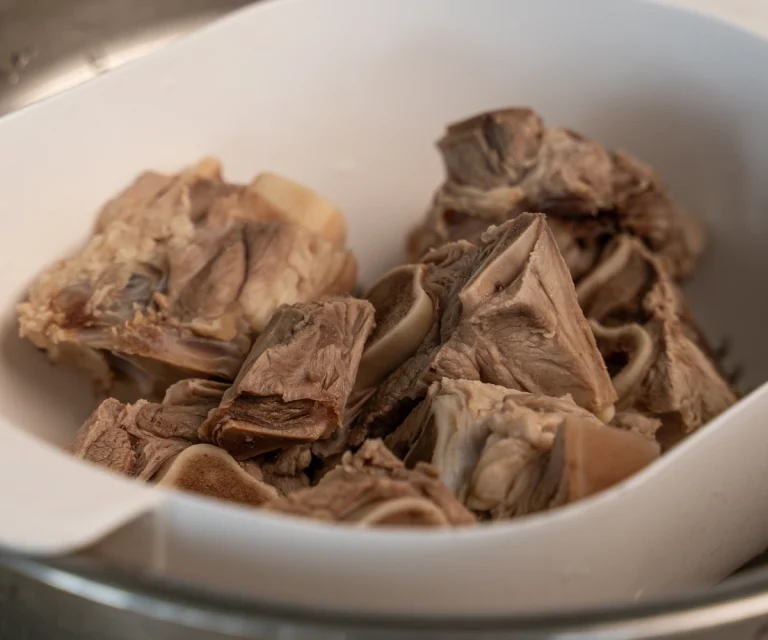
- Cut spare ribs between the bones and parboil for 5-10 minutes, getting rid of the scum and porky odor. Rinse and clean with cold water
- In a pot, add water, spare ribs, rehydrated dried shrimp, and whole onion. Bring it up to a boil, skim off the impurities, and let that simmer for one hour. Then remove the onion and simmer for another hour. Remove everything from the pot, add the cubed daikon radish, and cook for another 20-30 minutes to soften. Then season with Dear Mam fish sauce, MSG, rock sugar, salt, and pepper to taste
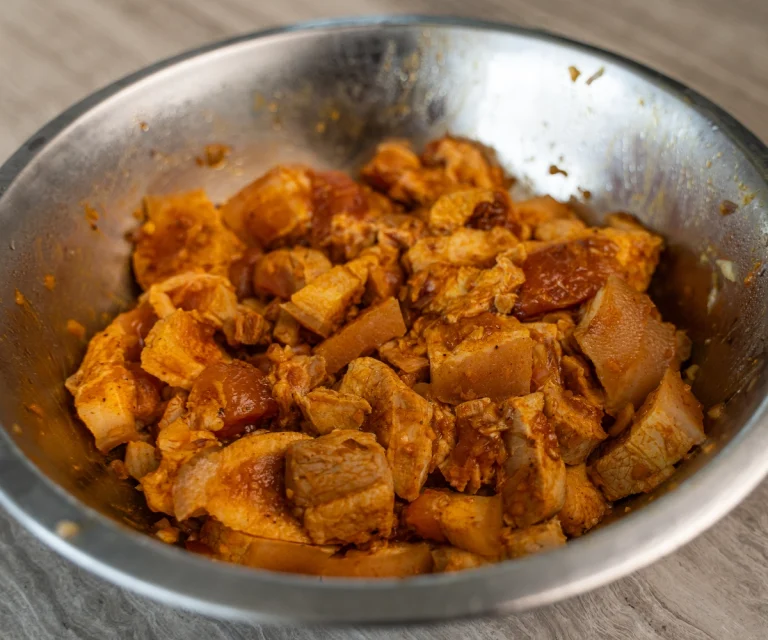
- While the broth is simmering, cut the pork belly into 1/2-inch pieces and marinate it with minced shallots, garlic, Dear Mam fish sauce, chicken bouillon, sugar, paprika, black pepper, turmeric powder, and annatto seed oil. Repeat the step for shrimp. Marinate for at least half an hour
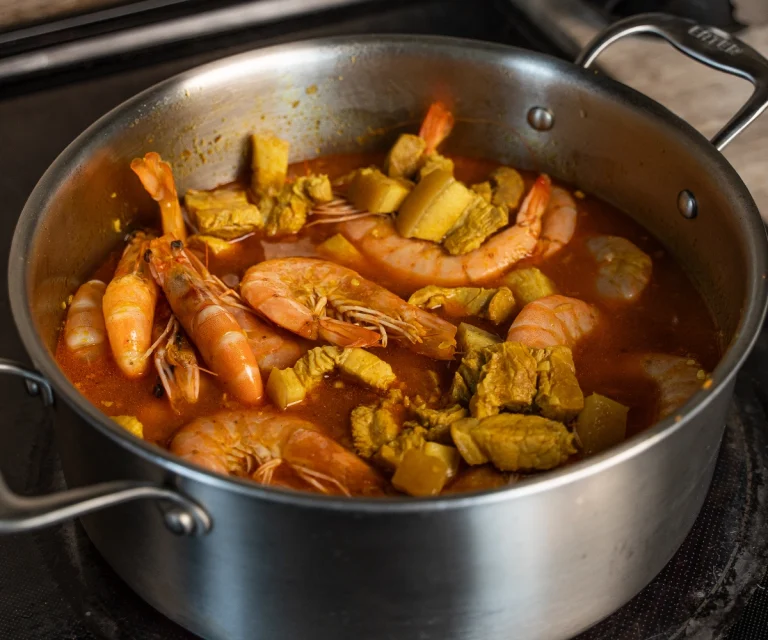
- To a pan, add annatto seed oil, and sauté pork belly. Then add in coconut water and shrimp and cook for another couple of minutes. Then, add just enough water to cover the proteins. Bring up to a boil and let that simmer for twenty minutes. Then add drained quail eggs. Remove shrimp to make sure you don’t overcook
- Cook the turmeric noodles according to package instructions, rinse in cold water, and toss in oil to prevent them from sticking to each other
- To assemble the bowl, add noodles, proteins, vegetables, and garnishes. Then add broth and spoon over the sauce
Did you make this recipe?
Tag @feedthepudge on Instagram and hashtag it with #feedthepudge
If you like this recipe, make sure you pin it!