
Com Ga Hoi An is one of the many different variations of the beloved chicken and rice dish that can be found all across Asia. This one, in particular, originates from Hội An, a historic city in the central, Quảng Nam Province of Vietnam. Gently poached chicken that’s been shredded is paired with fresh herbs, crunchy onions, and a fish sauce dipping sauce, all on top of a bed of fragrant turmeric rice cooked with chicken broth. Com Ga Hoi An is a beautiful dish that can be served for special occasions and family gatherings, but it is also easy enough to make that it can be eaten daily!
History of Com Ga Hoi An:
- Cultural Melting Pot: Hội An was a bustling international trading port from the 15th to the 19th centuries, attracting merchants from China, Japan, India, and Europe. This cultural diversity influenced the local cuisine, leading to the creation of unique dishes like Cơm gà Hội An.
- Chinese Influence: The dish is believed to have been influenced by Chinese culinary practices, particularly the method of poaching chicken and using the broth to cook rice, which imparts a rich flavor to the dish. The incorporation of fresh herbs reflects Vietnamese preferences for balanced and fresh flavors.

Development and Popularity
Traditional Preparation: The preparation of Cơm gà Hội An involves poaching the chicken to retain its moisture and tenderness. The broth from poaching is then used to cook the rice, which absorbs the flavors, making the dish more flavorful.
Local Ingredients: The dish makes use of ingredients readily available in the region, including free-range chickens, which are prized for their firm texture and rich flavor. The rice is often cooked in chicken broth with the addition of turmeric, which not only gives it a vibrant yellow color but also adds a subtle earthy flavor.

Hội An’s Free-Range Chickens: The free-range chickens, raised in the fertile lands around Hội An, are central to the dish’s identity. These chickens are smaller and have a firmer texture compared to industrially raised chickens, which adds to the dish’s appeal. (My recipe uses chicken quarters and breast that are easily accessible anywhere, and it’s much easier to process compared to whole chickens.)

Vietnamese Chicken and Rice / Com Ga Hoi An
4
servings30
minutes40
minutesIngredients
3 lbs 3 Chicken Quarter
1 lbs 1 Chicken Breast
Kosher Salt
- Broth:
3 quarts 3 Water
1/2 1/2 Onion
1 1 inch Knob of Ginger
1/2 1/2 inch Nob Rock Sugar
1 tbsp 1 MSG
2 TBSP 2 Rock Sugar
Green Onions
Cilantro
Black Pepper
- Chicken Salad:
Shredded Chicken
Onion
Vietnamese Coriander
Fried Shallots
- Lime Sauce:
1/2 tsp 1/2 Salt
1/2 tsp 1/2 Black Pepper
1 1 Lime (Juice)
- Turmeric Rice
3 cups 3 Washed Rice
3 cups 3 Chicken Broth
1 tbsp 1 Oil
1/2 tbsp 1/2 Turmeric Powder
- Fish Sauce Dipping Sauce (Nuoc Cham):
1/3 cup 1/3 Sugar
1/3 cup 1/3 Fish Sauce
1 2/3 cup 1 2/3 Filtered Water
5 5 Garlic Cloves
3 3 Thai Chilis
1 1 Lime (Juice)
- Garnish:
Fried Shallots
Directions
- Chicken and Broth:
- Scrub chicken with Kosher Salt, and rinse with water 2-3 times to remove chickeny odor. Add cleaned chicken to a pot with water
- Char half an onion and ginger on a dry pan, open flame, or broil in the oven. Add charred aromatics to the pot. Bring up to a boil, skim off the impurities, reduce to heat to simmer, and gently poach chicken for 15-30 minutes or until chicken reaches a safe internal temperature of 165F
- Remove the chicken and submerge it in an ice bath for 10 minutes to stop the cooking process and help the chicken retain its juicy texture. Shred by hand, then put aside
- Continue to simmer broth with aromatic for another 30-45 minutes. Discard aromatics, and reserve three cups of broth to cook rice with. Then season broth to taste with rock sugar, MSG, and fish sauce
- Turmeric Rice:
- Wash three cups of rice with cold tap water and then drain. Repeat this cycle 3-4 times or until the water mostly runs clear. Drain and put the rice in a wire mesh strainer and set aside
- In a frying pan on medium heat, add oil and turmeric powder. Mix well and thoroughly combine, then add washed rice. Toast rice for 3-4 minutes and fully coat rice with turmeric oil
- Add toasted rice to the rice cooker, and add chicken broth. Cook on standard white rice mode
- Lime Sauce:
- Combine salt, ground black pepper, and lime juice in a mixing bowl, then set aside.
- Chicken Salad:
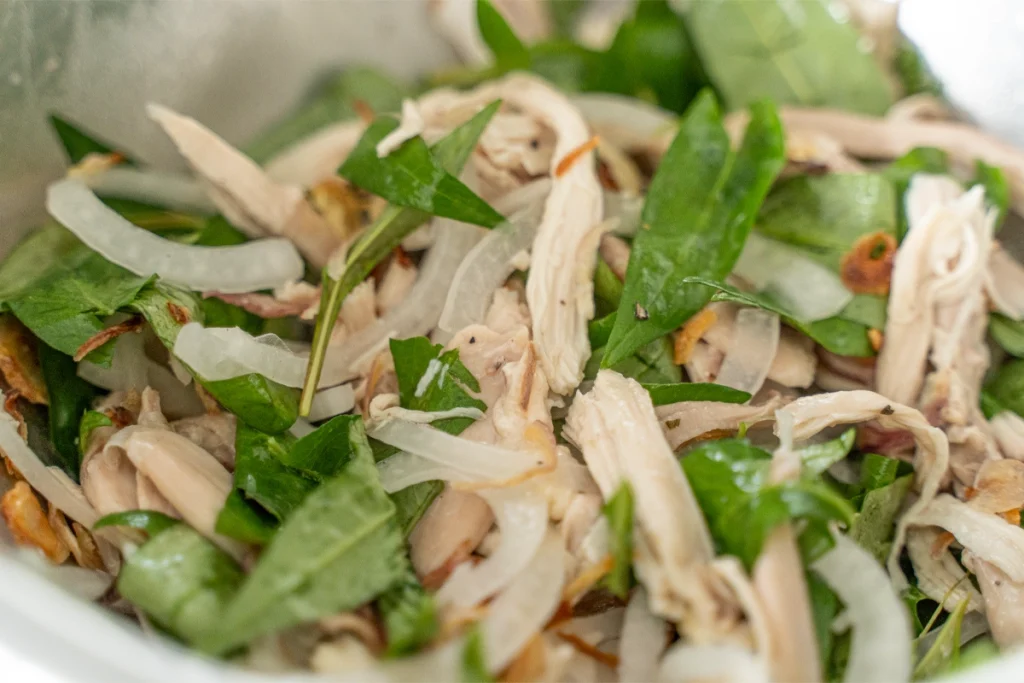
- Add thinly sliced white onions, Vietnamese coriander, shredded chicken, and fried shallots in a large mixing bowl. Toss generously with 2-3 tablespoons (or to taste) of lime sauce
- Fish Sauce Dipping Sauce:
- Combine sugar, fish sauce, and filtered water in a container or bowl. Add minced garlic, thinly sliced Thai chili, and juice of a lime. Mix well and serve in a dipping bowl alongside the chicken and rice
- Serve:
- To a plate or bowl, add turmeric rice and top with chicken salad, garnish with fried shallots. In a separate bowl, add seasoned chicken broth and garnish with chopped green onions, cilantro, and fresh ground black pepper. Serve with fish sauce dipping sauce, and enjoy!
Did you make this recipe?
Tag @feedthepudge on Instagram and hashtag it with #feedthepudge
If you like this recipe, make sure you pin it!

