
There is a certain kind of comfort that only a bowl of noodle soup can bring, and for me, there’s nothing quite like the comfort that comes from my mom’s Sup Nui Heo, a simple Vietnamese pork noodle soup that she would make whenever I needed a little warmth and care. It was the kind of meal that could make everything feel okay again, no matter what kind of day I was having. This recipe is similar to Vietnamese chicken noodle soup (Súp Nui Gà), but instead of chicken, the broth is built on the deep, savory flavor of pork bones. The beauty of soups like this one is that they are incredibly adaptable. You can use any kind of protein or vegetables you have on hand, making it a dish that feels both resourceful and homey. What I am sharing with you today is the foundation, the base recipe that you can build upon and make completely your own.
Choosing the Right Protein for Sup Nui Heo
For my recipe, I am using pork ribs and pork butt, a combination that gives the broth both depth and richness. When making sup nui heo, the key is to choose cuts that have bones because that is where all the flavor comes from.

Some great alternatives include:
• Pork hocks for a slightly gelatinous and hearty broth
• Pork spare ribs are cheaper and give you a balance of meat and bone
• Pork neck bones for that deep, meaty flavor
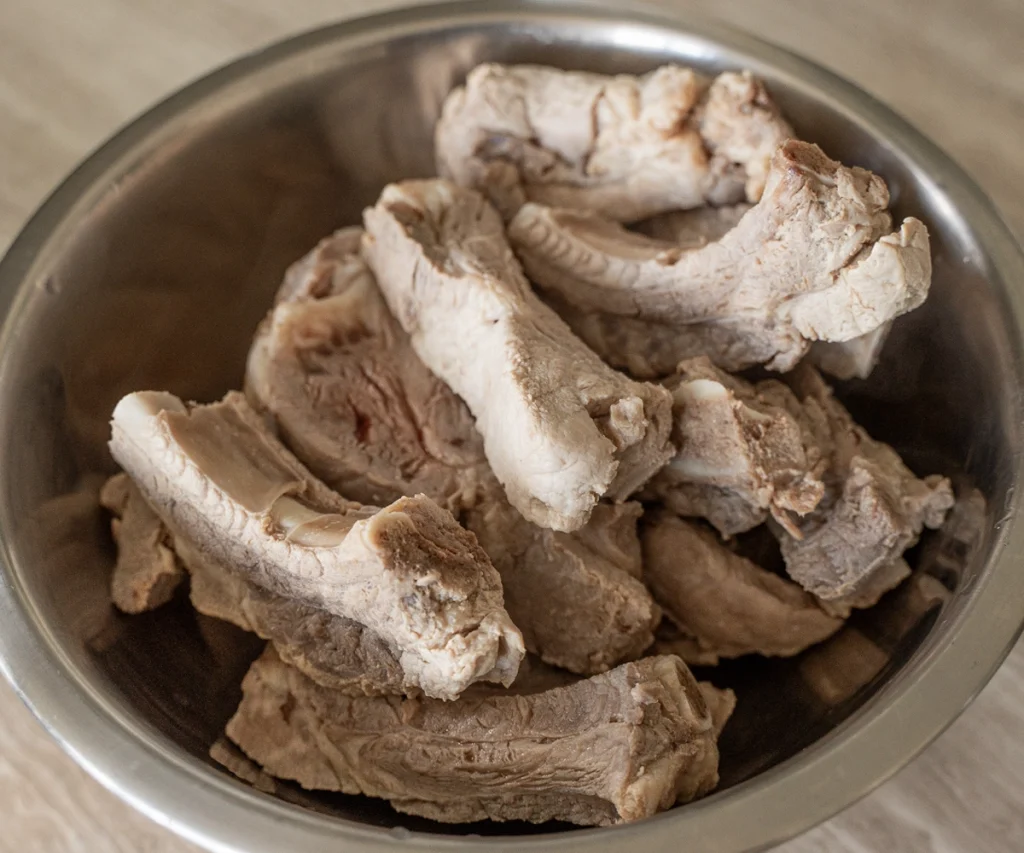
If you are not eating pork, no worries. This soup is just as delicious made with a whole chicken, or even beef bones if you want something richer and bolder. Regardless of the protein you choose, be sure to parboil the meat first. This step removes any scum or impurities, ensuring your broth remains light and clear. Bring a pot of water to a boil, add your protein, and simmer for five minutes. Then, discard the water and rinse the meat before starting your soup base.
Vegetables: Keep It Simple or Make It Your Own
Today, I’m keeping things simple by just using carrots. They add a touch of natural sweetness, add some nutrients, and pair perfectly with the pork. Now, one of the things I love most about soups like Sup Nui Heo is how flexible it can be. You can use just about any vegetable you have on hand.
Some of my favorite options are:
• Daikon or potatoes for heartiness
• Cauliflower or chayote for a lighter, refreshing flavor
• Winter melon for something mild and delicate
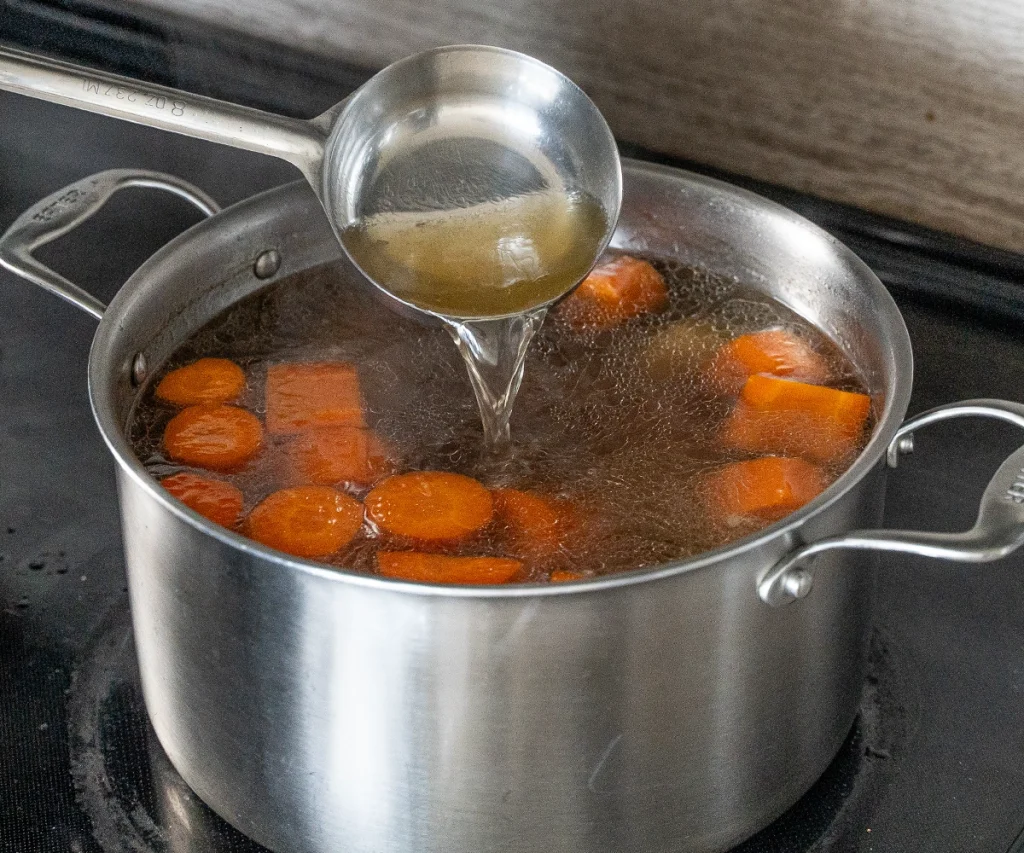
The key is to add your vegetables in stages, depending on how long each one takes to cook. Root vegetables, such as carrots and daikon, should be added first, as they take longer to soften. Meanwhile, lighter vegetables like cauliflower can be added toward the end to prevent them from becoming mushy.
Choosing the Right Macaroni
When it comes to noodles, Vietnamese macaroni is slightly different from what most people might expect. Instead of being made with just wheat flour like Italian pasta, Vietnamese macaroni is typically also made with rice flour, giving it a texture that is bouncier and chewier. It has this light, springy bite that soaks up the broth beautifully without ever getting too soft or mushy. For this recipe, I like using the Safoco brand, which is one of the more common Vietnamese brands you can find at Asian grocery stores.
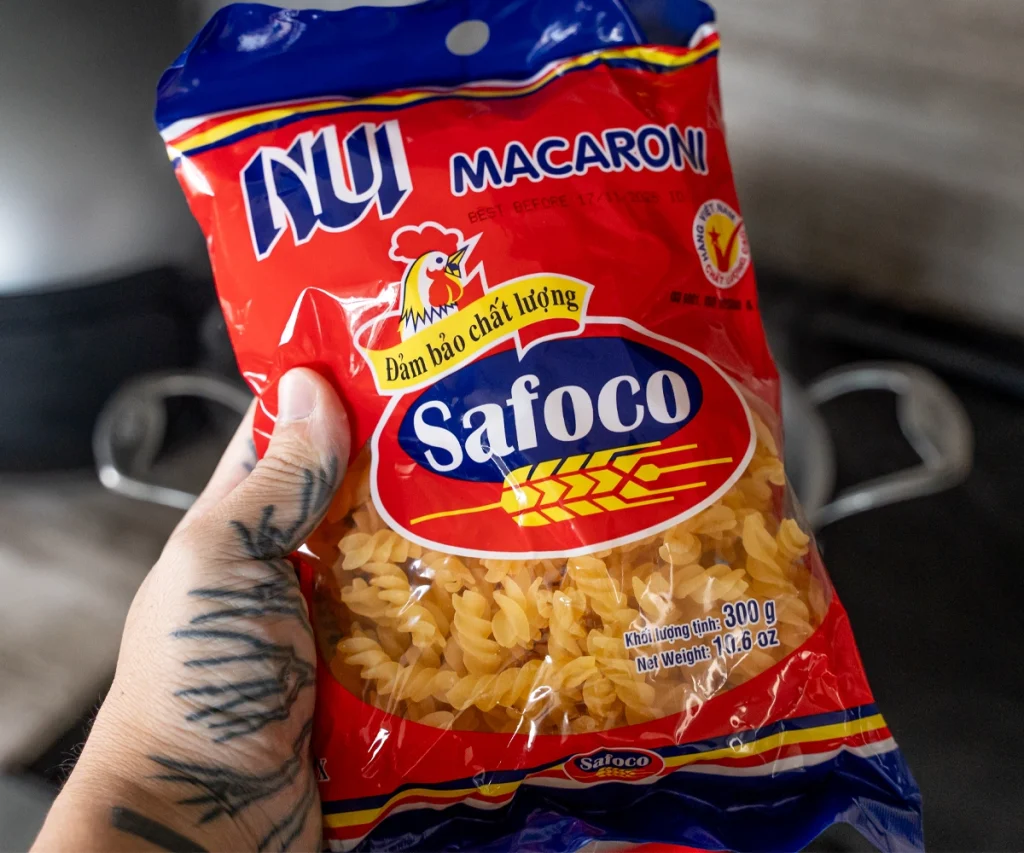
That said, I would not go out of my way to find it if it is not easy to get. The beauty of this soup lies in its flexibility; you can use any kind of pasta and any shape you have on hand, and it will still turn out incredible. Whether it is traditional macaroni elbows, small shells, or even penne, the broth and ingredients will do all the heavy lifting to make it delicious.

Sup Nui Heo / Pork Macaroni Soup
6-8
servings30
minutes2
hoursIngredients
4 quarts 4 Water
2 lb 2 Pork Bones
2 lb 2 Pork Butt
1 1 Yellow Onion
2 2 inch knob Ginger
3 Large 3 Carrots
1 inch 1 nub Rock Sugar
1 tbsp 1 MSG
3 tbsp 3 Fish Sauce
Salt to taste
- Macaroni:
18 oz 18 Vietnamese Macaroni
- Garnishes:
Cilantro, Chopped
Green Onion, Chopped
White Onion, Thinly Sliced
Thai Chili, Thinly Sliced
Black pepper
Directions
- Parboil the Pork Bones and Pork Butt:
- Start by bringing a large pot of water to a boil. Add your pork bones and pork butt, and let them boil for about 5 minutes. This helps remove any impurities and scum from the meat. After 5 minutes, drain the water and rinse the pork bones and pork butt under cool running water to wash off any residue. This step is important for keeping your broth clear and clean
- Prep the Aromatics and Veggies:
- Cut the onion and ginger in half. Char on a dry pan or over an open flame for 3-5 minutes
- Make the Soup:
- In a clean pot, combine 4 quarts of boiling water with cleaned ribs and pork butt. Bring to a boil, and skim off any impurities that rise to the top
- Add in the charred aromatics, reduce the heat to low, and simmer, covered, for 1 hour. Remove the aromatics and discard
- Continue simmering for an additional 30 minutes, or until the pork butt is tender. Remove and set in the fridge to cool. Cut into thin slices before serving
- Add in the carrots, and continue to let it simmer for another 10-15 minutes or until fork-tender
- Season the soup with rock sugar, MSG, and fish sauce. Stir gently to combine, and adjust seasonings as needed
- Cook the Macaroni:
- Cook Vietnamese macaroni in a pot of boiling, salted water according to the package’s instructions. Drain noodles in a colander and rinse with cold water to stop the cooking process
- Toss macaroni with a splash of oil to prevent the noodles from sticking together
- Serve:
- Add macaroni to a bowl, top with sliced pork butt, ladle in the soup and carrots. Garnish with chopped green onions, cilantro, thinly sliced white onions, Thai chilis, and fresh ground black pepper. Enjoy!
Notes
- Cook the Vietnamese macaroni all the way through, as rice flour macaroni cooked to al dente is very, very bouncy
Did you make this recipe?
Tag @feedthepudge on Instagram and hashtag it with #feedthepudge
If you like this recipe, make sure you pin it!


Simple and energizing.
When I was in middle school, my best friend’s mom was Vietnamese and she always hot a pot of soup ready – it’s how I fell in love with cilantro of all things. I lost touch with him and always wondered what some of them were specifically so I could make them myself. I tried this on a whim because I had all the ingredients and it was like that movie Ratatouille where the critic eats the dish and he’s immediately transported back in time, and what makes it special isn’t the taste but the amount of effort someone clearly put into it.
This is an easy one to make but it tastes like home and everything that comes with that. My compliments.
Hey Eric,
Thanks for the kind note. Food can be such an incredible thing when it’s able to take you back to another point in time, or remind you of when you first had a dish. I’m glad this was able to do that for you. I hope you give my other recipes a try!
Hey curious if the fish sauce can be substituted. I like fish sauce but my partner is not a fan so was wondering if I could make this in a way they would like
Hey Trevor, feel free to just use salt to taste instead. It won’t quite have the depth of fish sauce but should still be tasty