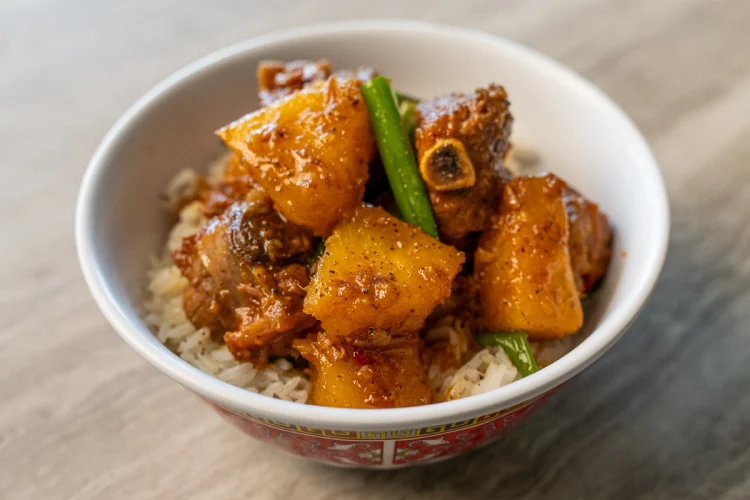
If you’ve spent any time on this page or any of my social media channels, you should already know that I have a soft spot for the dishes that never quite make it onto a restaurant menu. The kinds of dishes that typically take center stage at humble family meals instead. This Suon kho dua is exactly that kind of recipe. Another one of those classic Vietnamese plates you’ll almost never see when you go out to eat, because it lives at the heart of com gia dinh, the everyday family meal. It’s the kind of food my mom made for me as a kid, and to this day, it still carries all the warmth that comes with that.
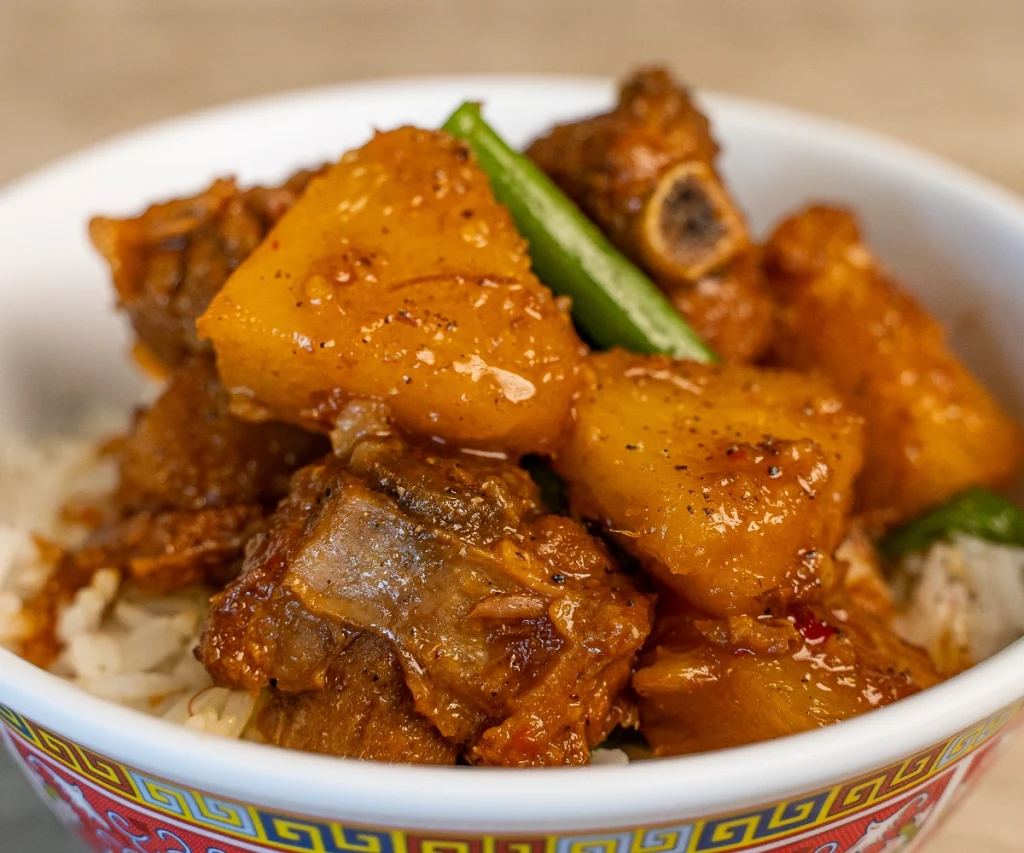
Thit kho, the broad family of caramel-braised dishes it belongs to, has a ton of different variations. The most popular ones usually feature pork braised with hard-boiled eggs or shrimp, and those will always have my heart. But this version has recently climbed its way into my list of new favorites. On top of the standard caramel braise that anchors nearly every thit kho, this one leans on pineapple in two ways. Pineapple juice goes into the braising liquid, where its natural enzymes tenderize the pork even further while folding in a bright, fruity sweetness. Then fresh pineapple chunks join near the end, and drink up all that glossy sauce until each piece bursts with flavor. For me, this dish is the epitome of the term “rice thief“, because, before you really even notice what’s happening, you’ll be reaching for bowl after bowl of rice just to keep up with this suon kho dua.
What Is Suon Kho Dua?
Let me break down the name because it tells you everything you need to know about the dish, and for most Vietnamese dishes, the name is a literal translation. So the word suon means ribs. Kho is a slow-braising method in which meat simmers in a caramel-and-fish-sauce base until it becomes savory, sweet, and tender. Dua is one of the Southern Vietnamese words for pineapple. You will also see this dish called suon kho khom or suon kho thom, depending on the Vietnamese dialect. Now, when you put it all together, you have pork ribs braised with pineapple.
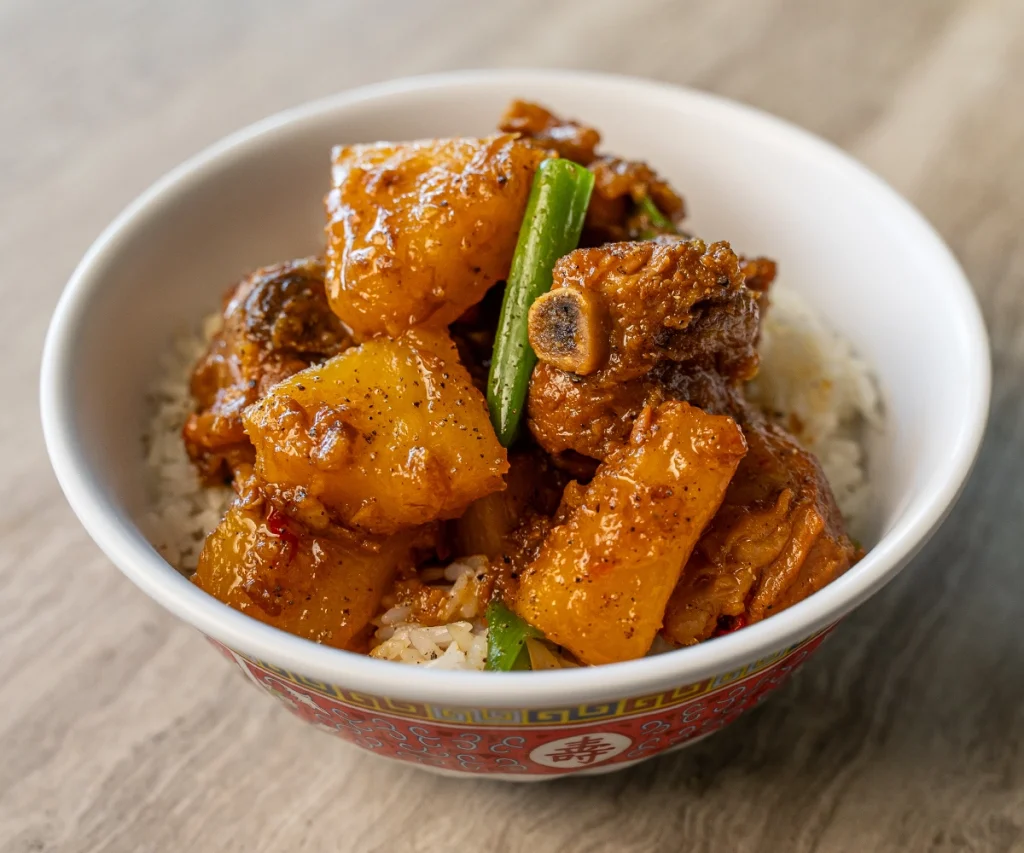
What sets this apart from the eggs or shrimp versions is that the pineapple pulls double duty in this recipe. The pineapple juice tenderizes and sweetens the braise from the inside, and the fresh chunks add pops of juicy brightness that cut right through the richness of the pork. This dish is the perfect balance between sweet, salty, savory, and a little tangy all at once, which is exactly why it disappears so fast.
Why You’ll Love This Suon Kho Dua Recipe
This is what genuine Vietnamese home cooking is all about. It’s delicious and approachable once you know the steps and techniques.
This dish is a rice thief in every sense of the phrase. The caramelized pineapple sauce was practically designed to be spooned over a hot bowl of jasmine rice, and you’ll understand the nickname the moment you take your first bite.
If you cook Vietnamese or Asian dishes regularly, this dish requires simple pantry-friendly ingredients. There is no long list of foreign or hard-to-find items here. A few aromatics, Dear Mam fish sauce, sugar, a can of Coco Rico, pineapple juice, and some fresh pineapple are really all the magic you need.
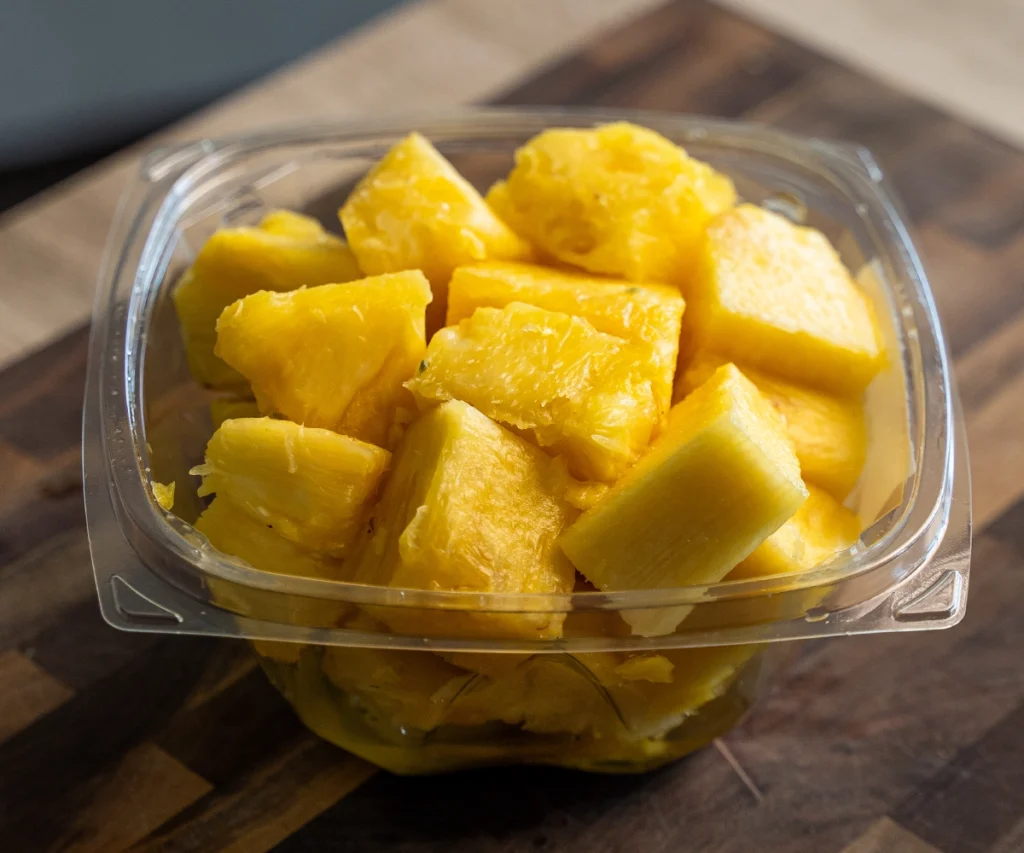
The pineapple does the majority of the heavy lifting. Between the juice in the braise and the fresh chunks at the finish, you get tenderizing power and a layered, sweet-and-tangy flavor without any fuss.
It tastes even better the next day. Like most kho dishes, the flavors deepen overnight, which makes this a dream for meal prep (not healthy, though!) and leftovers. In Vietnamese culture, kho dishes like this are typically made at the start of the week and eaten all week.
How to Make Suon Kho Dua
Parboil the ribs
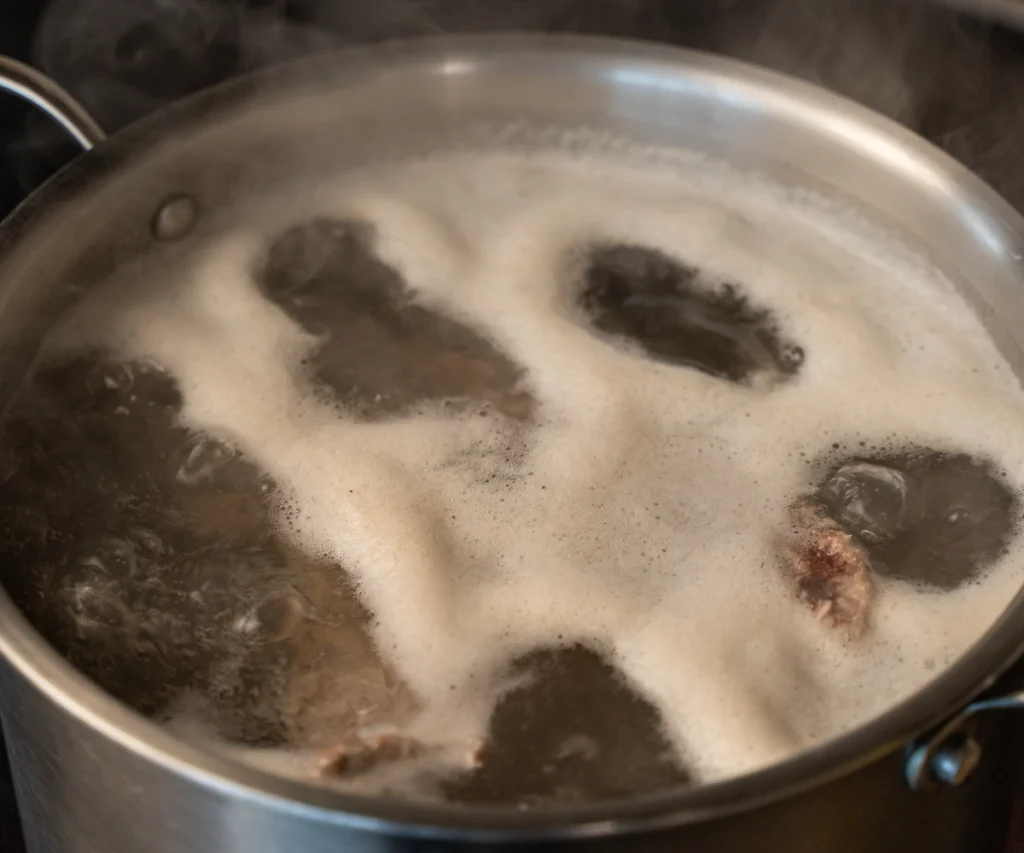
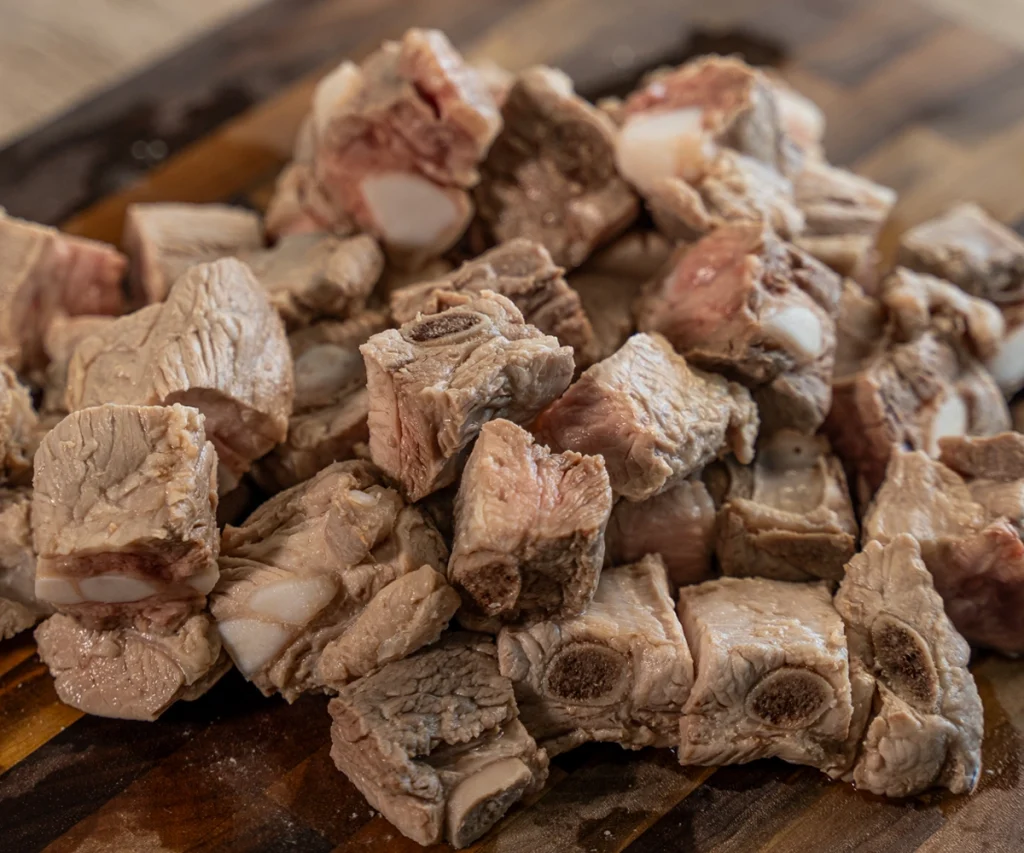
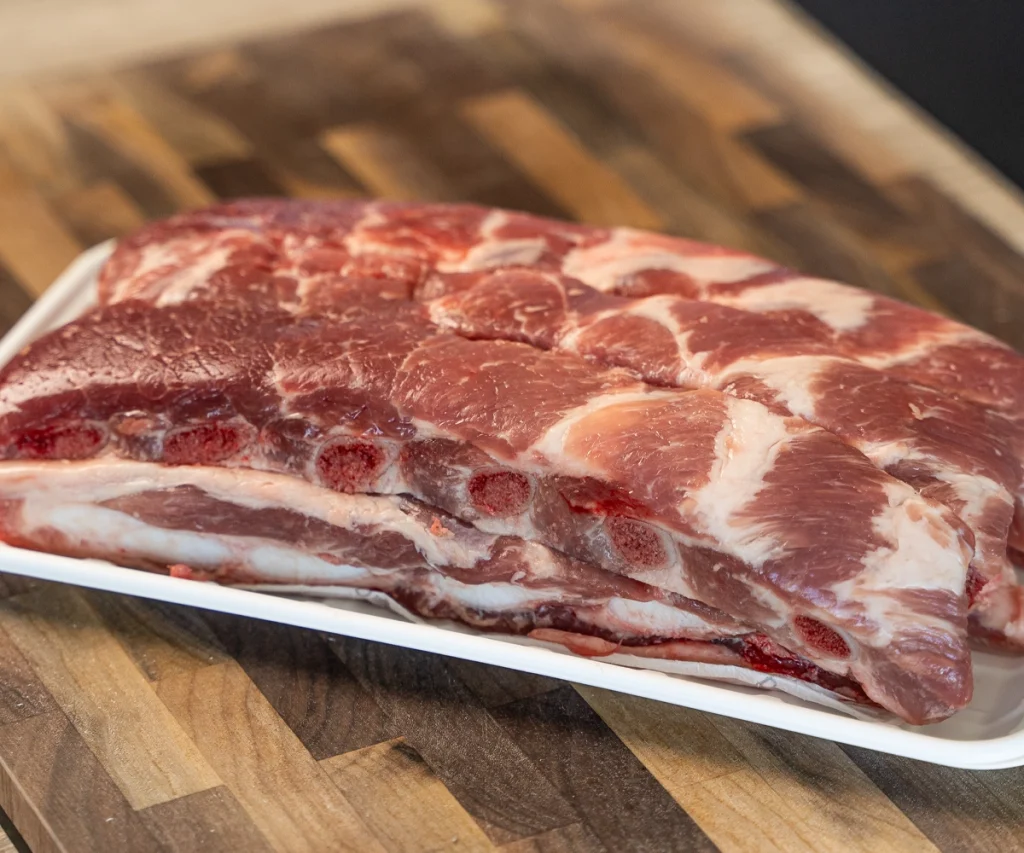
Rinse the pork spare ribs, then add them to a pot and cover with cold water along with a generous pinch of salt. Bring everything to a boil, then let the ribs parboil for about 5 minutes. You’ll start to see scum rise to the surface, and that’s exactly what we want to get rid of. Drain the ribs, rinse them well under cold running water, and scrub away any remaining bits of scum. Once they’ve cooled, cut the pork spareribs in between the bones into bite-sized pieces.
Make the nuoc mau (caramel)
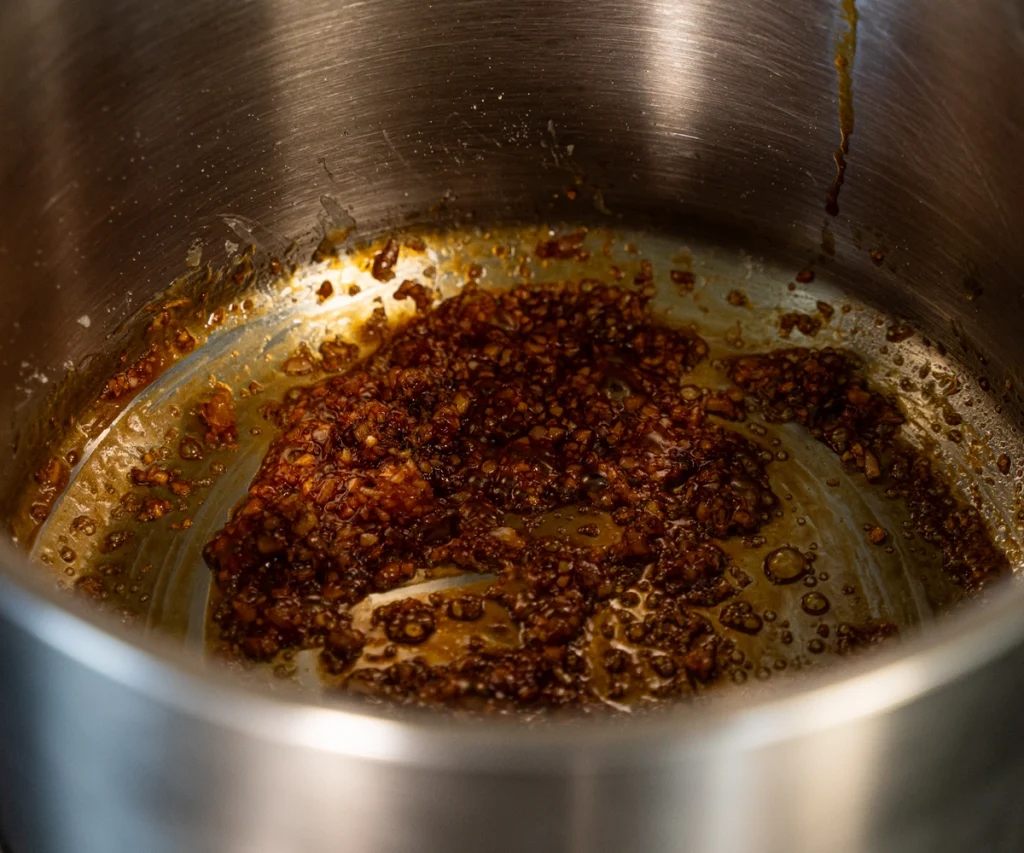
Nuoc mau is essentially just the Vietnamese name for caramel. It’s what gives the dish its signature color, sweetness, and slight smokiness. In a heavy pot or deep skillet on medium-low heat, add the three tablespoons of sugar. Let the sugar slowly melt, stirring occasionally to prevent it from burning. The sugar will initially harden and clump together before melting. Continue to cook the sugar until it turns a dark amber color. Keep a close eye on it because caramel can go from perfect to burnt in seconds. The moment it reaches a deep golden amber, pour in a tablespoon of oil to loosen it up. Stir well to combine, ensuring the sugar is dark but not burnt.
Sauté the aromatics and brown the spare ribs
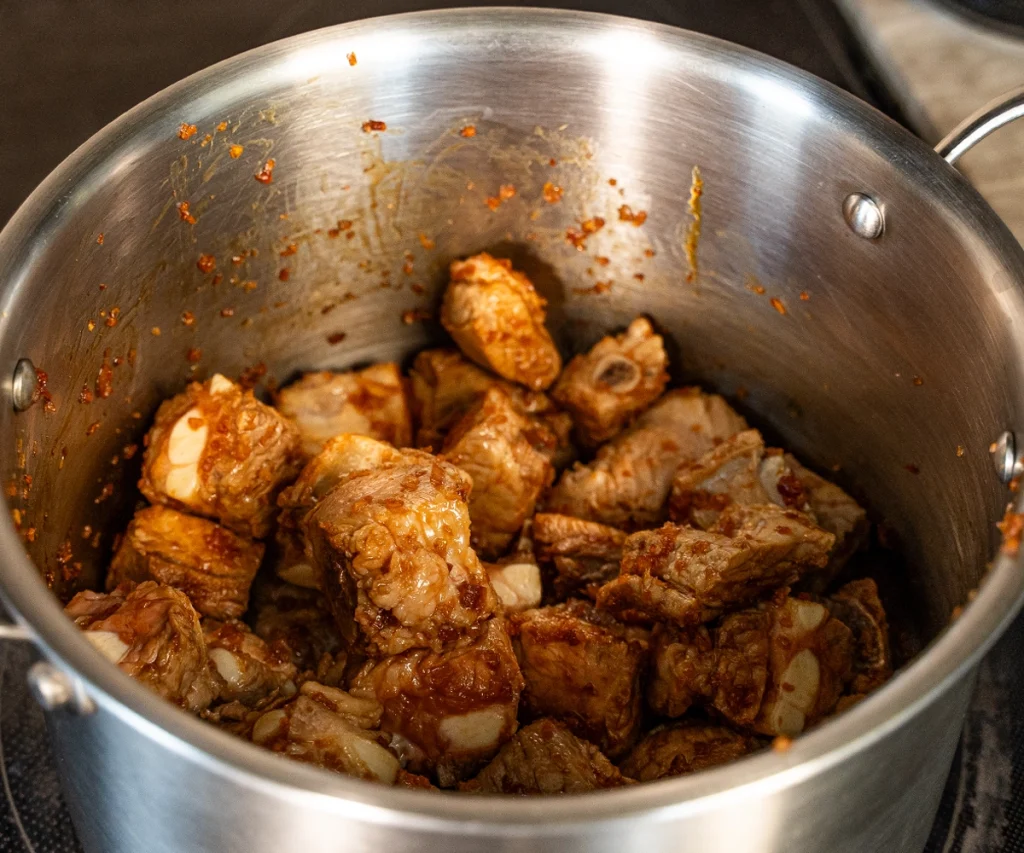
To the pot of nuoc mau, add in minced shallots and minced garlic. Sauté for 1-2 minutes or until fragrant. Add the cleaned pork spare ribs. Stir to coat every piece in that glossy syrup and let them sear for a few minutes until the pork picks up color and the kitchen starts to smell incredible.
Braise the pork
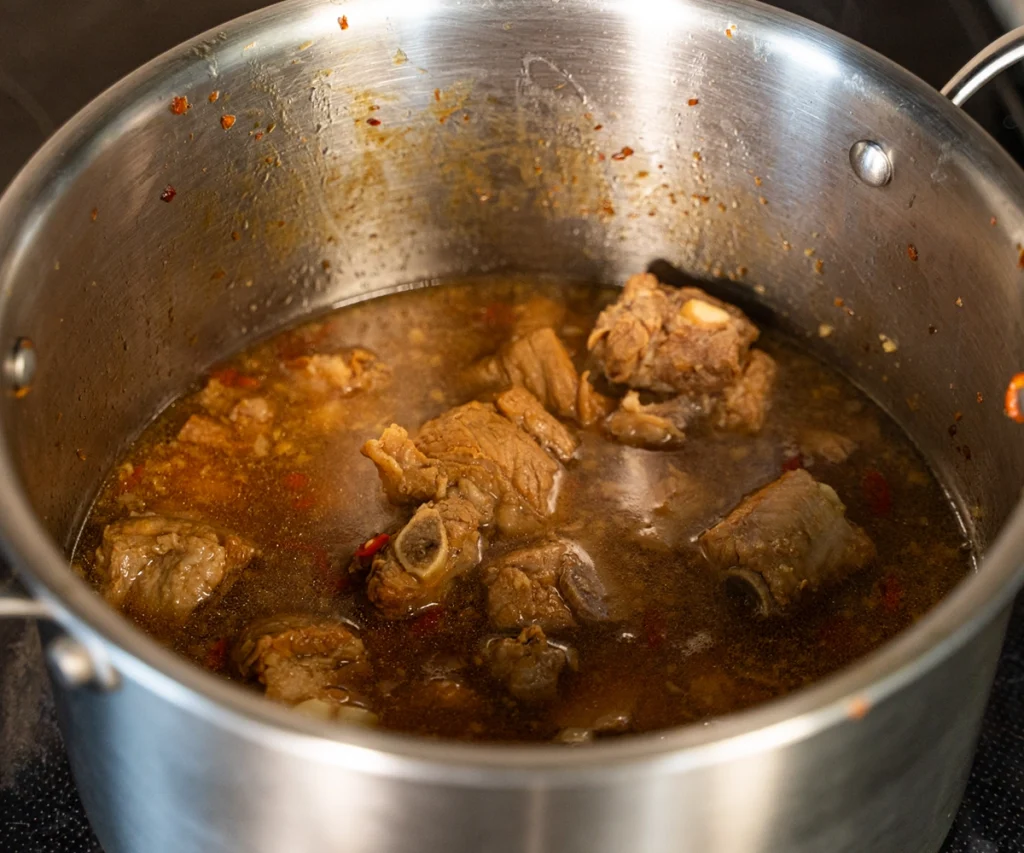
Season the pork spare ribs with Dear Mam fish sauce, and pour in the pineapple juice and Coco Rico. Stir everything together and bring it up to a boil. As soon as it boils, lower the heat to a gentle simmer, cover the pot, and let it braise for about 30 to 45 minutes or until the pork spare ribs are mostly tender but not falling apart.
Add the pineapple and reduce
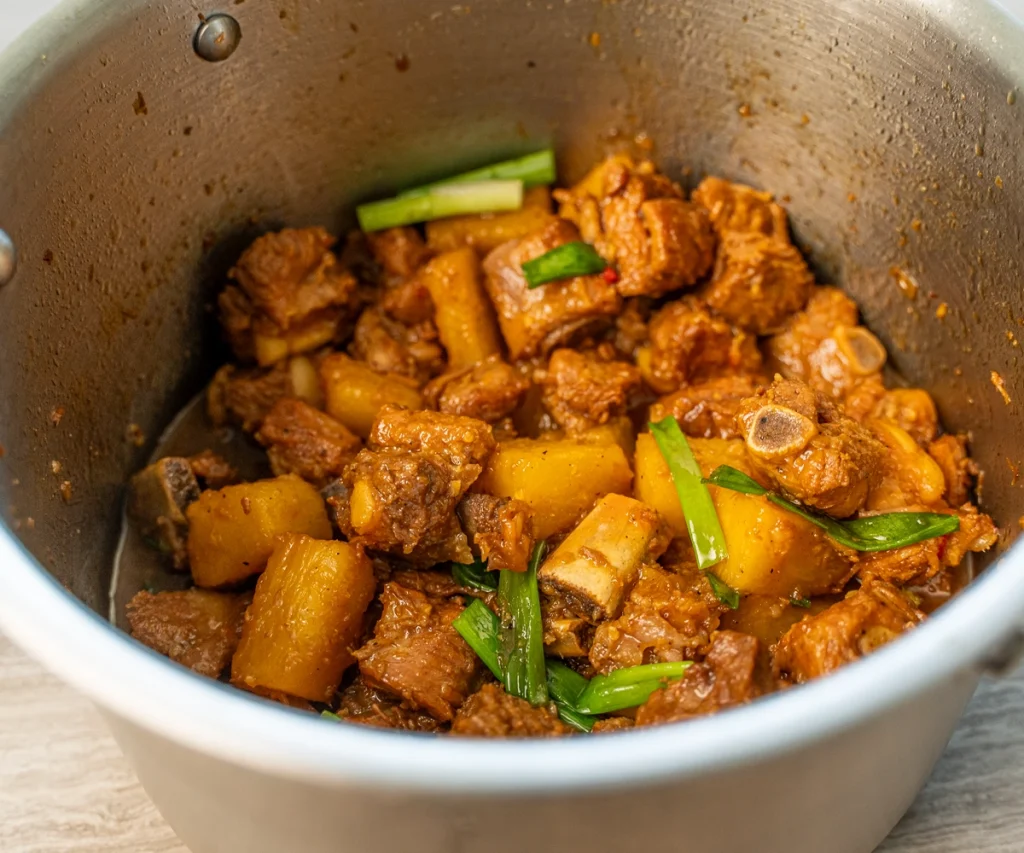
Once the ribs are tender, add the fresh pineapple chunks and let everything simmer, uncovered, for about 15 minutes. This does two things. It softens the pineapple just enough while keeping it bright, and it reduces the sauce into a thick, clingy glaze that coats every rib. Turn off the heat, then stir in the green onion sections. Make any final adjustments to the seasonings, and then it’s time to serve!
Serve
Spoon the pork spare ribs, pineapple, and that glorious sauce over a bowl of steaming jasmine rice and serve right away. Enjoy!
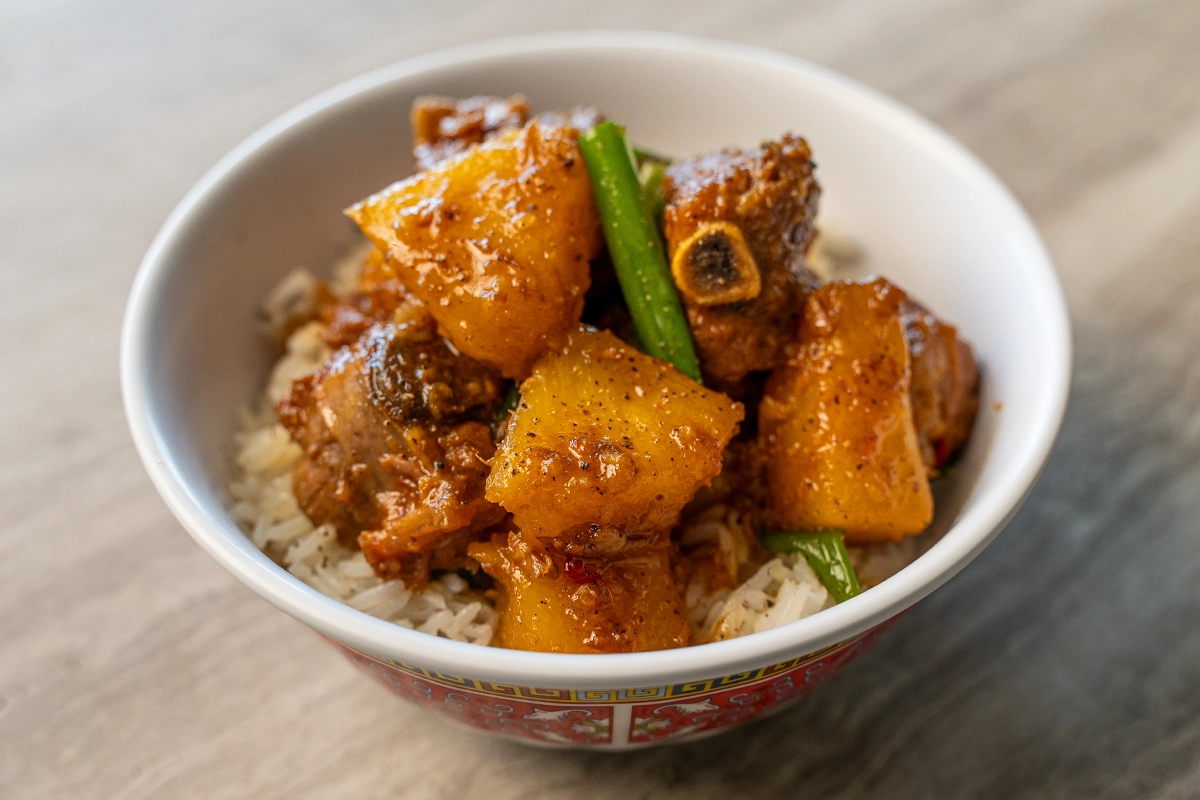
Suon Kho Dua / Pineapple Braised Spare Ribs
4-5
servings10
minutes40
minutesIngredients
2 lbs 2 Pork Spare Ribs
16 oz 16 Fresh Pineapple Chunks
1 tbsp 1 Minced Shallots
1 tbsp 1 Minced Garlic
1 1 bundle Green Onion
- Nuoc Mau (Caramel):
3 tbsp 3 Sugar
1 tbsp 1 Oil
- Sauce:
6 oz 6 Pineapple Juice
12 oz 12 Coco Rico
2 tbsp 2 Dear Mam Fish Sauce
Salt and Pepper to Taste
Directions
- Prepwork:
- Finely mince shallots and garlic. Cut green onions into 2″ sections. Parboil the pork spare ribs by adding them to a pot with cold water and a generous pinch of salt, then cover and bring to a simmer. Parboil for five minutes. Drain, rinse well under cold water, and scrub off any remaining bits. Once cool, cut the ribs between the bones into bite-sized pieces
- Make the nuoc mau:
- In a heavy pot over medium-low heat, add the sugar. Let it melt slowly, stirring occasionally. Gently cook the sugar until it turns a dark amber. Then stir in the oil to loosen it
- Cook the suon kho dua:
- Add the minced shallots and garlic to the caramel and sauté 1 to 2 minutes until fragrant. Add the ribs and stir to coat, then brown for a few minutes until they pick up color
- Season with Dear Mam fish sauce, then pour in the pineapple juice and Coco Rico. Bring to a boil, lower to a gentle simmer, cover, and braise 30 to 45 minutes until the ribs are mostly tender but not falling apart
- Add the fresh pineapple chunks and let it simmer, uncovered, for about 15 minutes, until the sauce reduces to a thick, clingy glaze. Turn off the heat and stir in the green onion sections. Adjust seasoning to taste
- Serve:
- Spoon the ribs, pineapple, and sauce over hot jasmine rice. Enjoy!
Did you make this recipe?
Tag @feedthepudge on Instagram and hashtag it with #feedthepudge
If you like this recipe, make sure you pin it!
Tips for the Best Suon Kho Dua
- Don’t rush the caramel. A proper nuoc mau should be a deep amber, almost on the edge of bittersweet. Too pale and your sauce will taste flat. Burnt, and it will turn harsh, ruining the dish. Watch it closely and trust your nose.
- Brown the pork spare ribs first before you braise them. Letting the ribs take on color in the caramel adds a savory depth and smokiness you simply cannot get by dumping everything in at once.
- Let the sauce reduce properly. The magic of any kho dish lives in that final reduction, when the liquid thickens into a glossy glaze. Be patient and let it get there.
- Taste at the very end. Pineapple can release a surprising amount of its own sweetness, so always season with salt, pepper, and a touch more Dear Mam fish sauce only after the sauce has reduced.
- Make it ahead. This dish tastes even better the next day, once the flavors have had time to settle, so it is even better in the next couple of days.
Frequently Asked Questions
Is suon kho dua the same as suon kho thom or suon kho khom?
Yes. They are all the same dish. The word for pineapple varies by region in Vietnam, so you’ll see dua, thom, and khom used interchangeably.
What is Coco Rico, and can I substitute it?
Coco Rico is a mild coconut-flavored soda that Vietnamese cooks love for braising. The carbonation and sugar help tenderize the meat and caramelize the sauce. If you cannot find it, coconut water, Sprite, or just water works well. Just keep in mind the sugar levels of each substitution and adjust accordingly.
What is nuoc mau?
Nuoc mau is a Vietnamese caramel sauce made by melting sugar until it turns a deep amber. It is not as sweet as caramel in a dessert. Instead, it is a lightly bittersweet syrup that gives kho dishes their signature dark color and savory-sweet depth.
What cut of pork should I use?
Pork spare ribs are perfect here, but you can also use pork belly, which adds melt-in-your-mouth richness and is closely related to the classic thit kho thom. Pork shoulder is a slightly leaner option that also braises well.
Why do I need to parboil the ribs?
Parboiling for a few minutes draws out impurities and any porky smell, leaving you with a cleaner-tasting dish and a clearer, more beautiful sauce. It is a small step that makes a real difference.


THANK YOU SO MUCH. I have been searching for this recipe for years. It was a one time meal I had at an acquaintance’s house. Nothing I searched for online was right. This is IT!
I’m so glad! When food can take you back to a different time or place, you know it’s going to be good. I hope you give my other recipes a try Julie!