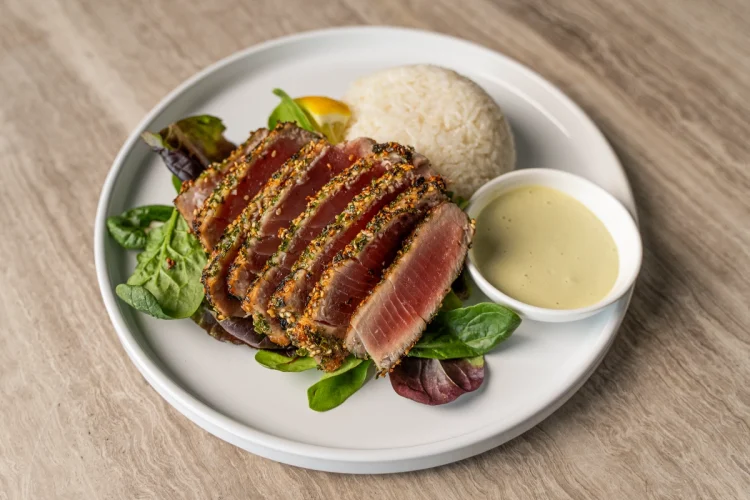
One of my best friends, Johnson, lived in Hawaii for a few years while he was in pharmacy school. When we flew out to visit him, he wasted no time pulling us around to all of his favorite spots around the island. Johnson had become a true local by that point, and the places he brought us to were the kind you only find out about through someone who actually lives there. One afternoon, after a long morning of snorkeling, our group stumbled into Fresh Catch in Honolulu, sun-soaked, salty, and absolutely starving. I wanted something comforting and satisfying without being heavy. The cashier pointed me straight to the seared ahi tuna, and I trusted her completely. What arrived in a styrofoam container was nothing short of stunning. The fresh ahi was coated completely in furikake and seared to absolute perfection. The outside had this gorgeous, savory crust, and the inside stayed buttery and rare. It sat simply over a bed of greens and white rice, with a cup of their savory aioli. That combination after a morning in the ocean? Completely perfect. It filled me up without weighing me down, and I thought about that plate for long after I came back home to Seattle.
Today, we are recreating the Seared Furikake Ahi at home, and the best part is that this recipe takes less than 10 minutes from start to finish. You don’t need any special skills or equipment. You just need great fish, good furikake, and a very hot pan.
What Is Furikake and Why Does It Make the Best Seared Ahi Crust?
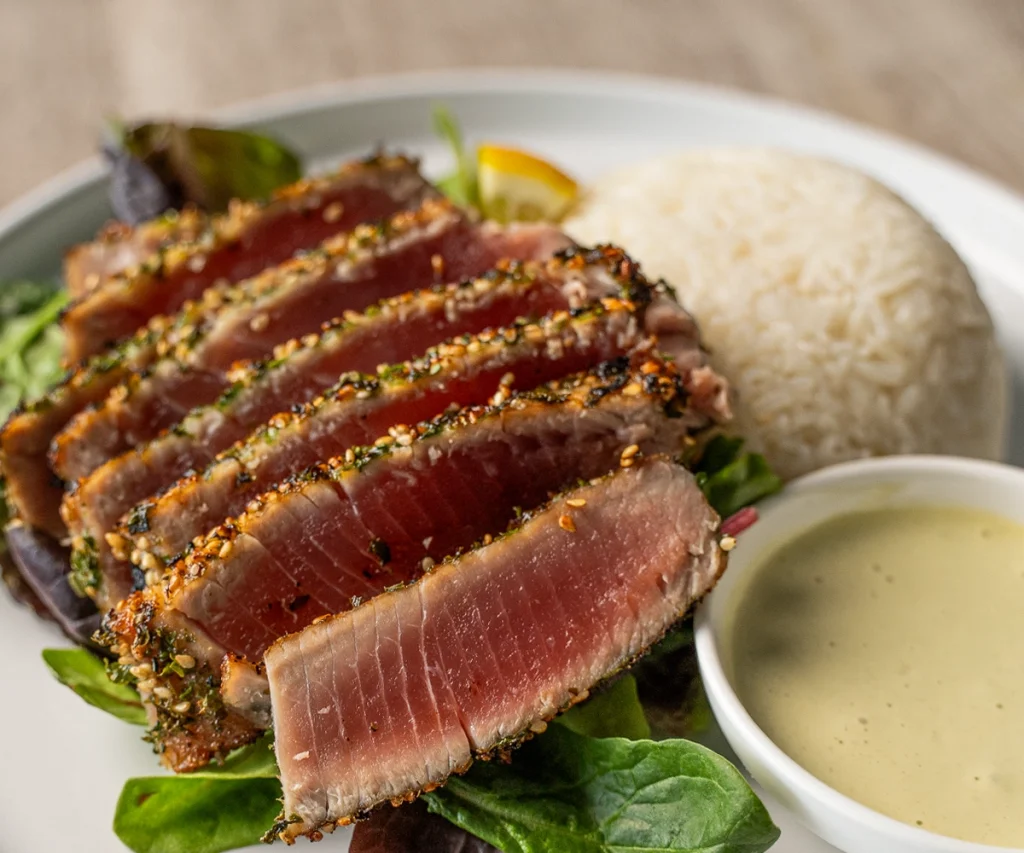
If you have never cooked with furikake, prepare for it to become a permanent fixture in your pantry. Furikake is a Japanese seasoning blend built around dried seaweed, toasted sesame seeds, and salt. Depending on the blend, it can also include dried fish, shiso, or a touch of sugar. It is traditionally sprinkled over rice, but when pressed onto a sushi-grade ahi steak and hit with a screaming-hot pan, it transforms into one of the most flavorful crusts you will ever eat.
The seaweed brings a deep, briny umami note. The sesame seeds toast instantly in the hot oil, turning nutty and golden. The result is a crust that is salty, savory, slightly sweet, and packed with flavor without overpowering the clean, fresh taste of the tuna underneath. This is exactly why furikake ahi tuna became a staple in Hawaiian cuisine, and why this recipe works so well at home.
How to Buy the Right Ahi Tuna for Searing
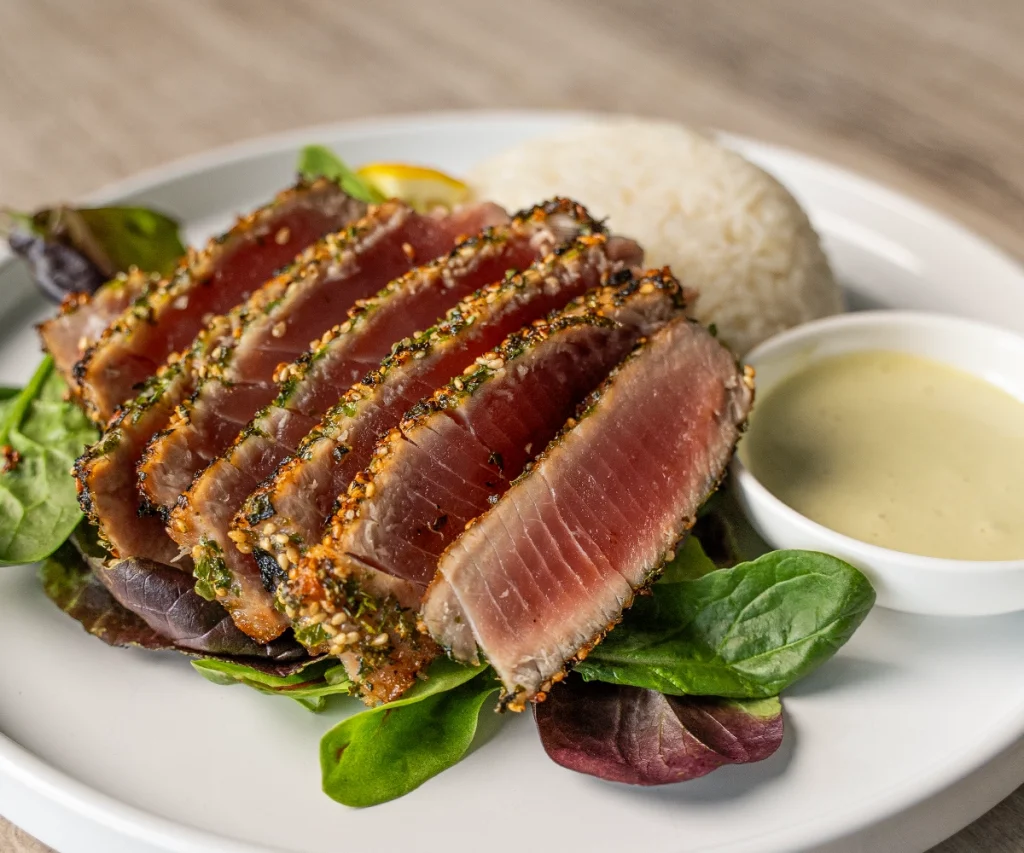
This recipe lives and dies by the quality of your tuna. Because we are searing the outside while keeping the center rare, you want sushi-grade or sashimi-grade ahi. Here is what to look for:
- Color: Deep red to vibrant pink with no brown or gray edges.
- Grade: Ask specifically for sushi-grade or sashimi-grade yellowfin ahi tuna. If your fishmonger sells sushi in-house, they almost certainly carry it.

- Frozen blocks: High-quality frozen saku tuna blocks are actually ideal. Flash-freezing eliminates harmful parasites and maintains excellent texture. Thaw overnight in the refrigerator before cooking.
- Thickness: Aim for steaks or blocks at least 1 inch thick. Thinner cuts cook through too quickly, and you lose that rare center.
The Secret to a Perfect Furikake Crust
A perfect sear on ahi tuna is all about heat and speed. You want the outside to cook fast and form a crust, while the center stays completely raw and silky. Here is how to nail it every single time:
Pat the fish completely dry
Moisture is the enemy of a good sear. Before you press a single sesame seed onto that tuna, pat it thoroughly dry with paper towels on all sides. This step makes a dramatic difference in how well the furikake adheres and how quickly the crust forms.
Press the furikake firmly
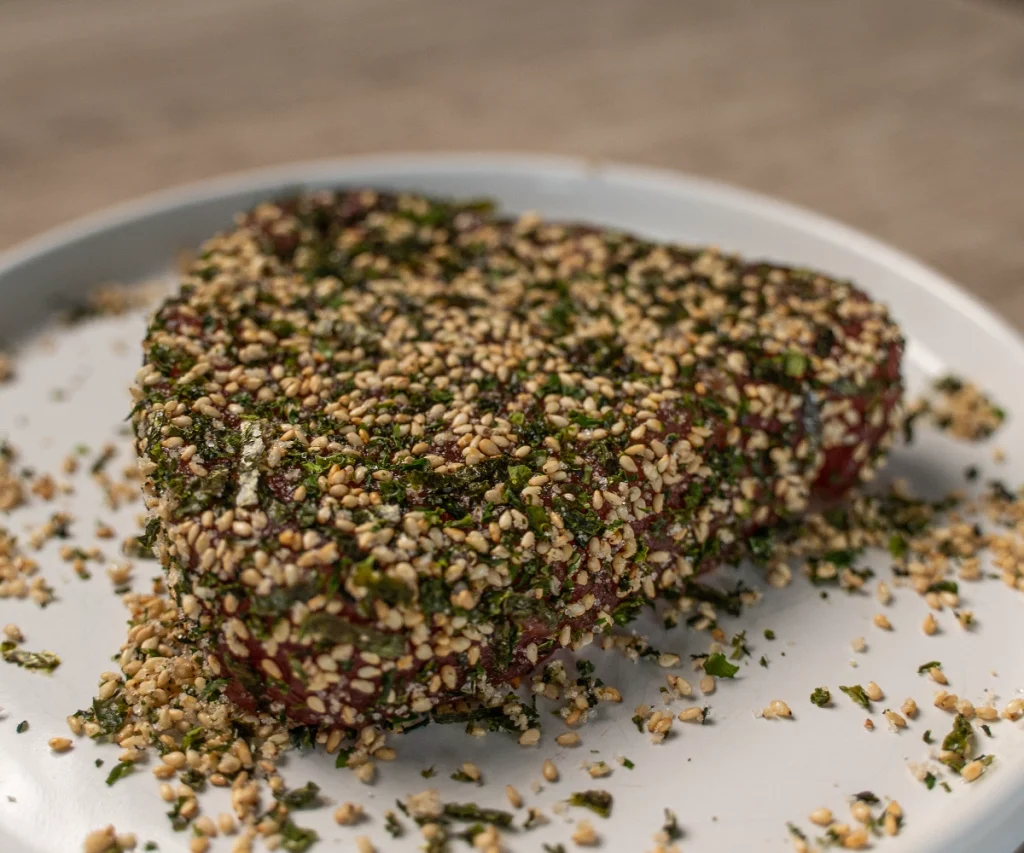
Do not just sprinkle furikake on top. Pour a generous layer onto a flat plate, then press the tuna firmly into it on all four sides. You want a solid, even coating that will hold together in the pan.
Use a high-smoke-point oil
Avocado oil or vegetable oil both work beautifully here. Avoid olive oil as it will burn at these temperatures.
Sear it fast and do not touch it
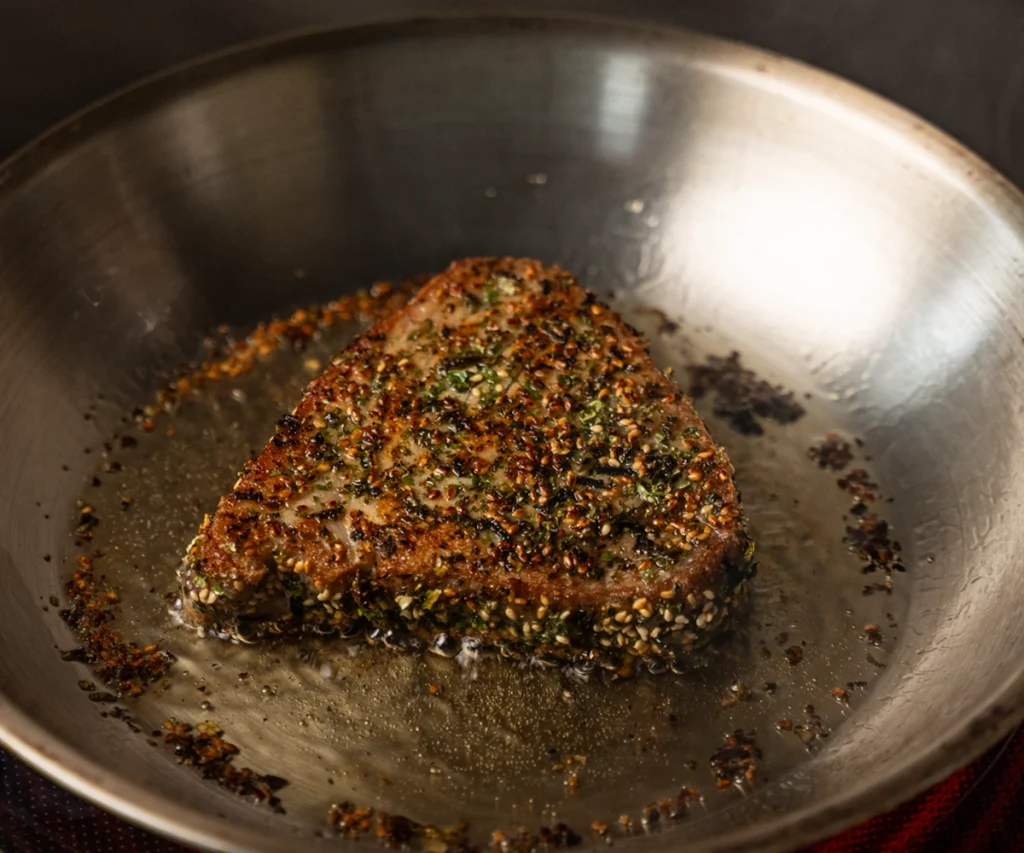
Place the tuna in the pan and leave it alone for 45 seconds per side. Resist every urge to move it. Let the crust develop and release naturally before you flip. Sear the furikake ahi on all sides until a complete furikake crust forms all the way around.

How to Serve Seared Furikake Ahi Tuna
Keep it simple and let the tuna be the star. Inspired by that unforgettable plate at Fresh Catch, here is the combination that works best:

- White rice: Steamed Japanese short-grain rice is the perfect base for our dish
- Mixed greens: A simple bed of greens adds freshness and cuts through the tuna’s richness.
- Aioli: Fresh Catch uses a ‘savory aioli’, but for my recipe, we’re using a wasabi aioli that pairs with the tuna amazingly
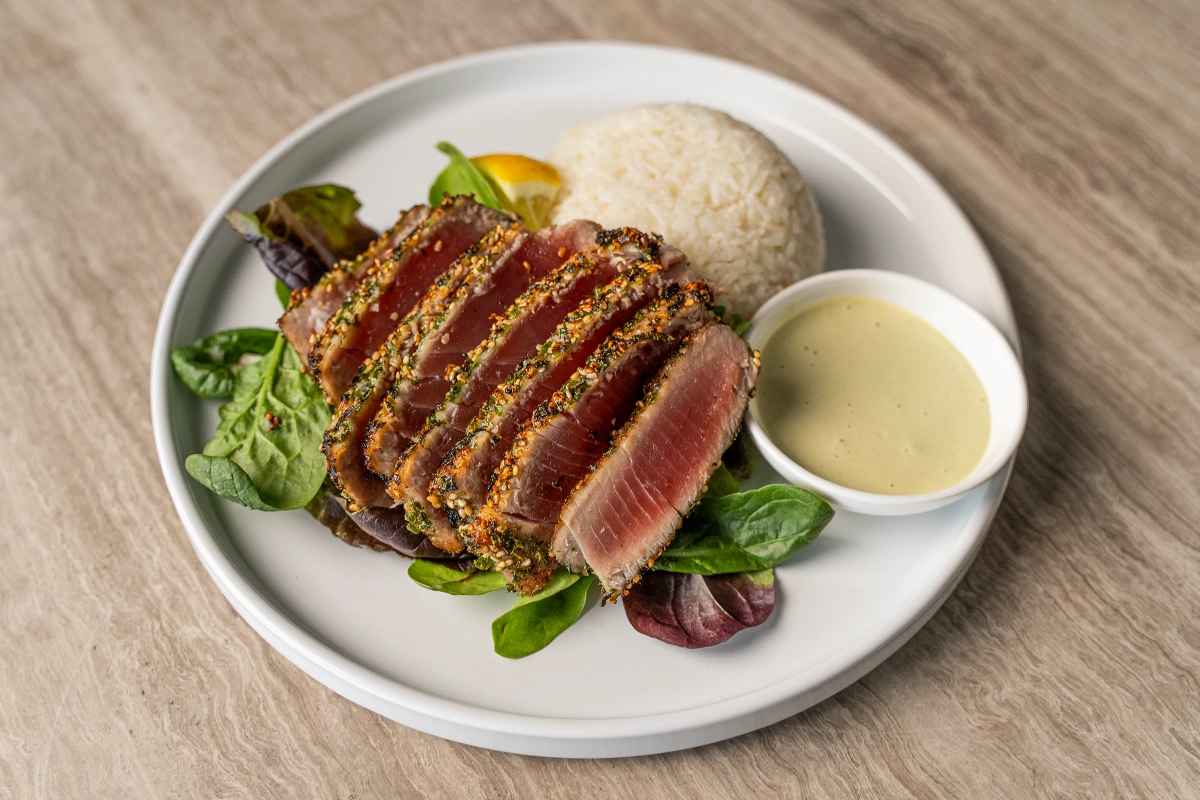
Seared Furikake Ahi with Wasabi Ailoi
2-3
servings5
minutes5
minutesIngredients
2 2 Ahi Tuna Steaks
2/3 cup 2/3 Furikake
3 tbsp 3 Oil
- Wasabi Aioli:
1/2 cup 1/2 Kewpie Mayo
1 tbsp 1 Wasabi Paste
1/2 tbsp 1/2 Soy Sauce
1/2 tsp 1/2 Rice Wine Vinegar
1 tbsp 1 Oil
- Accompaniments:
Cooked White Rice
Mixed Greens
Lemon Wedges
Directions
- Wasabi Aioli:
- Combine the Kewpie mayo, wasabi paste, soy sauce, rice wine vinegar, and oil in a food processor. Blend until everything is fully incorporated and smooth. Taste and adjust seasonings to your liking
- Cover and refrigerate until ready to serve
- Seared Furikake Ahi:
- Pat both ahi tuna steaks completely dry with paper towels on all sides
- Pour the furikake onto a flat plate. Press each tuna steak firmly into the furikake on all four sides and both ends, coating the fish completely and evenly. Press down firmly so the seasoning really adheres to the surface of the ahi
- Heat a heavy pan over high heat. Add the oil and let it heat until it shimmers. Carefully lay the tuna steaks into the pan. Sear without moving them for 45seconds until a deep golden crust forms on the bottom. Flip and sear the other flat side for another 45. Using tongs, hold each steak upright to sear all four edges for about 20-30 seconds each
- Transfer to a cutting board and rest for one minute. Using your sharpest knife, slice thinly against the grain
- Serve immediately over rice and greens. Pair with wasabi aioli and a wedge of lime. Enjoy!
Did you make this recipe?
Tag @feedthepudge on Instagram and hashtag it with #feedthepudge
If you like this recipe, make sure you pin it!
Frequently Asked Questions
Can I use regular tuna instead of sushi-grade ahi?
For a seared preparation in which the center remains rare, sushi-grade or sashimi-grade ahi is essential for food safety. If sushi-grade tuna is not available near you, look for a high-quality frozen saku tuna block online or ask at a local sushi restaurant. They often sell blocks directly to customers.
What is the best furikake brand for seared ahi?
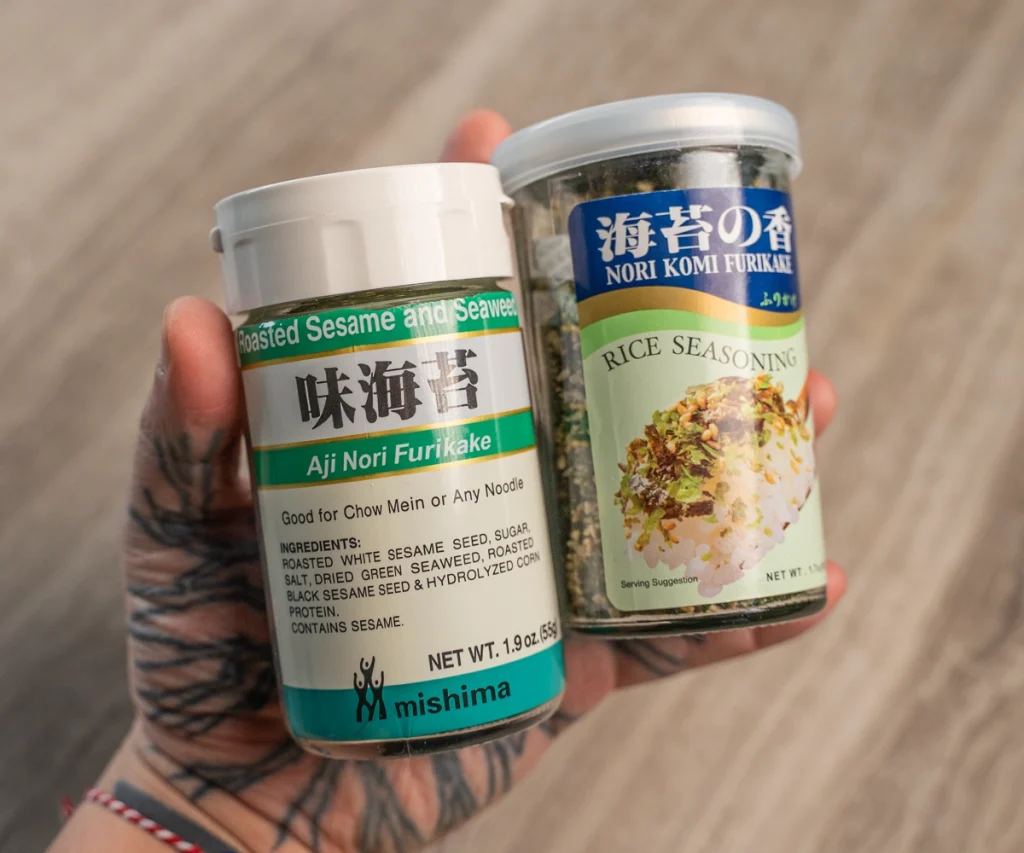
Mishima’s Nori Komi Furikake is a popular go-to for this recipe because of its clean, simple ingredient list of seaweed and sesame seeds. You can find it at most Asian grocery stores or online. Any simple furikake without heavy added flavorings works well for coating ahi.
Can I cook ahi tuna well done?
You can cook it to any doneness you prefer. That said, ahi tuna reaches its best texture and flavor at rare to medium rare. Cooking it all the way through results in a drier, less silky piece of fish and in the loss of much of what makes it special.
Can I make this ahead of time?
Seared ahi tuna is best served immediately after cooking. If needed, you can sear the block whole and refrigerate it. Slice it cold just before serving as part of a salad or bowl. Cold seared ahi on a bed of greens with aioli is actually a fantastic option.

