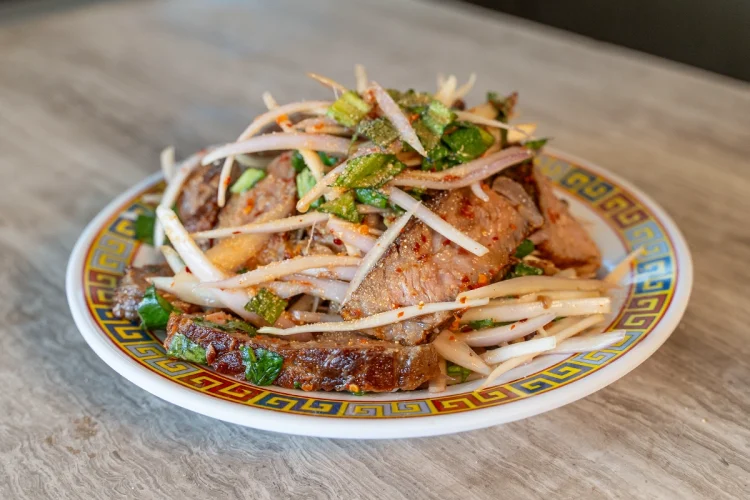
I’ve been completely obsessed with Nam Tok, also known as Thai Waterfall Beef, lately. There’s something about the bright, tangy, and herb-forward flavors of this dish that pairs perfectly with juicy steak, which I just can’t get enough of. To me, it embodies everything I love about Southeast Asian cuisine: the perfect balance of sour lime, savory fish sauce, fragrant herbs, and a little bit of spice to tie it all together. The best part is that it is surprisingly simple to prepare and comes together in under 30 minutes. Whether you serve it as a light appetizer to share or pair it with rice for a hearty main course, nam tok is one of those dishes that always feels effortless yet impressive.
What is Nam Tok?
Nam tok translates to “waterfall” in Thai, and the dish derives its name from the sizzling sound the beef makes as its juices hit the grill, evoking the sensation of a waterfall. Traditionally, it is made with grilled beef, such as sirloin or flank steak, that is sliced thin and tossed with a mixture of lime juice, fish sauce, roasted rice powder, shallots, fresh herbs, and chili flakes. The result is a bright and vibrant dish that highlights the beauty of contrast in Southeast Asian cooking.
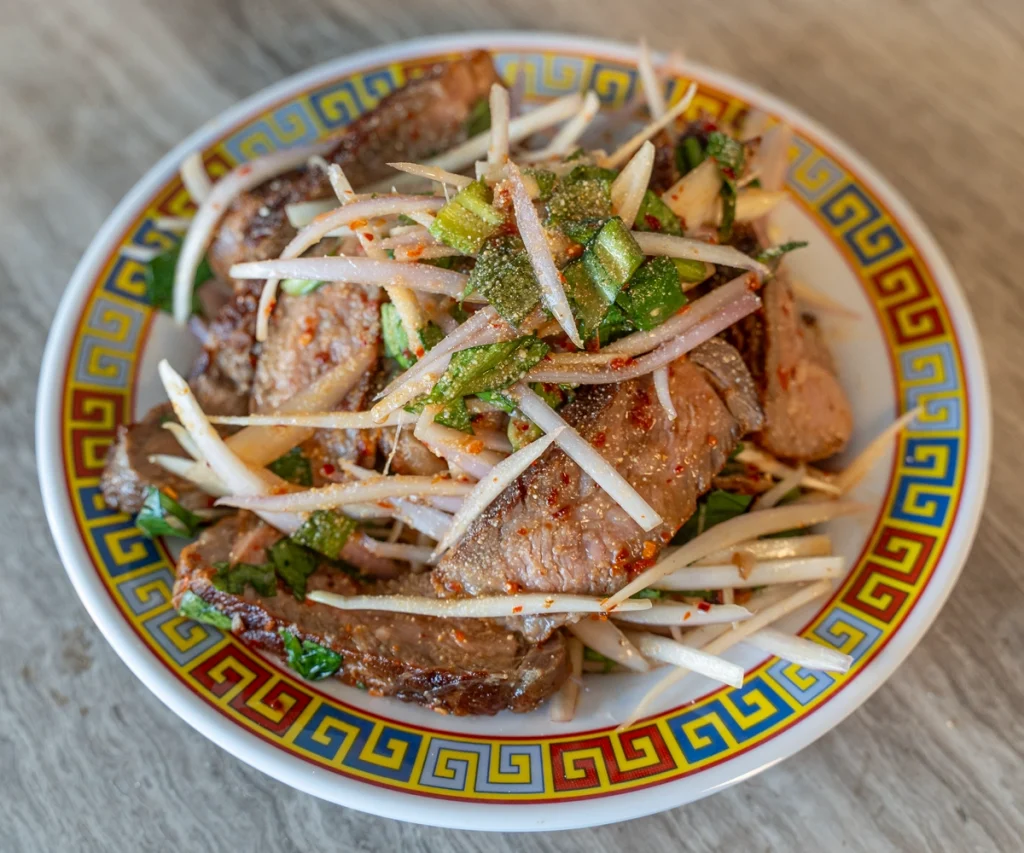
Nam tok is often compared to Steak Laab (Laab Neua); both dishes share the same core seasonings, including lime, fish sauce, chili, and herbs, and both utilize toasted rice powder to add a signature nutty flavor and subtle texture. The main difference lies in the preparation. Laab is often made with minced meat, while Nam Tok uses grilled slices of beef, which gives it a more substantial bite and a smoky charred depth that pairs beautifully with the brightness of the dressing. The history of Nam Tok is tied closely to the Isaan region of Northeastern Thailand, a part of the country heavily influenced by its proximity to Laos. In fact, many food historians believe that Nam Tok shares its origins with Lao laap (larb), a dish that is considered the national dish of Laos. Over time, the flavors have traveled across borders, weaving their way into neighboring cuisines, such as Cambodian, Vietnamese, and even some Chinese border regions.
Regional differences and similarities
This cross-pollination of flavors is a hallmark of Southeast Asian cuisine. Ingredients such as lime, fish sauce, fresh herbs like mint, cilantro, and Thai basil, chilies, and toasted rice are staples across Thailand, Laos, Cambodia, and Vietnam. Each culture might emphasize certain aspects differently, sometimes more herbs, sometimes more heat, but the underlying philosophy is the same: creating balance through layers of flavor and texture.

Nam Tok is a perfect example of how these regional cuisines overlap and influence one another. At first glance, it might remind you of a Vietnamese bò tái chanh, a rare beef salad, or even a Cambodian pleah sach ko, but each version has its own distinct identity. That is what makes these dishes so exciting, familiar yet distinct, and always hitting those high notes of sour, salty, spicy, and fresh.

Nam Tok / Waterfall Beef
2-3
servings15
minutes15
minutesIngredients
1 1 Lean Steak, like Sirloin, New York, or Flank
1/2 tsp 1/2 Salt
1 tbsp 1 Oil
2 tbsp 2 Butter
- Sauce:
1 tbsp 1 Fish Sauce
1/2 tbsp 1/2 Sugar (Optional)
1 1 Lime, Juice
1/2 tbsp 1/2 Crushed Dried Thai Chili
1 tbsp 1 Toasted Rice Powder, See Below
- Toasted Rice Powder:
2 tbsp 2 Uncooked Sticky Rice
4 4 Lime Leaves
- Herbs:
1 large 1 Shallot
1/4 cup 1/4 Culantro
Directions
- Prep:
- Start by dry-brining your steak. Rub it generously with salt and let it sit uncovered in the fridge for at least an hour. If you have time, leaving it overnight is even better. The salt will draw out excess surface moisture, which helps the steak develop a beautiful crust when seared, while keeping the inside tender and juicy
- Next, prepare the toasted rice powder. Place uncooked sticky rice and lime leaves in a dry pan over medium-low heat. Toast for about 5 to 7 minutes, stirring often, until the rice turns golden and fragrant. Remove and discard the lime leaves, then allow the toasted rice to cool. Once cooled, grind it into a fine powder using a spice grinder
- Slice the shallots thinly along the grain into strips. To mellow out their pungency, you can soak them in cold water for about 5 minutes. Roughly chop the culantro and set it aside
- Cook the Steak:
- Heat a pan over high heat and add a splash of oil. Place the steak in the pan and sear until it develops a deep crust, about 3 to 5 minutes per side, depending on the thickness and your preferred doneness. Once seared, lower the heat, add a knob of butter, and baste the steak on both sides. Remove it from the pan and let it rest for several minutes before slicing
- Make the Sauce:
- While the steak is resting, whisk together fish sauce, sugar, lime juice, crushed dried Thai chili, and the toasted rice powder
- Put It All Together and Serve:
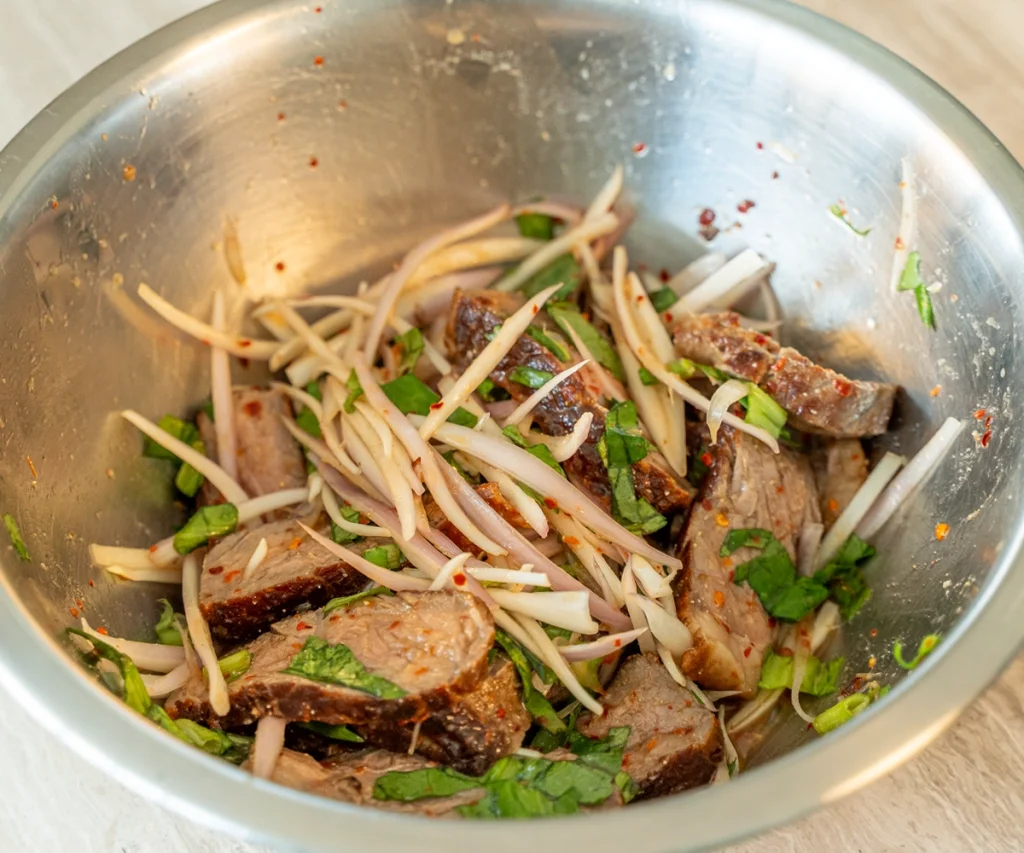
- Thinly slice the rested steak against the grain and place it in a mixing bowl. Add the sliced shallots, and chopped culantro. Pour the dressing over the beef and toss everything until evenly coated
- Serve Nam Tok by itself or with rice and fresh vegetables. Enjoy!
Did you make this recipe?
Tag @feedthepudge on Instagram and hashtag it with #feedthepudge
If you like this recipe, make sure you pin it!

