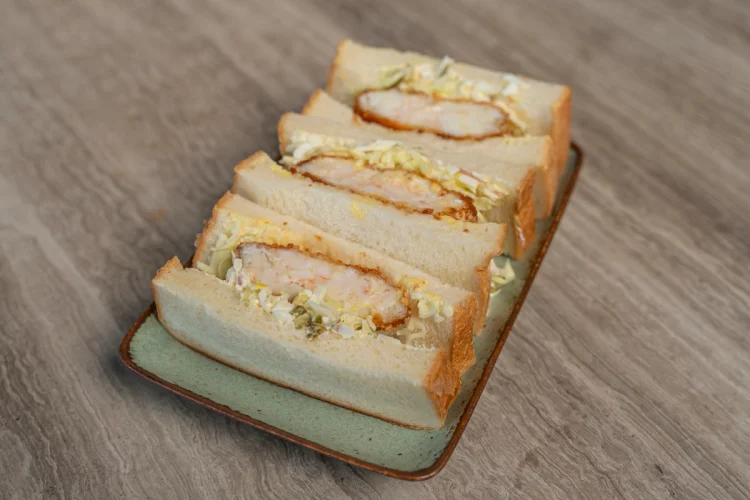
The very first time I ate an Ebi Katsu Sando, I stood at a tiny counter in Tokyo, eyes closed, completely ignoring the people around me. A crispy, golden shrimp patty inside cloudlike shokupan bread, slicked with tangy tartar sauce and fresh shredded cabbage. It tasted like someone had taken all the best ideas from Japanese street food and compressed them into a single, perfect bite. In that very moment, I decided I needed to master this at home! This recipe is the result of many, many test batches, far too much panko, and an obsessive commitment to texture. This is the kind of recipe that earns you the “you need to open a restaurant” comment every single time.

What Is an Ebi Katsu Sando?
Ebi katsu sando (エビカツサンド) is a Japanese sandwich built around a deep-fried shrimp cutlet. “Ebi” means shrimp in Japanese, “katsu” refers to a panko-breaded, deep-fried cutlet, and “sando” simply means sandwich. Unlike whole-shrimp katsu, ebi katsu uses a shrimp patty made from minced and chopped shrimp, pressed into shape. That technique gives you a cutlet with two distinct textures: a springy, bouncy paste exterior and chunky, snappy shrimp pockets throughout.
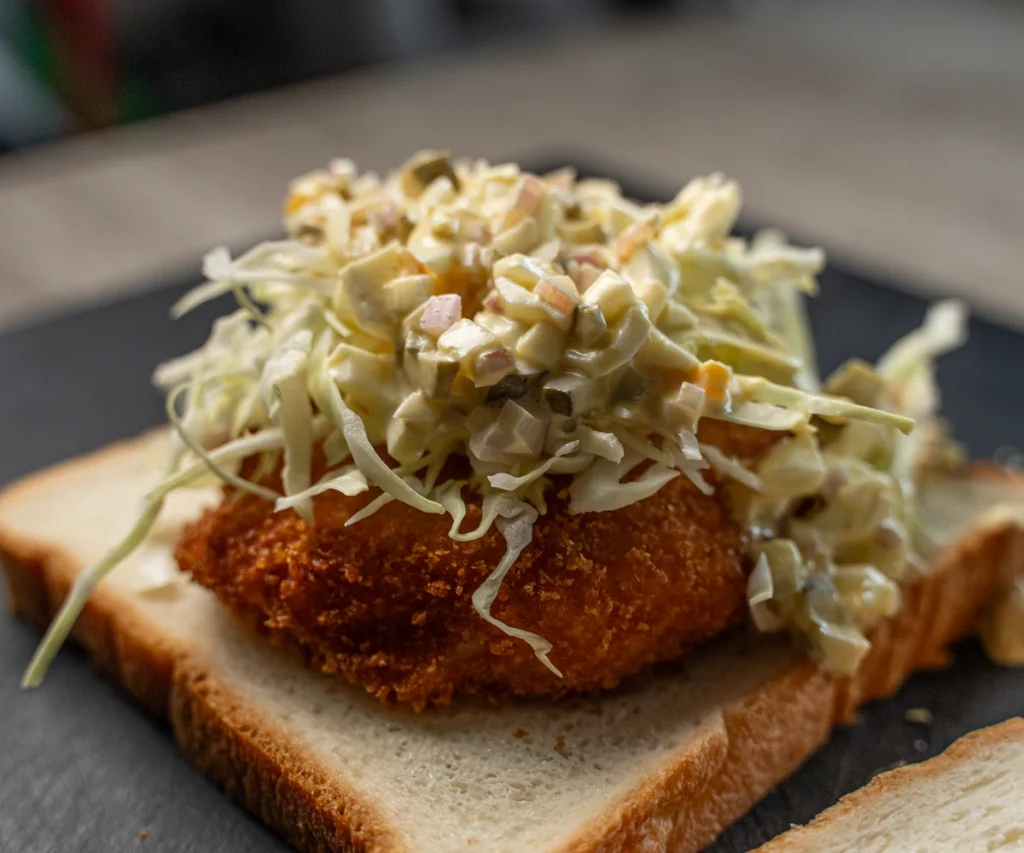
It sits inside Japanese milk bread (shokupan), the pillow-soft, slightly sweet white bread that every Japanese konbini stocks. The combination of the ultra-crispy panko crust against that cloud of bread creates one of the most satisfying textural contrasts in all of sandwich culture. A layer of homemade tartar sauce and shredded cabbage finishes the job.
Why This Recipe Works
Most ebi katsu recipes tell you to simply mince your shrimp and shape them into a patty. Which produces a fine result, but here is what I do differently, and exactly why it matters.

The Two-Texture Shrimp Mix
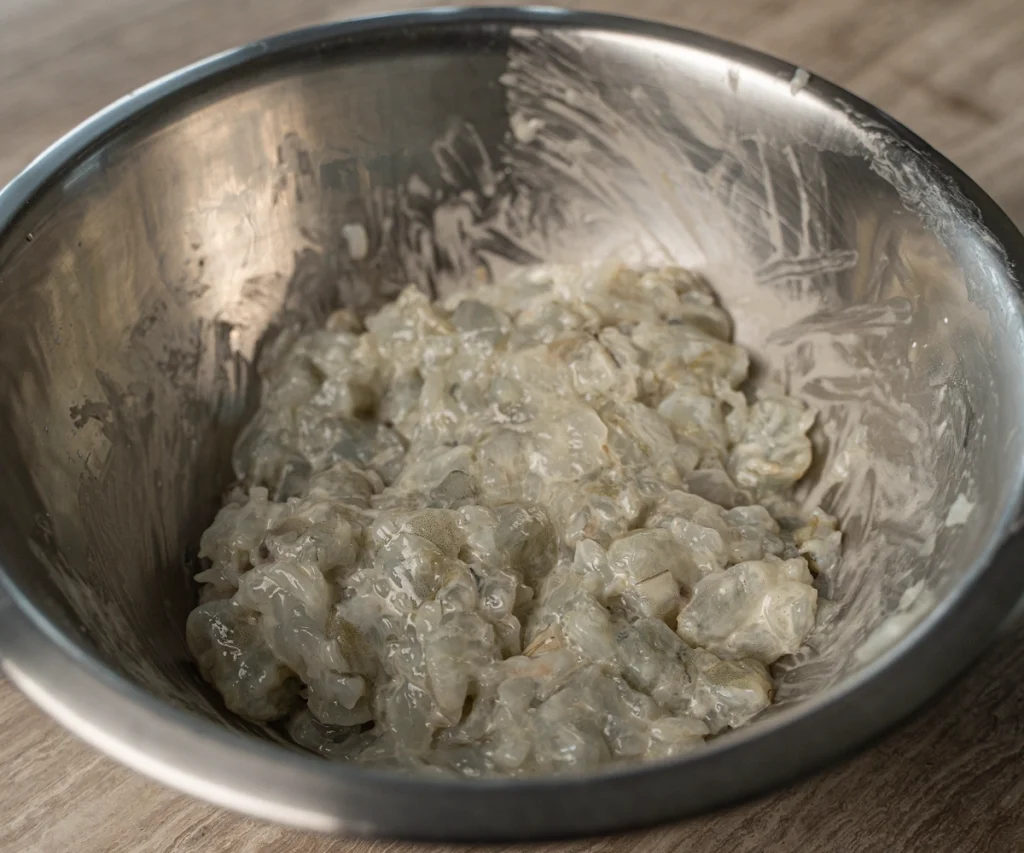
I mince two-thirds of the shrimp into a sticky paste and leave the remaining third roughly chopped. The paste acts as a binder, creating that bouncy, almost surimi-like spring that makes you want to take another bite immediately. The chunky pieces give you real, identifiable shrimp flavor and a satisfying bite within the bite. Most recipes skip this step, yet for me, it’s that texture that takes this to the next level.
The 30-Minute Freeze
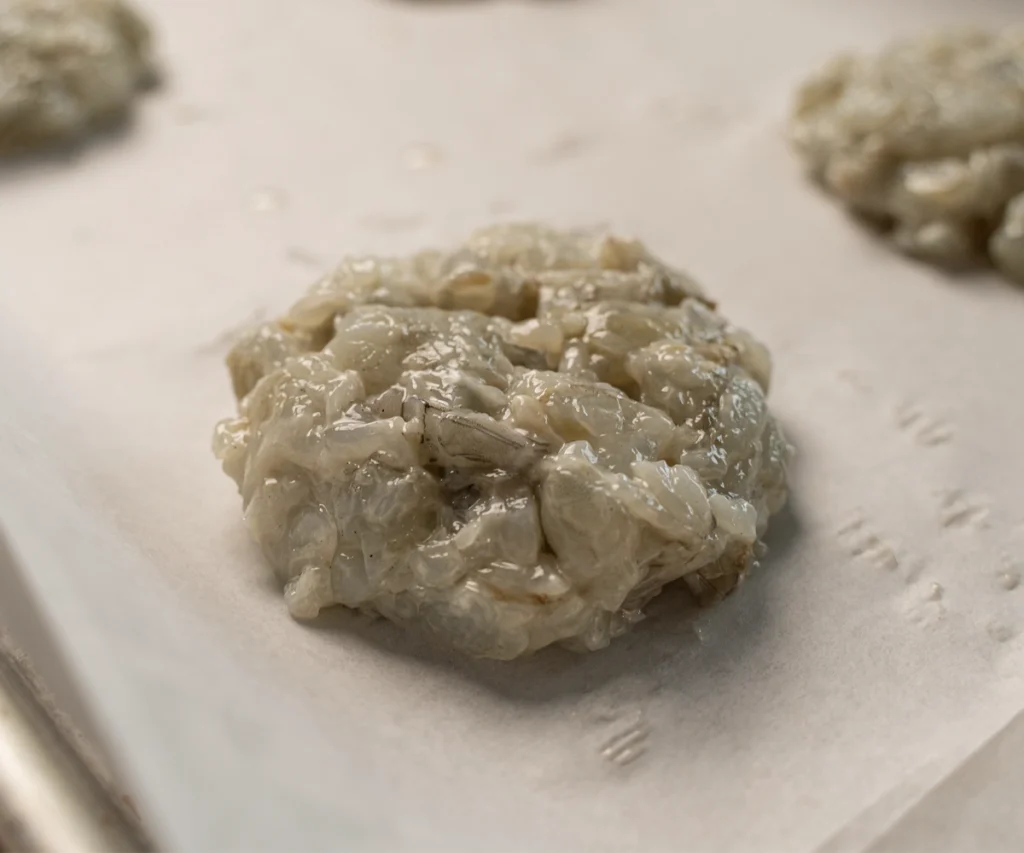
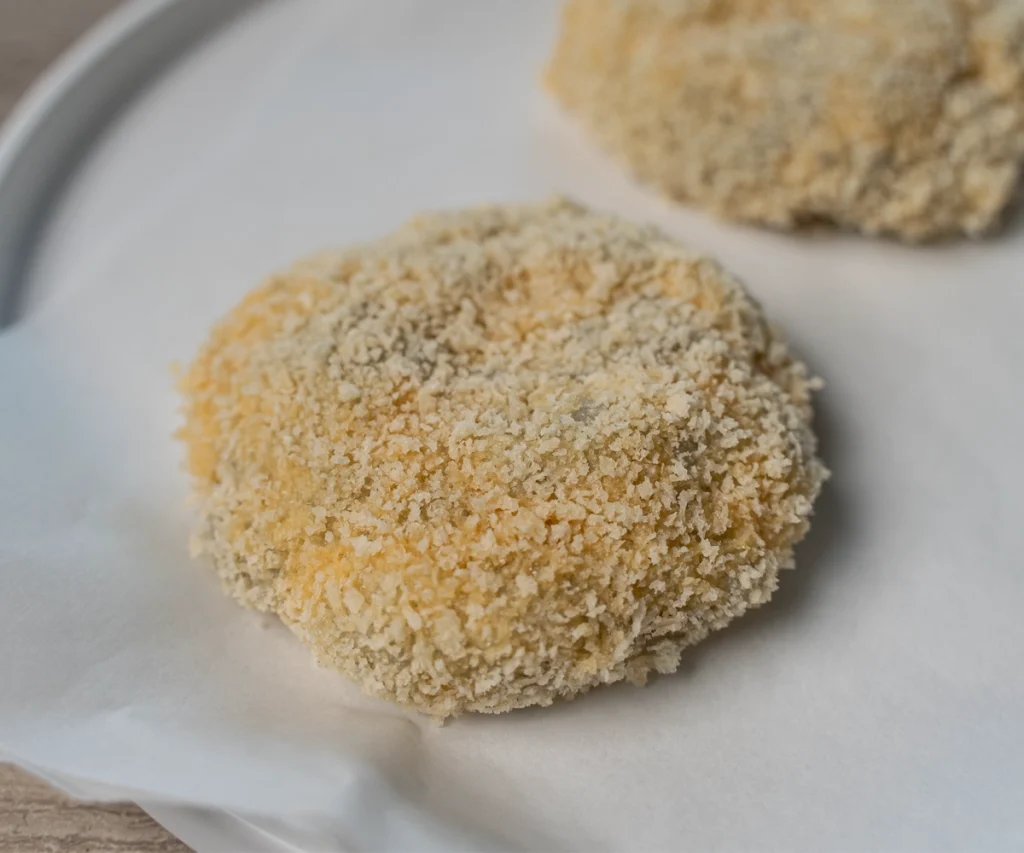
Before you bread the patties, freeze them for 30 minutes to firm the surface. This makes dredging dramatically easier and prevents the patty from falling apart when it hits the hot oil. It also helps the panko coating adhere evenly. This single step separates a good ebi katsu from a great one.
Wire Rack, Not Paper Towels
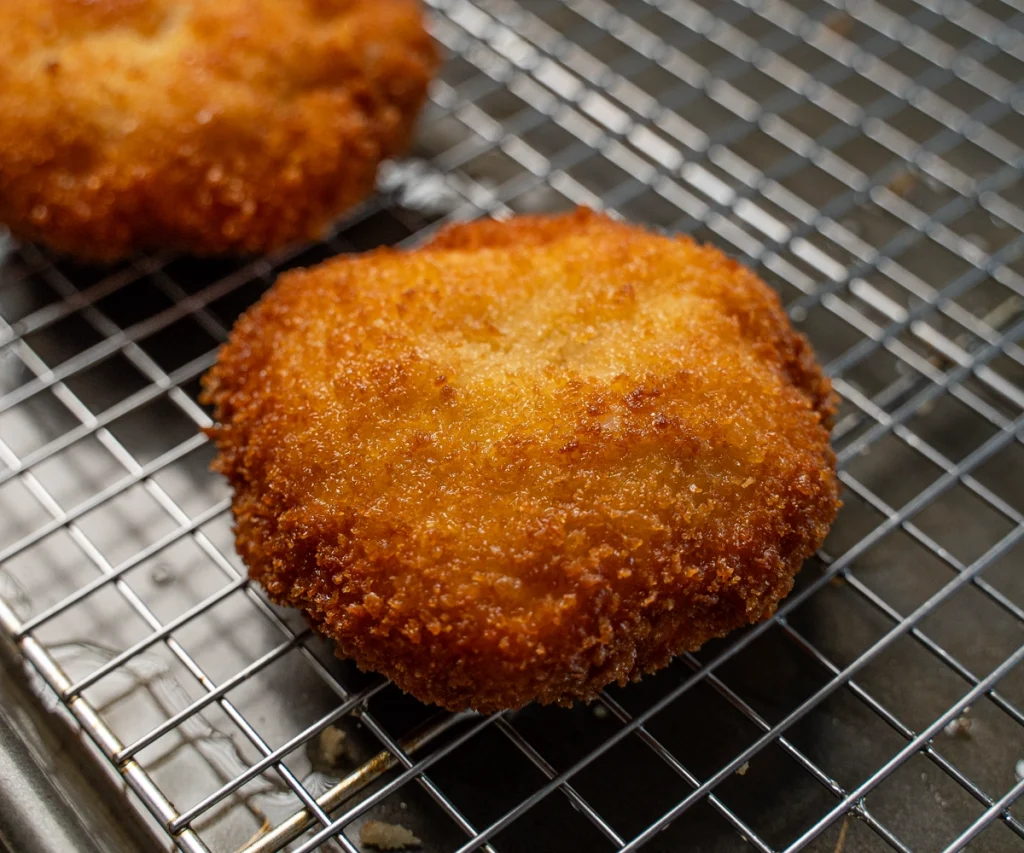
The moment your katsu comes out of the oil, it goes onto a wire rack. Paper towels trap steam underneath and turn your crust soggy within minutes. A wire rack keeps airflow moving around the entire cutlet. Your crust stays crisp until the very last bite.
Key Ingredients and Why They Matter
Japanese Milk Bread (Shokupan)
Shokupan makes this sandwich. Its pillowy softness, subtle sweetness, and tight crumb structure hold everything together without getting soggy or falling apart. You find it at Japanese or Asian grocery stores, or you can bake your own. In a genuine pinch, a thick-cut brioche or Texas toast works, but the result changes noticeably.
Panko Breadcrumbs
Standard breadcrumbs will not produce the same result. Panko crumbs are larger, lighter, and more irregular in shape, which creates a dramatically crispier, more textured crust that shatters when you bite into it. Always use panko for katsu.
Kewpie Mayonnaise
Japanese Kewpie mayo uses only egg yolks (rather than whole eggs) and a touch of rice vinegar, making it richer and more umami-forward than Western mayo. The Kewpie mayo is used to make the best Japanese tartar sauce.

Ebi Katsu Sando / Japanese Shrimp Cutlet Sandwich
4
servings30
minutes15
minutesIngredients
- Ebi Katsu:
2 lb 2 Shrimp
1 1 Egg White
2 tbsp 2 Cornstarch
1/2 tsp 1/2 Salt
1/2 tsp 1/2 Sugar
1/2 tsp 1/2 White Pepper
- Coating:
1 cup 1 Flour
2 2 Eggs
2 cups 2 Panko
Oil, For Frying
- Japanese Tartar Sauce:
2 2 Eggs
3 tbsp 3 Pickles Chopped
2 tbsp 2 Kewpie Mayo
1 Small 1 Shallot, Diced
1/2 1/2 Lemon, Juice
Salt and Pepper
- Accompaniments:
Butter
Shredded Cabbage
Shokupan
Directions
- Make the shrimp patty mix:
- Chop peeled and deveined shrimp. Two-thirds of the shrimp should be finely chopped into a paste, while roughly chopping the remaining one-third for texture
- Transfer the shrimp to a bowl and add an egg white, cornstarch, salt, sugar, and white pepper. Mix vigorously for 1 to 2 minutes until the mixture turns cohesive and sticky
- Shape and freeze:
- Apply a little oil to your hands to prevent the shrimp mixture from sticking, then press the mixture into circular patties slightly larger than your bread slices. The patties shrink a little during frying. Place them on a parchment-lined tray and freeze for 30 minutes until the surface firms up. This step makes dredging clean and keeps the patty intact through the fry
- Make the Japanese tartar sauce:
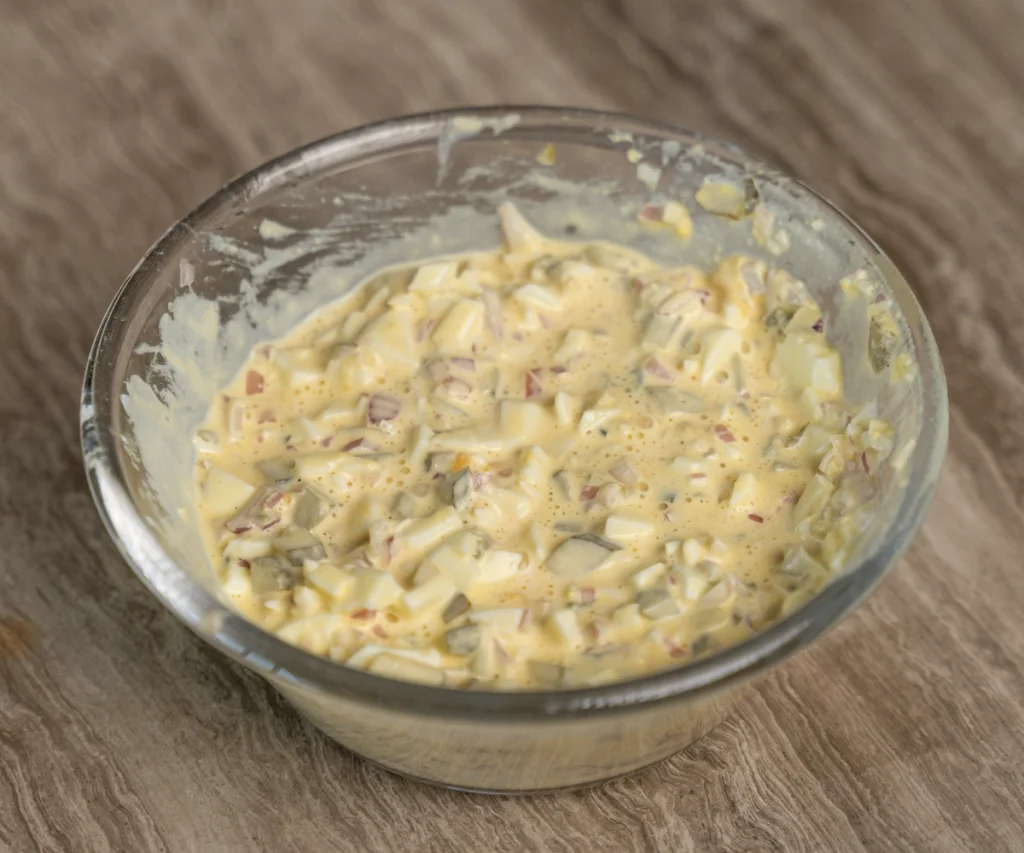
- Hard-boil the 2 eggs for 10 minutes at a gentle simmer. Cool completely, peel, and chop finely. Combine with the chopped pickles, Kewpie mayo, diced shallot, and lemon juice. Season generously with salt and pepper. Refrigerate until you are ready to assemble
- Set up your dredging station:
- Line up three wide shallow bowls: flour in the first, beaten eggs in the second, panko in the third
- Bread the patties:
- Working quickly while the patties stay cold, dredge each one in flour and shake off any excess. Dip in beaten egg and let the excess drip away cleanly. Press firmly into the panko on both sides, ensuring you build a thick, even, fully adhered crust
- Fry the katsu:
- Heat neutral oil in a heavy pan to 350F. Lower each patty gently into the oil and fry for 4-5 minutes per side, until the crust is deep and uniformly golden brown. Lift onto a wire rack to rest for 2 minutes
- Assemble the ebi katsu sando:
- Butter each slice of shokupan generously. Set the katsu on top of one of the slices. Add shredded cabbage and tartar sauce on top. Close the sandwich and press down gently. Slice the sandwich into thirds. Serve immediately.
Notes
- Notes and Storage: Shaped and breaded patties freeze beautifully for up to one month. Fry directly from frozen, adding 1 to 2 extra minutes per side. Fried katsu keeps in the refrigerator for up to 2 days, re-crisp in a 3f5F oven for 8 minutes on a wire rack. The Japanese tartar sauce keeps refrigerated for up to 3 days. *Total active time is 30 minutes; the 30-minute freeze is mostly hands-off.
Did you make this recipe?
Tag @feedthepudge on Instagram and hashtag it with #feedthepudge
If you like this recipe, make sure you pin it!
Frequently Asked Questions
Can I bake the ebi katsu instead of frying it?
You can, but the result changes significantly. Baking produces a lighter, less-crispy crust that lacks the deep-fried, shattering texture that defines a great katsu. If you go the oven route, brush generously with oil and bake at 400F on a wire rack for 18 to 20 minutes, flipping once. For the closest result to frying, a light spray of neutral oil over the entire breaded surface before baking helps.
What bread can I use if I can’t find shokupan?
In an absolute pinch, thick-cut brioche is the best substitute; it shares shokupan’s richness and soft crumb. Texas toast or any thick-sliced soft white bread also works well. Avoid sourdough or rustic artisan loaves; their open crumb structure absorbs the sauces too quickly, and the crust overpowers the delicate shrimp flavor.
What is the difference between ebi katsu and ebi fry?
Ebi fry coats whole, intact shrimp in panko and fries them. Ebi katsu uses minced and formed shrimp pressed into a patty. Ebi katsu gives you a much larger crust, a different texture entirely, and the ability to shape the patty to perfectly fit the bread, which matters in a sandwich context.
Can I make the patties ahead of time?
Absolutely. Shape and bread the patties up to 1 month ahead, then freeze them in a single layer on a parchment-lined tray before transferring to a freezer bag. Fry them directly from frozen, adding about 90 seconds to each side. This makes the ebi katsu sando ideal for meal prep and spontaneous entertaining alike.


Hi, Are these dill or sweet pickles, please? Thanks! Ebi, in Japanese, is the baby shrimp.
I used dill!