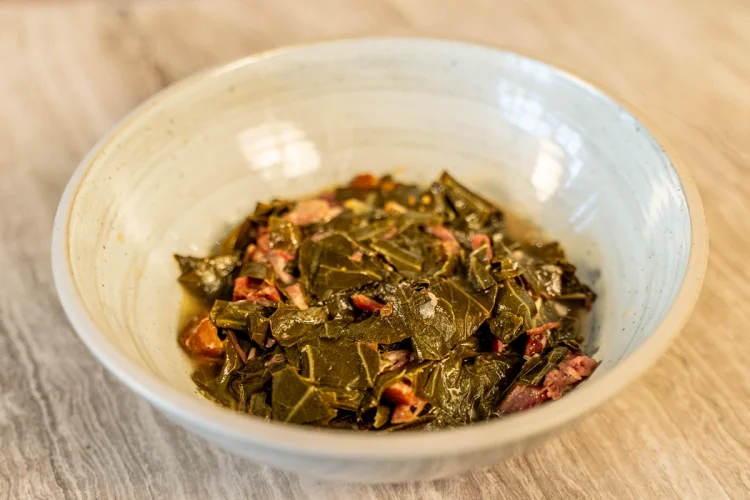
I recently stopped by the SeaTac Farmers Market the other week, a relatively new market that launched just last year and has already become something truly special. It’s run by the team at African Community Housing & Development, and what sets this market apart is its mission: to center BIPOC communities and prioritize cultural diversity in every way. From the moment I arrived, the stalls were filled with color, life, and abundance. Everywhere I looked, there was beautiful produce, from vibrant fruits to lush leafy greens. One vendor in particular had some incredible-looking collard greens, and as soon as I saw them, I knew exactly what I had to make. A big pot of slow-simmered collard greens with smoked pork hocks. One of my all-time favorite soul food dishes.
What are Collard Greens?
For those unfamiliar, collard greens are a hearty, leafy green vegetable that belongs to the brassica family, the same plant family that includes cabbage, kale, broccoli, and mustard greens. Their thick, flat leaves grow in large rosettes, and they’re known for their slightly bitter flavor and sturdy texture, which makes them ideal for slow cooking. Unlike more delicate greens that wilt in minutes, collards benefit from a long simmer, allowing their natural toughness to break down into tender, silky bites.

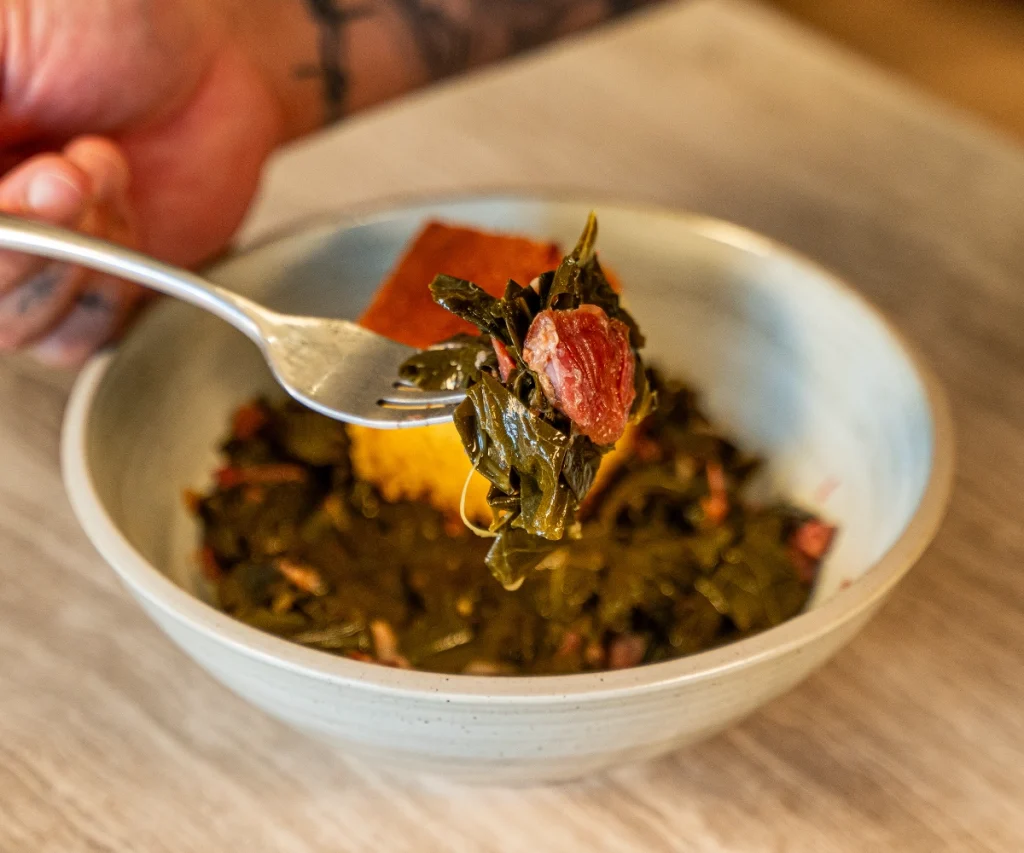
Traditionally, collard greens are simmered low and slow with savory aromatics and meat, especially smoked or cured cuts like pork hocks, turkey necks, or bacon, which infuse the greens with rich, salty flavor. The resulting broth, often referred to as potlikker, is liquid gold, deeply flavorful, and packed with nutrients. It’s not uncommon to see it sopped up with a piece of cornbread or served on the side, a quiet reminder that nothing goes to waste.
Collard Greens in Black Culture and History
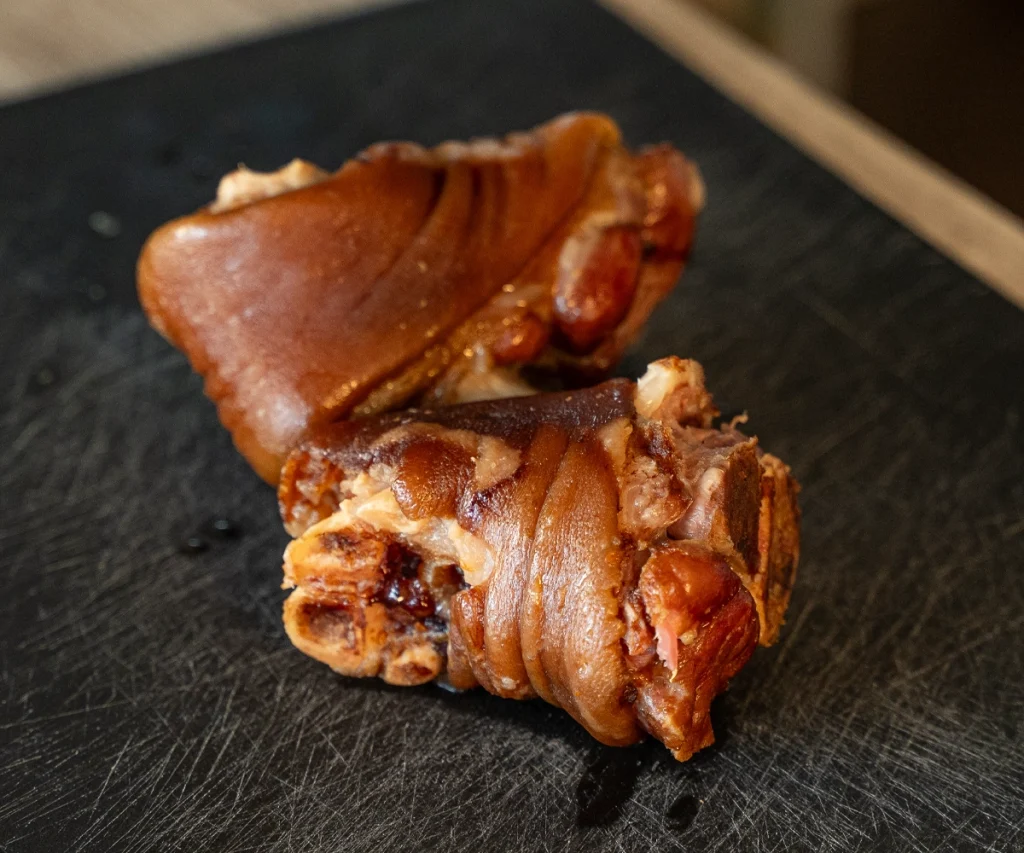
In Black culture, collard greens are more than just a comfort food; they are a symbol of resilience. They’re a dish steeped in history, survival, and community. Their roots in African American cuisine stretch back to the era of enslavement, when enslaved Africans in the American South were given only the scraps and castoffs of plantation life. With creativity and ancestral knowledge, they transformed humble ingredients, such as greens, into deeply flavorful and nourishing meals. Collard greens were often one of the few vegetables enslaved people could grow in their own gardens, providing essential nutrients in an otherwise limited diet. They were typically cooked with whatever meat was available, often smoked or salted remnants like ham hocks, pig’s feet, or turkey necks, not only to flavor the greens but to stretch ingredients and feed large families. This cooking method mirrored African traditions of braising greens with meat and spices, adapted with the ingredients available in the South.
Over generations, collard greens evolved into a cornerstone of what we now know as soul food. They became a staple at Sunday dinners, holiday feasts, and community gatherings, passed down through oral tradition and family recipes, always cooked with care and intention. Today, they represent much more than sustenance. Collard greens are a symbol of Black cultural identity, resilience, and resourcefulness. They tell a story of making the most with what you have and turning it into something beautiful, flavorful, and full of soul.

SeaTac Farmers Market
That’s why finding those collards at the SeaTac Farmers Market felt so full-circle. This market isn’t just another place to buy produce; it’s one of the only BIPOC-priority farmers markets in the area, intentionally designed to uplift communities of color. One of the most inspiring parts? The market doesn’t take a cut of vendors’ sales, meaning every dollar goes directly into the hands of the farmers, food makers, and small business owners who are working hard to share their culture and craft. They also offer free kid bucks, allowing children to shop for their own produce. The market also gives away free veggies every week. It’s all rooted in community, creating space not just for food, but for connection, access to resources, and support for local families and producers.
If you’re in the Seattle area and want to check it out, the SeaTac Farmers Market operates seasonally every Wednesday from June through the end of October, from 3-7pm. Trust me, it’s worth the visit. Whether you’re there for the food, the people, or just the energy of the space, you’ll leave feeling more connected, and probably with a few things in your bag you didn’t know you needed. And if you happen to spot those collard greens? You already know what to do.
How to Prepare Collard Greens
Before you throw your greens into the pot, proper prep is key to bringing out their best flavor and texture. Collard greens are hearty, but they do need a little attention before they’re ready to shine. Here’s how I like to prepare mine:
Start by washing them thoroughly. Collard greens grow low to the ground, so it’s common for dirt or grit to cling to the leaves. Fill a large bowl or clean sink with cold water, baking soda, and salt. Submerge the leaves, and gently swish them around. Let them sit for a few minutes so the grit sinks to the bottom, then lift the greens out. Repeat this process until the water runs clear; typically, three or four rinses are sufficient.

Remove the tough stems. Lay each leaf flat and use a sharp knife to slice along the stem on either side, removing the thick central rib. You can also simply fold the leaf in half lengthwise and tear or cut the stem away. These stems are too fibrous to eat when cooked traditionally, so don’t skip this step.
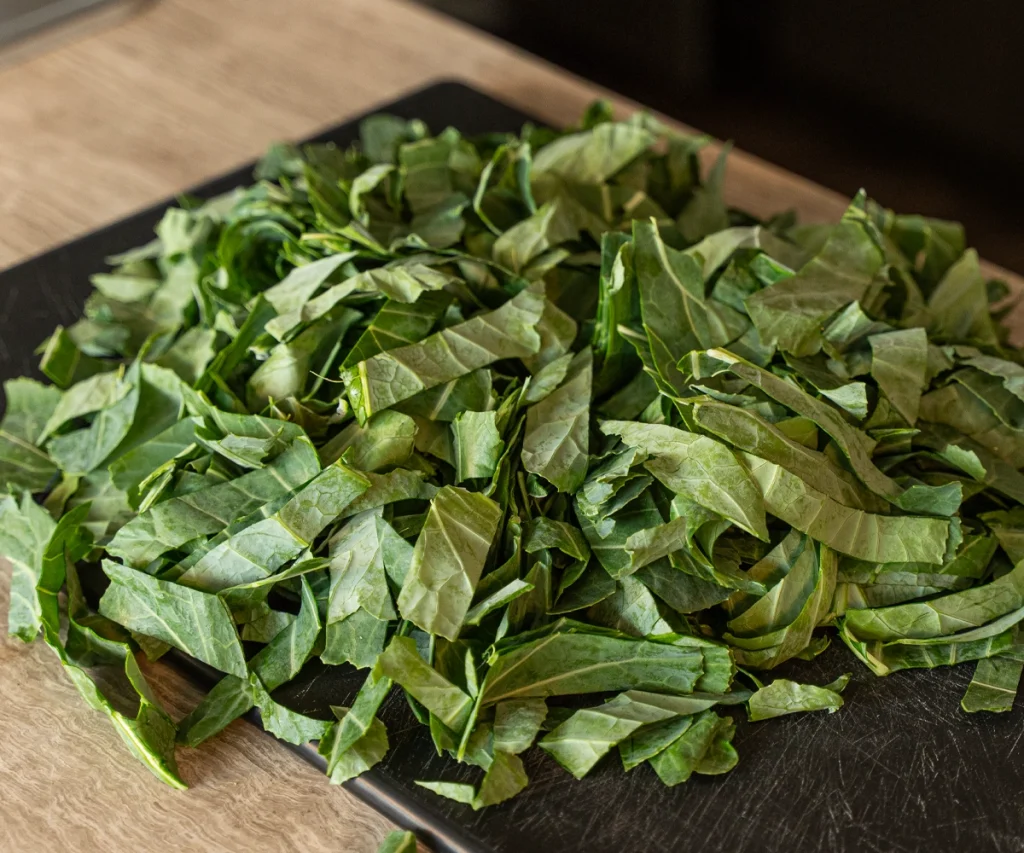
Roll and cut. Once you’ve cleaned and de-stemmed your leaves, stack a few at a time, roll them up tightly into a cigar shape, and slice them crosswise into thin ribbons. This technique is called a chiffonade, and it helps the greens cook evenly and makes them easier to eat, especially when simmered low and slow in a pot with aromatics and meat.

Collard Greens with Ham Hocks
4-6
servings15
minutes4
hoursIngredients
3 lb 3 Collard Greens
1/2 tbsp 1/2 Salt, To Clean Collard Greens
1 tbsp 1 Baking Soda, To Clean Collard Greens
1 lb 1 Ham Hock or Smoked Turkey Wing
1 Medium 1 Onion, Diced
3 3 Garlic Cloves, Minced
1 tsp 1 Red Pepper Flakes
4 Cups 4 Water
1 tbsp 1 Brown Sugar
1 tbsp 1 Chicken Bouillon
2 tbsp 2 Apple Cider Vinegar
1 tbsp 1 Hot Sauce
1 tbsp 1 Oil
1/2 tbsp 1/2 Fish Sauce (Optional)
Directions
- Process The Collard Greens:
- Fill a large bowl or sink with cold water. Add salt and baking soda. Submerge the collard greens and gently agitate them to loosen any dirt or grit. Let them soak for a few minutes, then rinse thoroughly. Repeat as needed until the water runs clear
- Remove the tough stems from each leaf. Stack the leaves, roll them into a tight bundle, and slice into bite-sized ribbons. Set aside
- Make the Potlikker:
- In a large, heavy-bottomed pot, heat up the oil over medium heat. Add the diced onion and sauté until softened, about 2-3 minutes. Stir in the minced garlic and red pepper flakes and cook for another 30 seconds until fragrant
- Add the ham hock (or smoked turkey wing) to the pot along with 4 cups of water. Bring to a boil, skim off any impurities, then reduce the heat to a simmer. Cover and cook for 45 minutes to 1 hour, or until the meat starts to become tender and the broth is flavorful
- Cooking the Collard Greens:
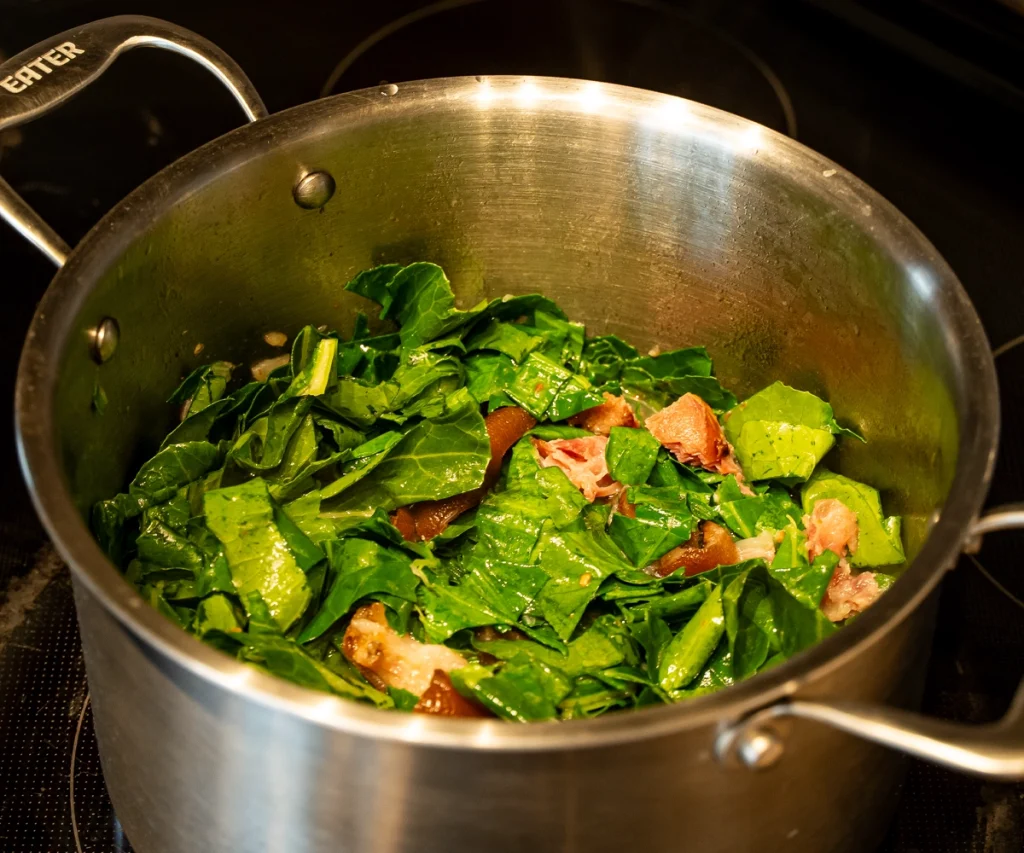
- Add the prepared collard greens to the pot and then season with the chicken bouillon, apple cider vinegar, hot sauce, and fish sauce. Mix well to combine
- Cover and simmer on low for 1-3 hours or until the greens are tender and full of flavor. Adjust seasoning to taste
- Serve
- Serve the collard greens hot, with a bit of the potlikker. They’re perfect alongside cornbread, rice, or as a hearty side to your favorite soul food dishes! Enjoy!
Did you make this recipe?
Tag @feedthepudge on Instagram and hashtag it with #feedthepudge
If you like this recipe, make sure you pin it!

