
Growing up, my mom had a way of showing her love without many words. Her affection often came in the form of food, and cháo gà was her remedy for almost everything. If I was feeling under the weather, I knew what was coming: the comforting aroma of chicken simmering on the stove, mingling with the earthy fragrance of ginger. She’d ladle the hot porridge into a bowl, topping it with fresh herbs and crispy shallots. It was simple, nourishing, and precisely what my body and soul needed. To this day, no store-bought soup or quick meal can replicate the feeling of being cared for like that bowl of chao ga my mom made. It’s a reminder of how food can be an act of love, a way to heal, and a bridge to our roots.
What is Chao Ga?
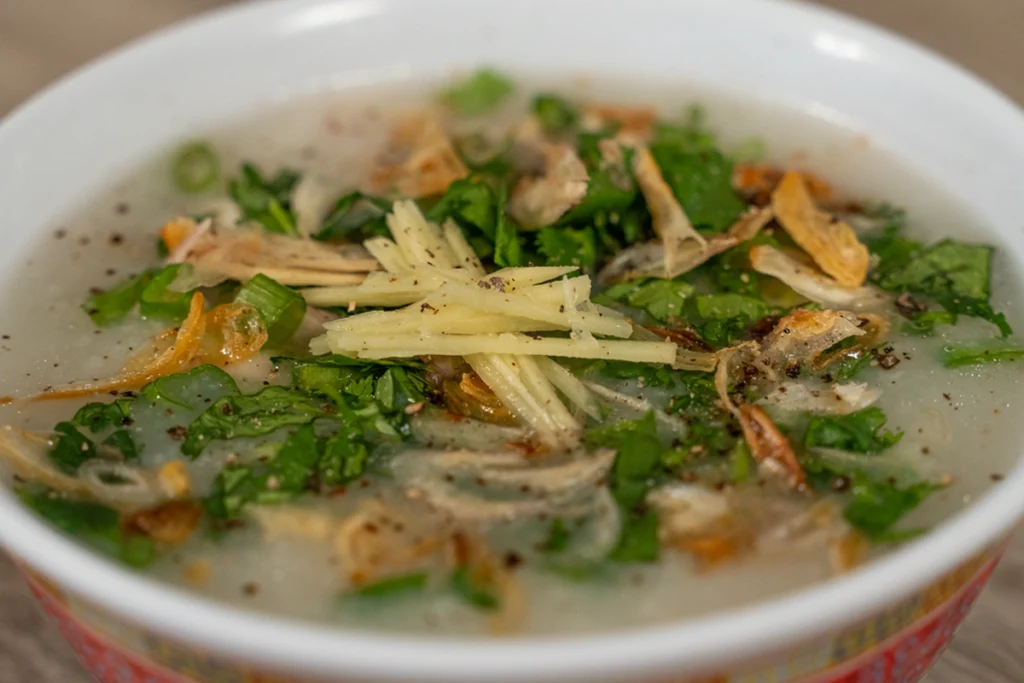
Chao Ga is a classic Vietnamese dish made by simmering rice in water or stock until it breaks down into a creamy porridge to create a flavorful and comforting meal. Often compared to chicken soup in Western cuisine, it’s a dish that’s both nourishing and easy on the stomach, making it a go-to for recovery and relaxation. The simplicity of the ingredients—rice, chicken, ginger, and a few seasonings—belies the depth of flavor that emerges from the slow cooking process. Topped with fresh herbs and garnishes, it’s a dish that feels both familiar and special.
Rice Porridge Across Asia
Cháo gà may hold a special place in Vietnamese cuisine, but the concept of rice porridge is beloved across Asia, each country offering its own unique take:
- China: Congee or jook is often seasoned with soy sauce, pickled vegetables, or century eggs, making it a savory delight.
- Japan: Okayu is typically lighter and less seasoned, often served with umeboshi (pickled plum) for a subtle tang.
- Korea: Juk comes in many variations, including sweet and savory, but the chicken version, dakjuk, is most similar to cháo gà.
- Philippines: Arroz caldo, influenced by Spanish cuisine, incorporates saffron or turmeric and is garnished with garlic and calamansi.
- Thailand: Khao tom is a thinner, brothier rice soup, often spiced with garlic, cilantro, and chili.

What Makes Vietnamese Chao Unique?
While all these variations share a base of rice cooked to a soft consistency, Vietnamese chao stands out for its simplicity and depth of flavor.
- Aromatic Ingredients: Vietnamese chao is often infused with ginger and sometimes pandan leaves, adding a subtle, fragrant complexity.
- Chicken as the Star: The broth is made by simmering chicken with aromatics, creating a savory base that’s light yet deeply flavorful.
- Fresh Garnishes: Vietnamese cuisine thrives on balance, and chao ga is no exception. Toppings like scallions, cilantro, ginger, and fried shallots add brightness and texture.
- Fish Sauce Magic: A drizzle of fish sauce brings umami to the dish, elevating its comforting flavors.
Compared to thicker, more seasoned porridges like Chinese congee or spiced Filipino arroz caldo, Vietnamese cháo retains a lighter, cleaner profile that feels both soothing and invigorating.

Why You’ll Love This Recipe
If you’re looking for a dish that’s as comforting as it is versatile, chao ga is a must-try. Whether you’re feeling under the weather or simply craving something warm and nourishing, this dish has you covered. It’s easy to make, uses pantry staples, and is endlessly customizable. Add more ginger for warmth, top it with a soft-boiled egg for richness, or spice it up with chili oil. Use the rice porridge as a blank canvas to customize it however you’d like! With every spoonful, you’ll taste not just the delicious harmony of flavors but also the tradition and care that make chao ga so special. It’s more than food—it’s a hug in a bowl, ready to comfort and nourish you, just like my mom’s chao always did for me.

Chao Ga / Vietnamese Chicken Porridge
4-6
servings15
minutes1
hourIngredients
1 cup 1 Uncooked Jasmine Rice
2 lbs 2 Chicken Quarters
2 tbsp 2 Kosher Salt
4 Quarts 4 Water
1/2 1/2 Yellow Onion
2 2 inch Knob Ginger
1 1 inch Nub Rock Sugar
1 tbsp 1 MSG
1/2 tsp 1/2 Salt
2 tbsp 2 Fish Sauce
1 tbsp 1 Cornstarch
- Garnishes:
Cilantro
Green Onion
Ginger
Black Pepper
Directions
- Chicken:
- Scrub chicken with kosher salt and rinse with cold tap water 1-2 times to help reduce chicken odor
- Prep:
- Cut yellow onion and knob of ginger in half
- For garnishes, thinly slice and julienne ginger, finely chop up green onion and cilantro
- To prep rice, take one cup of uncooked rice and toast in a dry frying pan on medium heat for 2 minutes or until grains of rice turns to an opaque white color
- Cook:
- Bring 4 quarts of water up to a boil in a stockpot. Add cleaned chicken quarters, half a yellow onion, and a 2-inch knob of ginger. Bring the water back up to a boil, skim off the impurities, and then reduce the heat to low
- Simmer covered with a slight crack for 25 minutes or until chicken is cooked through and tender
- Remove chicken and aromatics from the pot, and skim away any other impurities
- Season broth with a 1-inch nub of rock sugar, one tablespoon of MSG, and half a teaspoon of salt
- Add toasted rice, bring back up to a boil, reduce the heat to medium-low, and simmer covered with a slight crack for 40-50 minutes or until the rice has fully expanded and grains begin to dissolve into the stock
- Season to taste with fish sauce, and then make a cornstarch slurry and add to the rice porridge for a velvety finish
- Serve:
- Shred chicken by hand or cut with a knife. Then, ladle rice porridge into a bowl. Top with chicken and garnishes of choice, and enjoy!
Did you make this recipe?
Tag @feedthepudge on Instagram and hashtag it with #feedthepudge
If you like this recipe, make sure you pin it!


Looks tasty! Not seeing the rice in the ingredient list, am I missing it?
Thanks for catching my mistake, updated the ingredient list!
Really good recipe ! We really enjoyed it ! Thanks for sharing ! 🥣
I’m so glad it turned out well!
I made this tonight, and it was delicious. Tasted just like my mom’s :’) Thank you for sharing this recipe!
I’m so glad it reminded you of your mom’s! Nostalgia makes everything taste that much better. Thanks for the comment Vy, and hope you try out some of my other recipes!
Can I use cooked rice instead? How does that change the cooking time?
Cooked rice will reduce the cook time by almost half! Make sure you change the proportions of the rice to liquid ratio to ensure you get the consistency you’re looking for
My dad never had the patience to teach me what he learned from my ba noi. Your recipe taught me the base/ingredients and now I can make it according to my pallet. I have this recipe bookmarked to refer to every time I’m sick XD