
Soups like Canh Suon Heo are at the heart of Vietnamese home cooking, what we call com gia dinh. They are warm, humble, and full of life. Growing up, my mom made countless variations of this soup. The base was always the same: pork bones, aromatics, and gentle seasoning simmered together into something nourishing. What changed was whatever vegetables she could find. When times were tough, my mom would make this soup with whatever we got from the food bank. Sometimes it was potatoes or beets, other times it was cabbage or daikon. She always found a way to make it work, stretching what we had to feed our family of seven. To me, this soup represents her resourcefulness and love, reflecting the struggles we went through and her resilience in keeping us fed and together. Today I’m remaking it with carrots and cauliflower, which is a tribute to that foundation recipe and to the spirit of Vietnamese family cooking.
The Foundation of Canh Suon Heo: Bones, Aromatics, and Seasoning
Pork Bones and Ribs
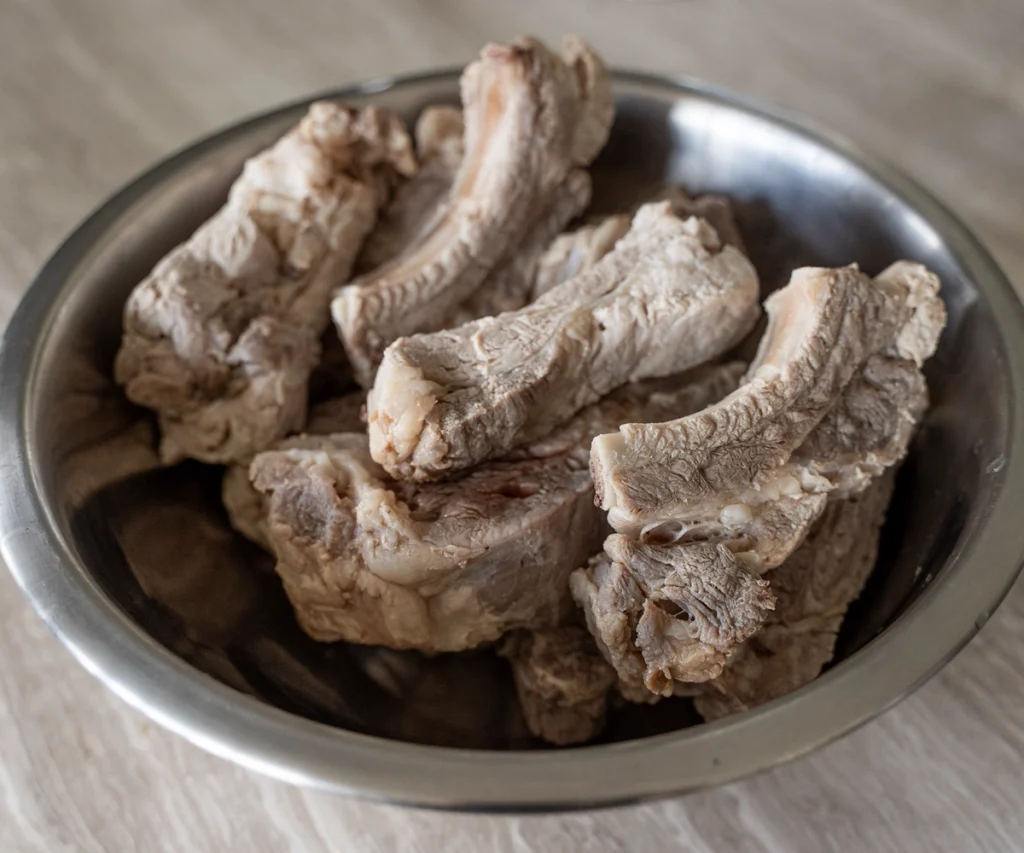
The soul of any canh suon heo starts with the bones. They create the body, depth, and flavor that define the broth. You can use any kind of pork bones you can find. For this recipe, I chose pork ribs because they were on sale for $3/lbs at my local grocery store. They add just the right amount of meat and look beautiful when served in the bowl. But you can opt for even cheaper cuts like pork spare ribs, neck bones, or even pork hock. The key is to have some hearty bones that can release flavor into the broth as they simmer.

If you want a clear broth, parboil the ribs first by boiling them briefly, discarding the water, and rinsing the meat. This step removes impurities and helps create a clean, clear soup.
Aromatics: Onion and Ginger
In Vietnamese cooking, aromatics are what bring balance and fragrance to a soup. For this one, charred onion and ginger are essential. When you lightly char the onion or shallot over an open flame or in a dry pan, you draw out its natural sweetness and give the soup a subtle smoky aroma. Ginger adds warmth and helps remove any strong pork smell while brightening the overall flavor.
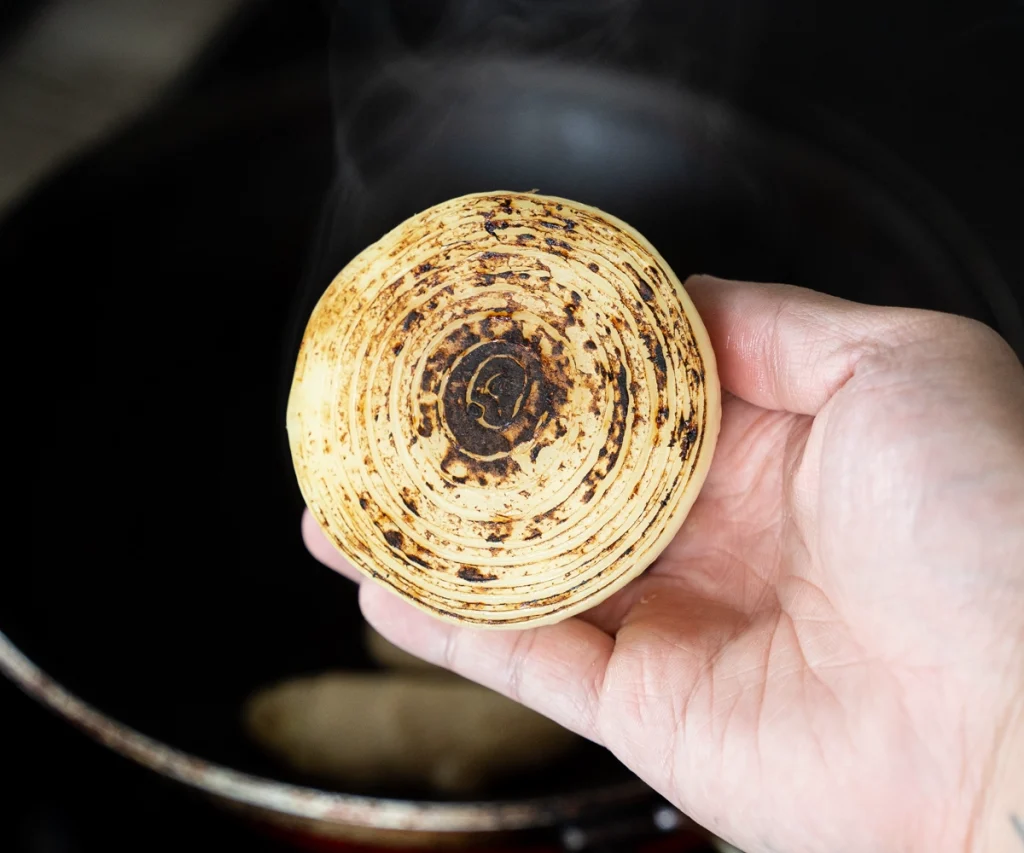
Char the onion and ginger until their edges are slightly blackened, and add them to the pot. These two ingredients transform a simple pork broth into something comforting and complex.
Seasoning: Rock Sugar, MSG, and Fish Sauce
The hallmark of Vietnamese soups lies in their balance of flavors: light, savory, and umami. Three ingredients help achieve this balance: rock sugar, MSG, and fish sauce.
- Rock sugar brings gentle sweetness and rounds out the saltiness of the broth. It gives the soup a clean, balanced finish that regular sugar cannot replicate
- MSG enhances umami and adds richness. It is a small touch that creates that signature depth found in many Vietnamese soups
- Fish sauce provides the savory backbone and distinct Vietnamese flavor that ties everything together. A few tablespoons go a long way
These three ingredients work together to build that familiar Vietnamese comfort flavor found in every home kitchen.
Tips for the Best Canh Suon Heo
- Parboiling helps create a clear and clean broth. Then, during the simmering process, skim off the impurities as they rise to the top.
- Add vegetables in stages so they do not overcook.
- Always season the broth to taste. If it tastes flat, add a bit more fish sauce. If too salty, balance with a touch of sugar.
- Use whatever vegetables are accessible, and customize it to fit your preferences!

Canh Suon Heo / Pork Rib Soup with Carrots and Cauliflower
4-6
servings30
minutes1
hour30
minutesIngredients
2 lb 2 Pork Ribs
4 quarts 4 Water
1 1 Yellow Onion
2 2 inch knob Ginger
3 Large 3 Carrots
1 1 Cauliflower Head
1/2 1/2 inch nub Rock Sugar
1 tbsp 1 MSG
3 tbsp 3 Fish Sauce
- Garnishes:
Green Onions
Directions
- Prepare the Pork Ribs:
- Bring a pot of water to a boil, then add the ribs and parboil for 5 minutes to remove impurities. Drain and rinse both the ribs and the pot to ensure a clean broth
- Prep the Aromatics and Veggies:
- Cut the onion and ginger in half. Char on a dry pan or over an open flame for 3-5 minutes
- Peel carrots and cut into 1.5″ pieces. Cut the cauliflower into florets
- Make the Soup:
- In a clean pot, combine 4 quarts of boiling water with cleaned ribs. Bring to a boil, and skim off any impurities that rise to the top
- Add in charred aromatics, reduce the heat to low, and simmer covered for 1 hour. Remove the aromatics and discard
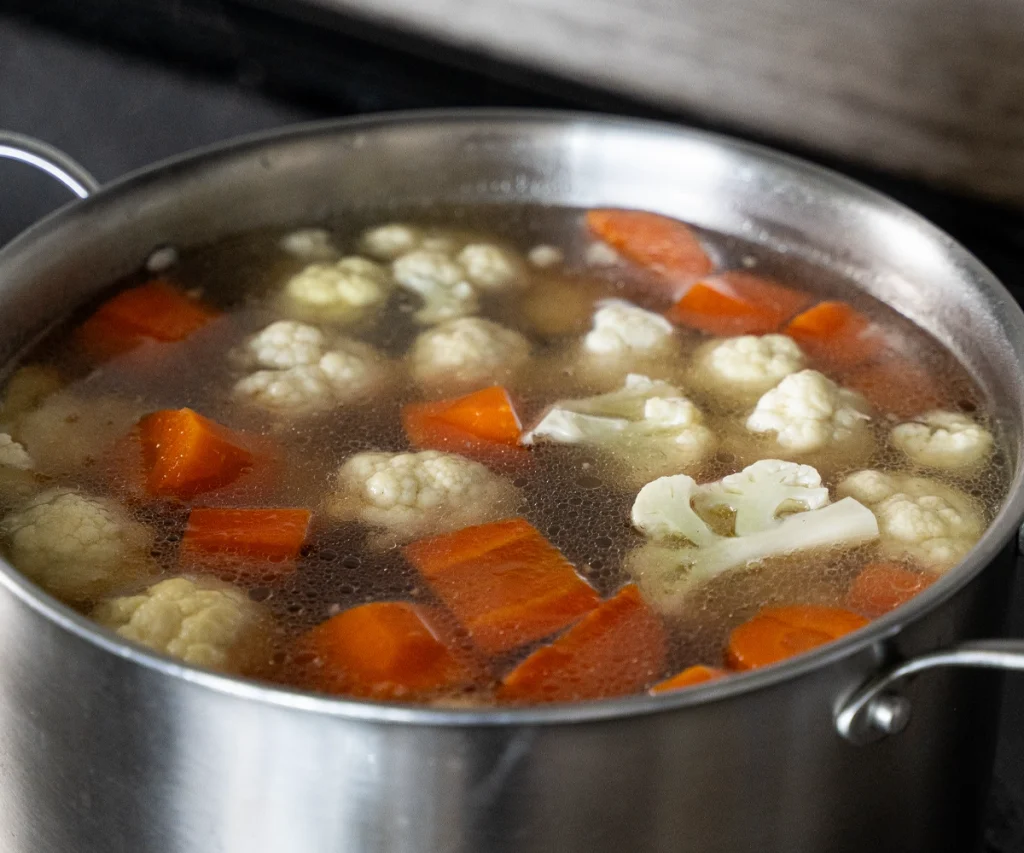
- Add the vegetables in intervals so you don’t overcook them. Add carrots first and simmer for another 10-15 minutes. Add cauliflower towards the end, as it should only take about 5 minutes to soften
- Season the soup with rock sugar, MSG, and fish sauce. Stir gently to combine, and adjust seasonings as needed
- Serve:
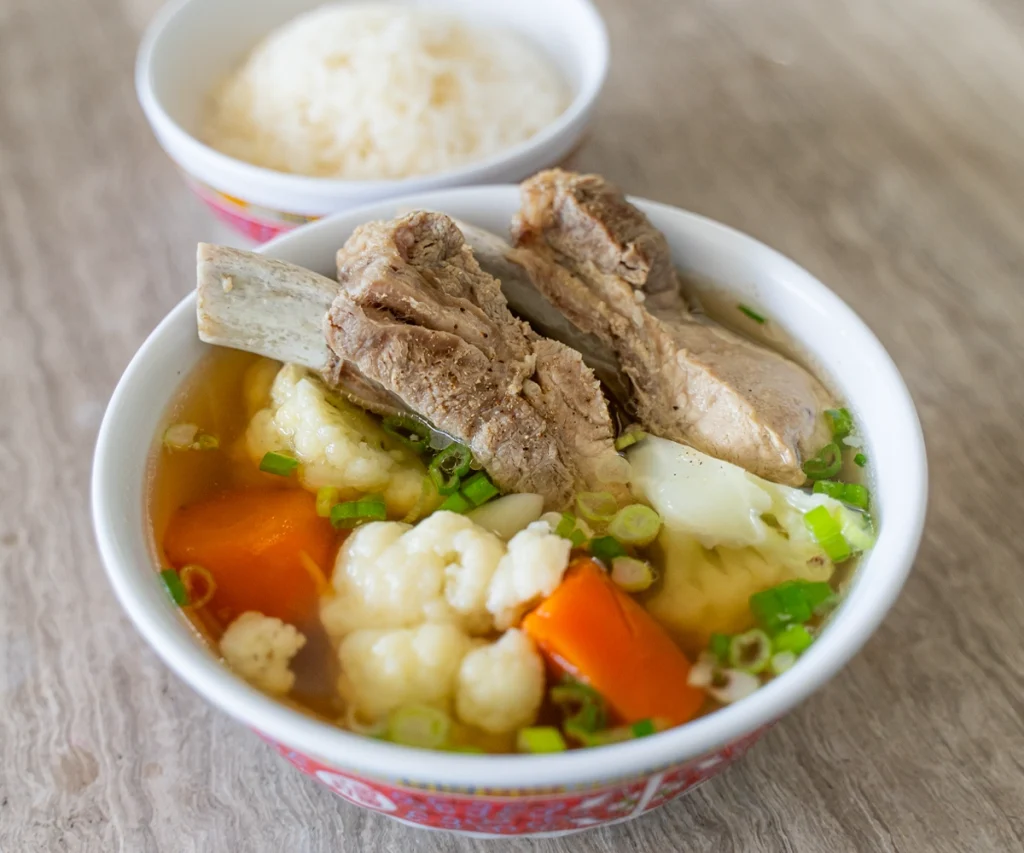
- Ladle the soup into a serving bowl and pair it with a side of rice. Alternatively, ladle soup directly over the bowl of rice. Garnish with green onions and fresh ground black pepper. Enjoy!
Notes
- Clarity: Parboiling and frequent skimming help you get a clearer broth.
Avoid overcooking veggies: Especially cauliflower. Overcooked florets can fall apart and cloud the broth.
Balance flavors: If the broth tastes flat, small pinch more rock sugar. If too sweet, add extra fish sauce or a squeeze of lime (if you like a bright lift).
Use tough cuts if needed: If you only have cheaper, less meaty bones, extend the simmer time to extract more flavor.
Alternate veg ideas: Use potato, winter melon, chayote, cabbage, daikon. Use whatever is inexpensive or available.
Make ahead / leftovers: The soup can be made ahead; when reheating, be gentle (don’t boil vigorously or veggies may disintegrate).
Did you make this recipe?
Tag @feedthepudge on Instagram and hashtag it with #feedthepudge
If you like this recipe, make sure you pin it!


Do you have a procedure for making this soup in the Instant Pot? Although I’m Chinese American (Cantonese), your soup reminds me of the soup that my mother made a long, long time ago.
Thank you for sparking a moment of remembrance.
The nostalgia is real for sure! I’ll be sure to make an instantpot version of this recipe soon!
There’s something about soup that makes you want to return again and again and again, dad is Australian mum is Vietnamese its just built into my biology my body knows what it needs. Grandma lived over 100.