
Growing up, some of my favorite family dinners were those when my dad would buy a whole fried fish from Ranch 99. Now, being at the grocery store with my dad, I’d stand by his side as he chatted with the fishmonger, picking out the exact fish he wanted and patiently waiting while the fryer sizzled away. The smell of crispy fish filled the air, making the anticipation almost unbearable. When the fish was finally handed over, its golden skin gleaming through the too-small plastic container, and the oil from the fish would just ever so slightly melt the edges of the container — a sure sign it was fresh and perfect. The car ride home was a test of willpower, but I’d always sneak a piece of that crispy skin when my dad wasn’t looking. Back home, my siblings and I would gather around the table as he unveiled the fish. We’d enjoy it with bowls of rice, fresh cucumber slices, and a simple dipping sauce of fish sauce and ginger. This Ca Hoi Chien recipe is my homage to those moments — a reminder that sometimes, the simplest meals are the most memorable.
What Type of Fish to Use
In my recipe, I’m using salmon filets. They were on sale, and I find them easier to work with than frying a whole fish at home. But traditionally, my dad would opt for tilapia or red snapper, both of which have a mild taste and flaky texture that hold up beautifully when fried. If you want to stay true to the classic experience, any white fish like sea bass, catfish, or grouper would work well. Just be sure to choose something with firm flesh that won’t fall apart during frying.

If you’re using salmon here, make sure you’re getting a nice center-cut filet!To pick a good salmon filet, look for the following signs:
- Color: Fresh salmon should have a vibrant orange to deep pink hue, depending on the variety. Avoid filets that look dull or grayish.
- Texture: The flesh should be firm and spring back when pressed. Soft or mushy salmon is a sign of spoilage.
- Smell: Fresh salmon has a mild, ocean-like scent. If it smells overly fishy or sour, it’s best to avoid it.

Why Cornstarch?
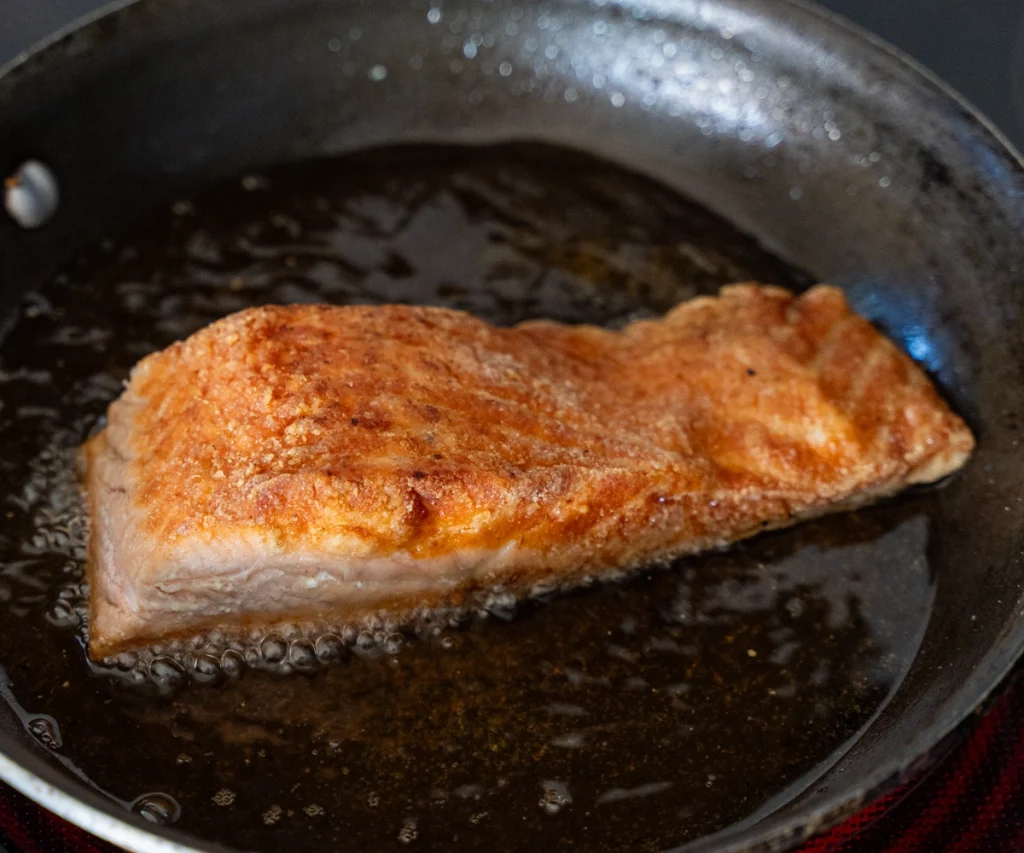
A dry cornstarch coating isn’t a traditional Vietnamese method, but I personally love the extra crunch it brings. It creates a light, crispy crust that contrasts perfectly with the buttery, flaky texture of salmon. If you’re aiming for a more authentic take, you can skip the cornstarch and simply fry the fish as is. But if you’re like me and enjoy a little extra crispiness, that thin layer of cornstarch is a game changer.
Types of Dipping Sauces
At home, we kept it simple. Thinly sliced ginger paired with a splash of fish sauce was our go-to. The savory, salty punch of fish sauce combined with the warmth of ginger perfectly complemented the fried fish. If you’re craving something a little different, here are some alternatives:
Nuoc Cham: This classic Vietnamese dipping sauce balances sweet, sour, and salty, adding brightness to each bite.
Soy Sauce or Maggi: For a more umami-forward flavor, soy sauce or Maggi seasoning is an excellent pairing.

Why You’ll Love This Recipe
- Incredible Texture: The crispy, golden crust combined with the rich, moist salmon is just incredible.
- Simple and Straightforward: The technique is easy to follow and doesn’t require any complicated ingredients.
- Fried Garlic Goodness: By frying minced garlic in the oil first, you not only get golden, aromatic garlic to use as a garnish, but the oil itself becomes infused with flavor.
- A Refreshing Change: If you’ve been making a lot of beef or pork dishes like I often do, this is a fantastic way to switch it up with some seafood.

Ca Hoi Chien / Fried Salmon
2
servings10
minutes15
minutesIngredients
1 lb 453.59450 g Salmon Filet
Oil (For Frying)
6 6 -8 Garlic Cloves, Minced
- Dry Batter:
1/3 cup 42.24 g Cornstarch
1/2 tsp 2.1 g Sugar
1/4 tsp 1/4 MSG
1/4 tsp 1.5 g Salt
1/4 tsp 0.6 g White Pepper
- Accompaniments:
Rice
Cucumbers
Fish Sauce
Ginger
Cilantro
Directions
- Prep the Salmon:
- Pat the salmon filet dry with paper towels. Cut into evenly sized portions for easier frying
- Combine the cornstarch, sugar, MSG, salt, and white pepper in a bowl. Dredge each salmon piece in the dry batter, ensuring it’s evenly coated, and shake away excess
- Fry the Garlic:
- Heat about 1 inch of oil in a large skillet or frying pan over medium heat
- Add the minced garlic and fry until golden brown and fragrant, stirring frequently to prevent burning. Once done, remove the garlic with a slotted spoon and drain on paper towels. Set aside for garnish
- Keep the infused oil in the pan for frying the salmon
- Fry the Salmon:
- Heat the garlic-infused oil to around 350F
- Carefully add the salmon pieces to the pan, skin-side down
- Fry on each side for about 3-4 minutes until it’s golden brown and cooked through. Adjust the time depending on the thickness of the salmon, remove and drain on a paper towel
- Serve:
- Arrange the fried salmon on a serving plate. Top with the crispy fried garlic and cilantro. Serve with steamed rice, sliced cucumbers, and a dipping sauce made from fish sauce and sliced ginger. Enjoy!
Did you make this recipe?
Tag @feedthepudge on Instagram and hashtag it with #feedthepudge
If you like this recipe, make sure you pin it!

