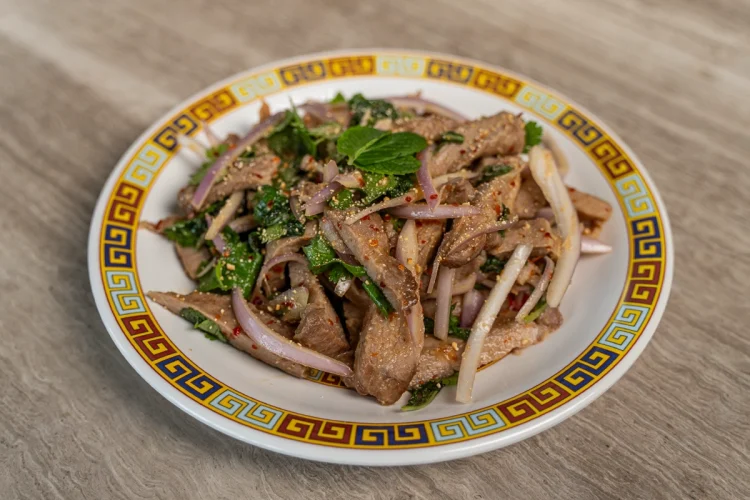
Lately, I’ve been finding myself craving the flavors of Thailand. Bright lime, salty fish sauce, fresh herbs, and one of my favorite dishes that has all of those things in one is Moo Nam Tok, or waterfall pork. Normally, this dish is best grilled. High heat. Smoky char. That unmistakable outdoor flavor. But here in Seattle, it has been cold, rainy, and grey, which means grilling season is very much on pause. Instead of waiting for summer, we are making Moo Nam Tok in the air fryer, and I promise it is just as satisfying. This air fryer Moo Nam Tok delivers juicy pork, punchy herbs, and the iconic savory, sour, spicy dressing without leaving the house. It is fast, reliable, and incredibly flavorful.
What Is Moo Nam Tok
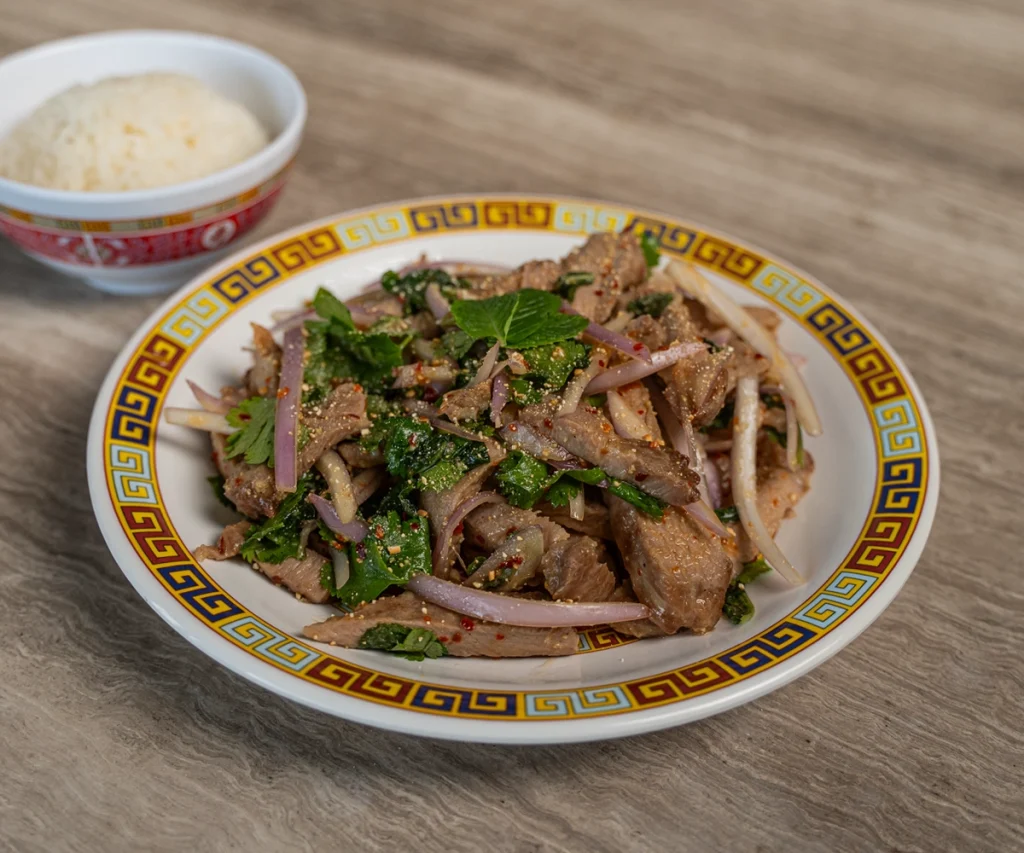
Moo Nam Tok translates to waterfall pork in Thai. Traditionally, it is a grilled pork salad tossed with fresh herbs, toasted rice powder, lime juice, fish sauce, and chili. The name comes from the juices that drip from the meat as it is sliced, resembling a waterfall. This dish is especially popular in Northeastern Thailand, where it is part of Isan cuisine. It is bold, herbaceous, savory, and balanced. Moo Nam Tok is often served warm or at room temperature and eaten with sticky rice, fresh vegetables, or lettuce wraps. Because Thailand and Cambodia share a border, there are many overlaps in ingredients, techniques, and flavor profiles between the two cuisines. You will find similar meat salads, herb-heavy preparations, and lime-forward sauces throughout both cultures.
The Core Components of Moo Nam Tok
Pork
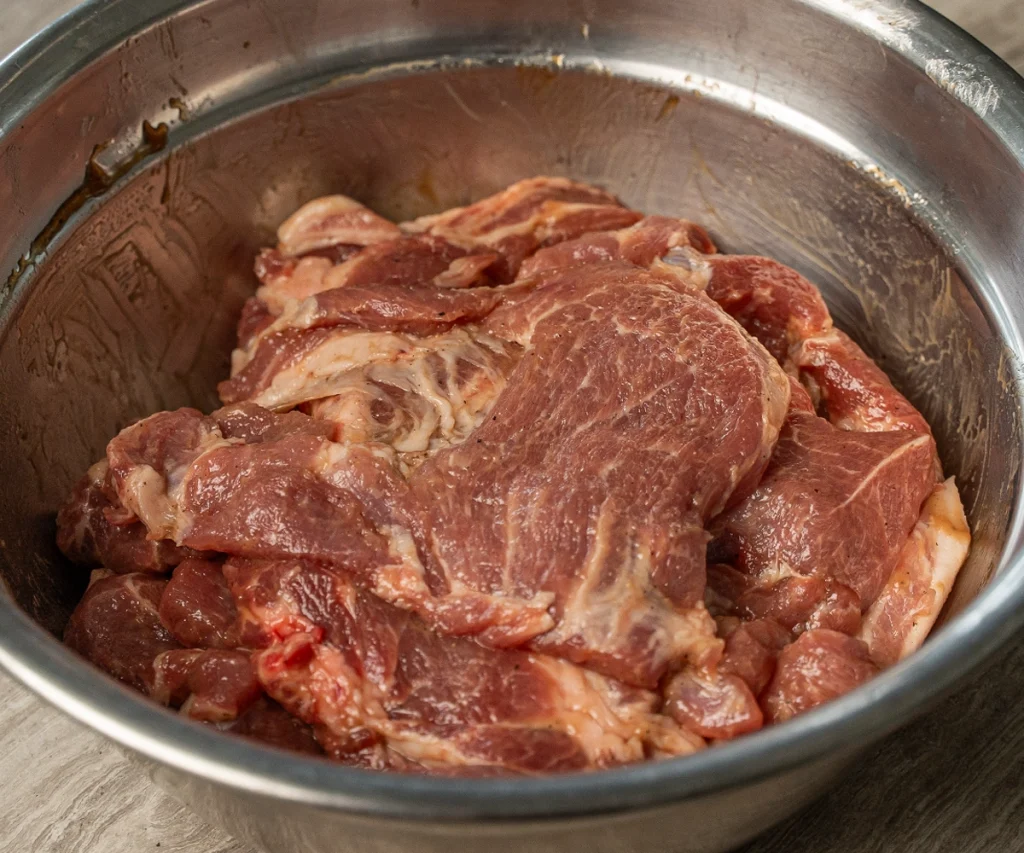
For this recipe, I use pork shoulder cut into half-inch to three-quarter-inch thick steaks. Pork shoulder has excellent marbling, which keeps the meat juicy even when cooked at high heat in the air fryer. It also absorbs seasoning beautifully.

Other great pork options include: Pork neck. This is the most traditional cut used for Moo Nam Tok. It has a high fat content and an incredible flavor. If you can find it, use it. Pork loin. Leaner and milder. This is a good option if you want something lighter, but be careful not to overcook it, as it dries out more quickly. Pork chops. Bone-in or boneless both work. Choose thicker chops for better juiciness. Each cut brings a slightly different texture, but the sauce and herbs tie everything together.
The Herbs and Vegetables
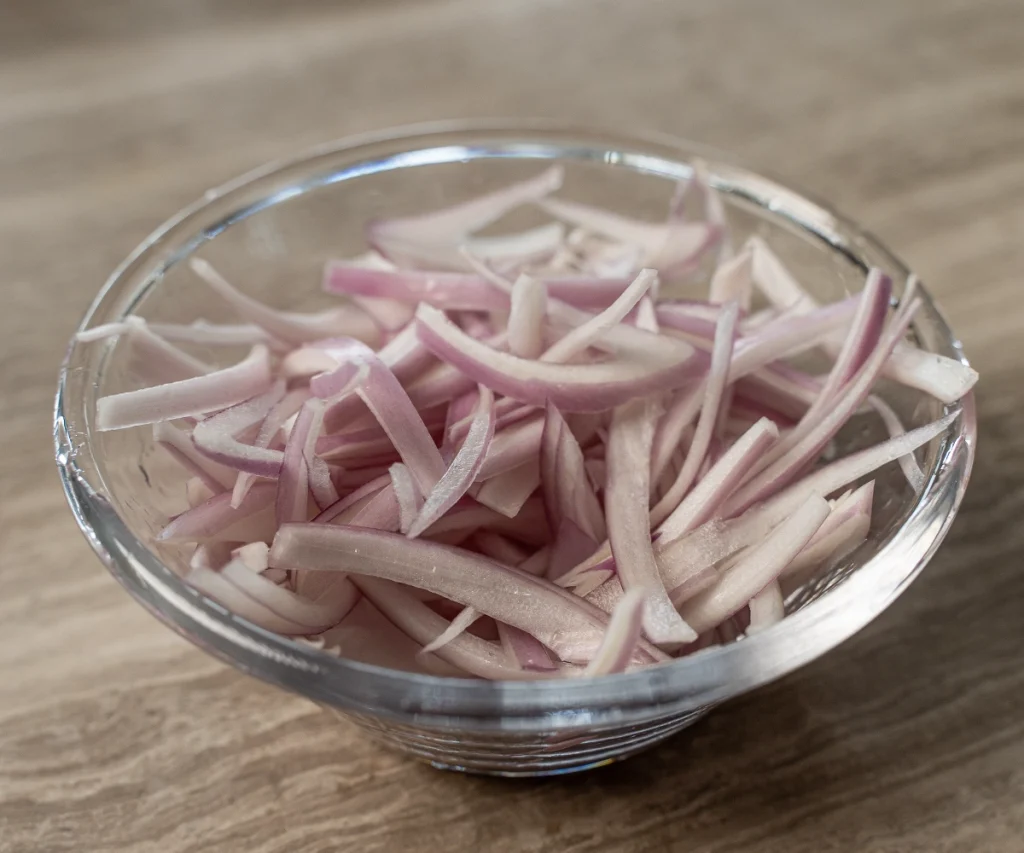
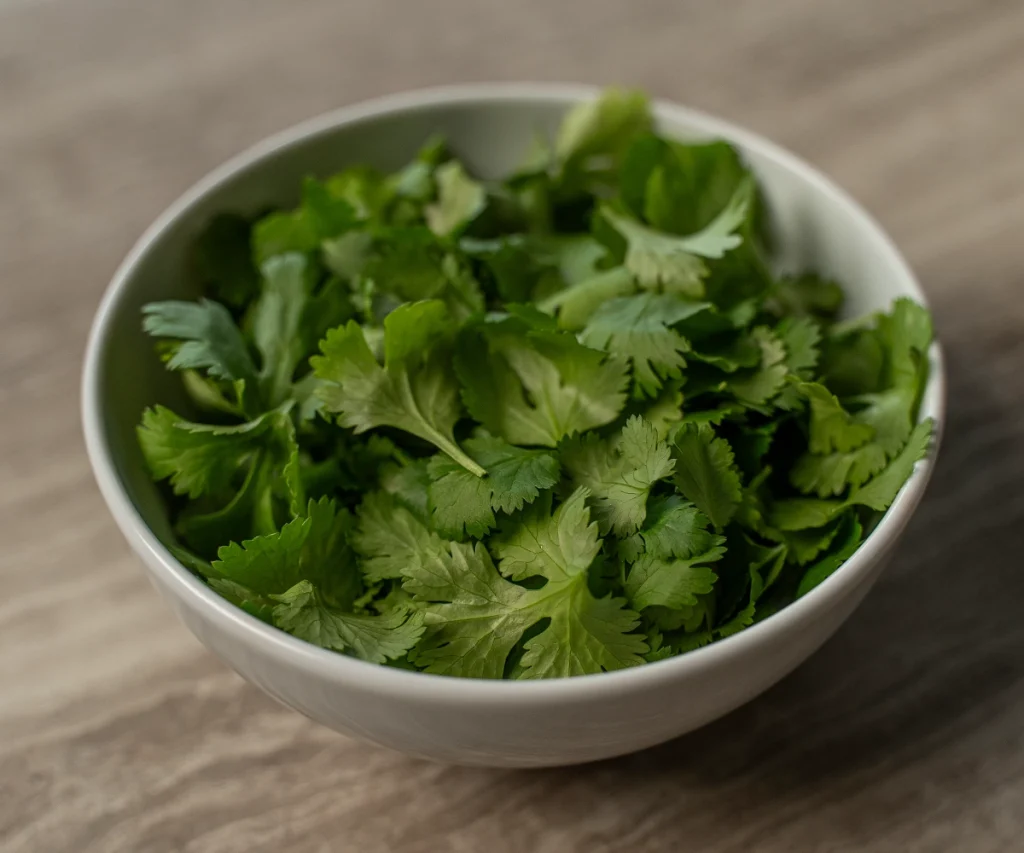
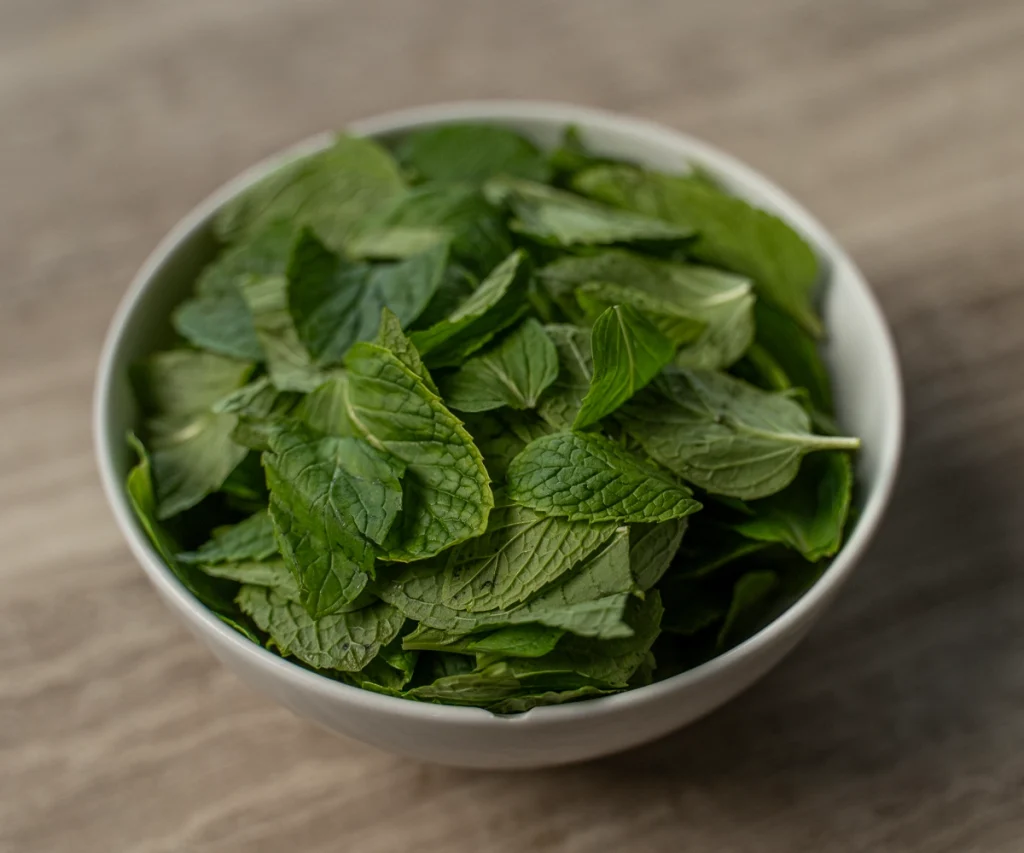
Herbs are not optional here. They are the soul of the dish. Most commonly, you will see shallots or red onions, cilantro, and mint. These add crunch, fragrance, and brightness, balancing the pork’s richness. Shallots offer a sweeter, softer bite than raw red onions. Cilantro brings freshness. Mint adds a cooling herbal note that lifts the entire dish. There are many variations of Nam Tok, but this trio is the most classic and reliable combination. Feel free to play around with your favorite herbs and find the combination that works best for you!
The Sauce That Brings It All Together
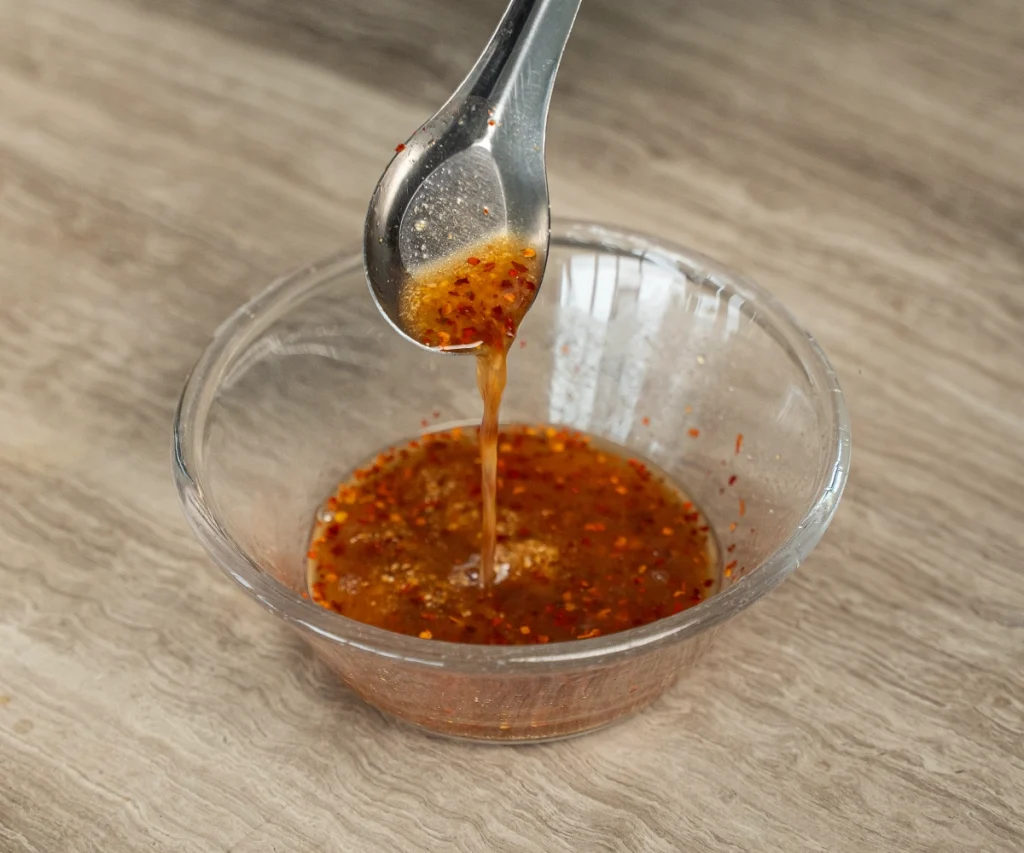
Fish sauce provides deep, savory umami. Sugar balances the salt and heat. Lime juice adds acidity and brightness. Crushed dried Thai chili brings heat. Toasted rice powder adds nuttiness and a subtle crunch while slightly thickening the sauce. Each ingredient has a purpose, and when combined, the result is bold, balanced, and just straight up addictive.
How to Make Air Fryer Moo Nam Tok
Prep the Pork
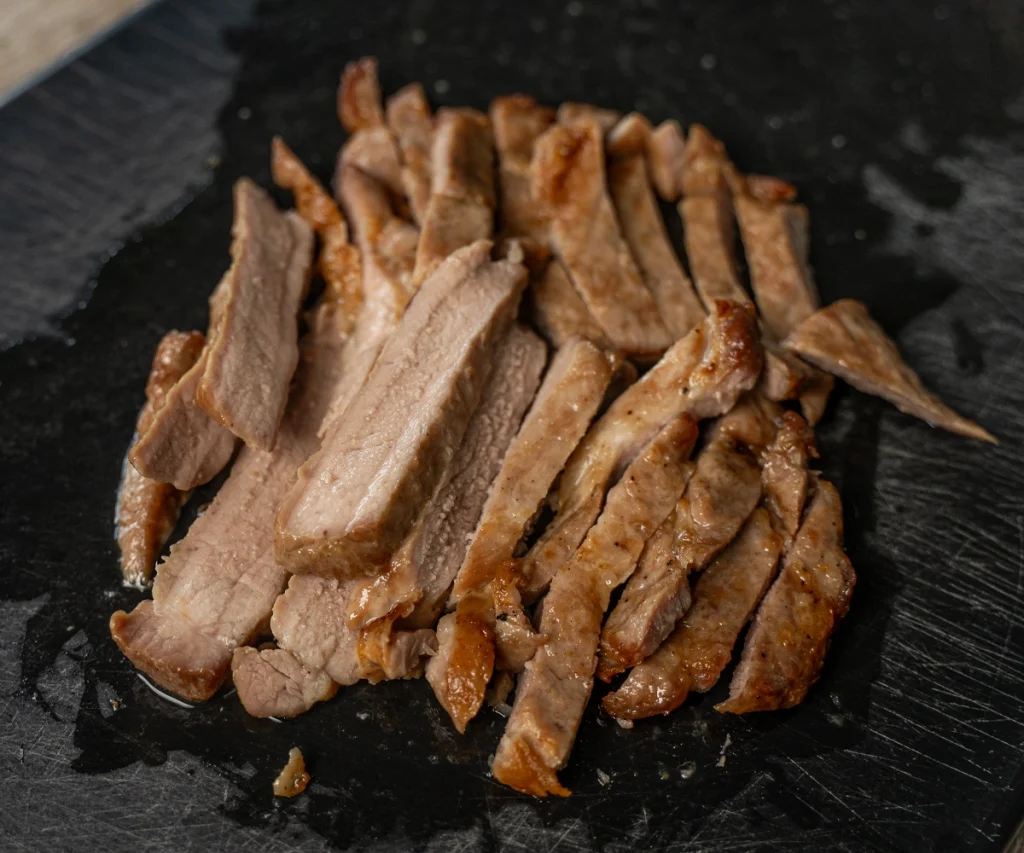
Preheat the air fryer to 400F, then cut the pork shoulder into steaks 1/2 to 3/4 inch thick. Rub evenly with oyster sauce, salt, and black pepper. Place the pork steaks in the air fryer basket in a single layer. Spray lightly with cooking spray. Air fry for 10 to 12 minutes, flipping halfway through.

The pork should reach an internal temperature of 140F. Remove from the air fryer and let it rest. During resting, the internal temperature will rise to a safe 145F while allowing the juices to redistribute before slicing. Slice the pork against the grain into thin strips.
Herbs and Vegetables
Slice shallots along the grain into thin strips. Cutting them end-to-end keeps more of the cell walls intact, making them less pungent when eaten raw. For an even milder flavor, soak the sliced shallots in cold water for 5 minutes, then drain well. For the cilantro and mint, pick the leaves from the stems. If the mint leaves are large, cut them in half or thirds so they roughly match the size of the cilantro leaves.
Make the Sauce
Start by making toasted rice powder. In a dry pan over medium heat, toast uncooked sticky rice along with a couple of lime leaves. Stir constantly until the rice turns golden brown and fragrant. Discard the lime leaves. Transfer the toasted rice to a spice grinder and grind it into a fine powder. Set aside.
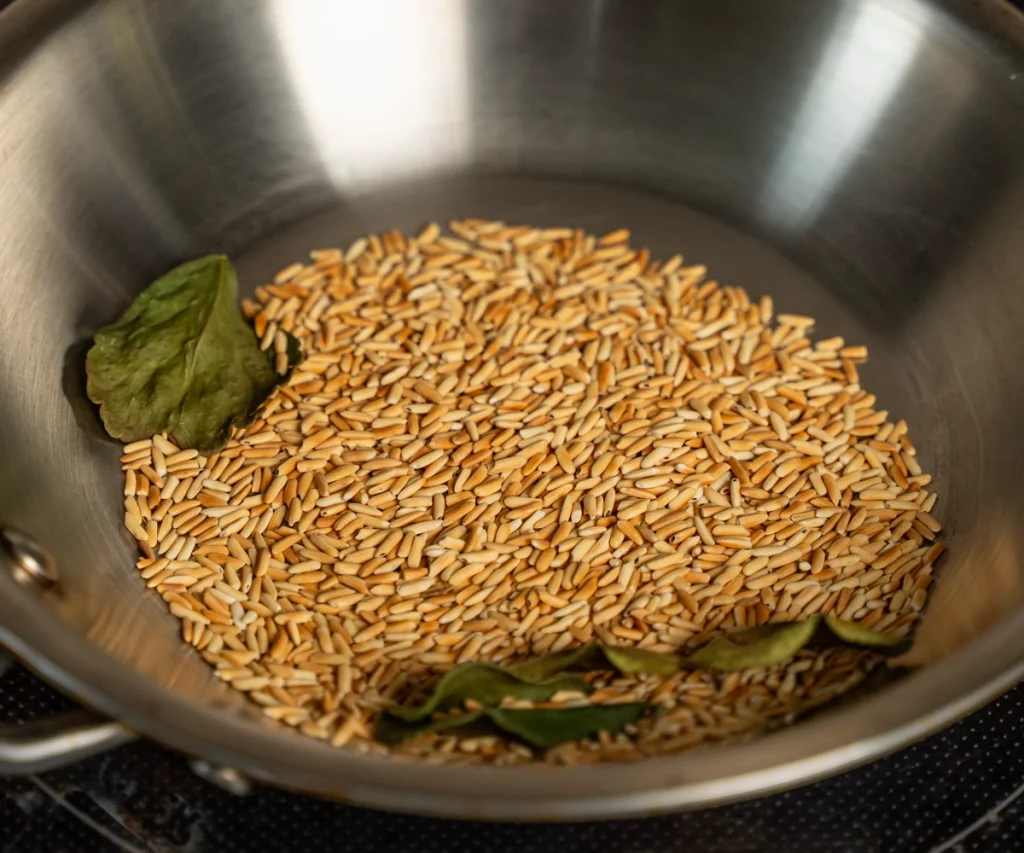
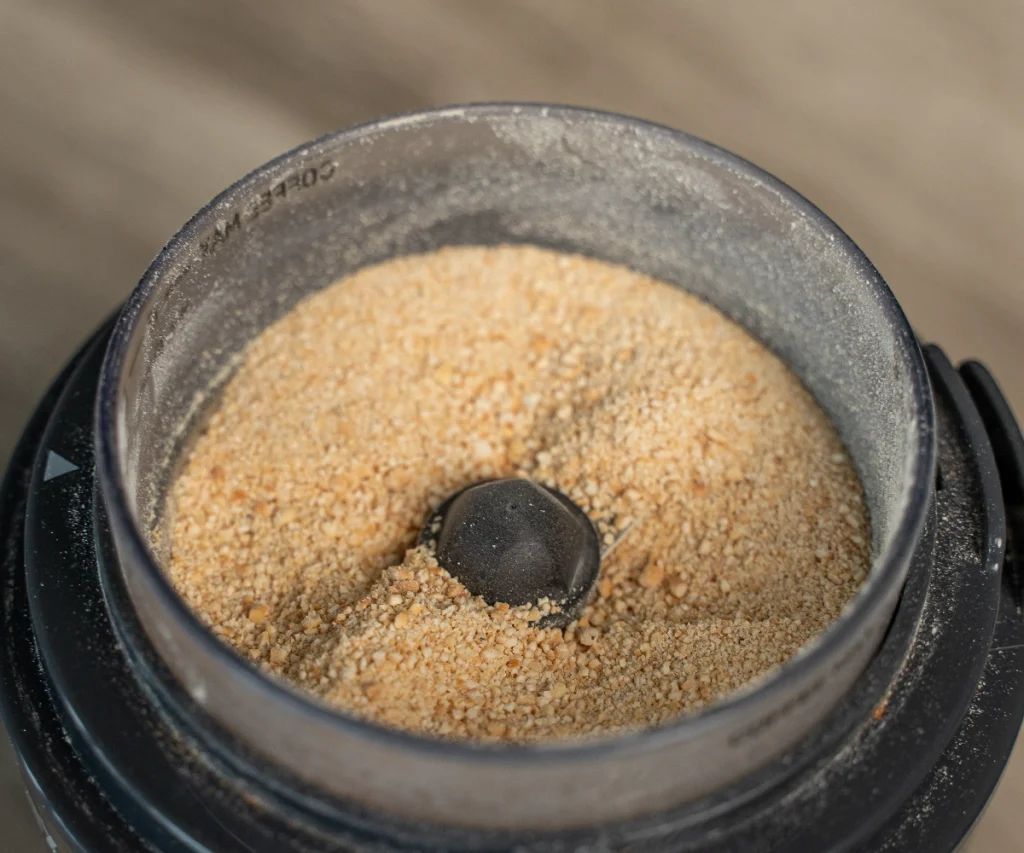
In a separate bowl, combine fish sauce, sugar, lime juice, crushed dried Thai chili, and toasted rice powder. Mix until well combined.
Assemble and Serve
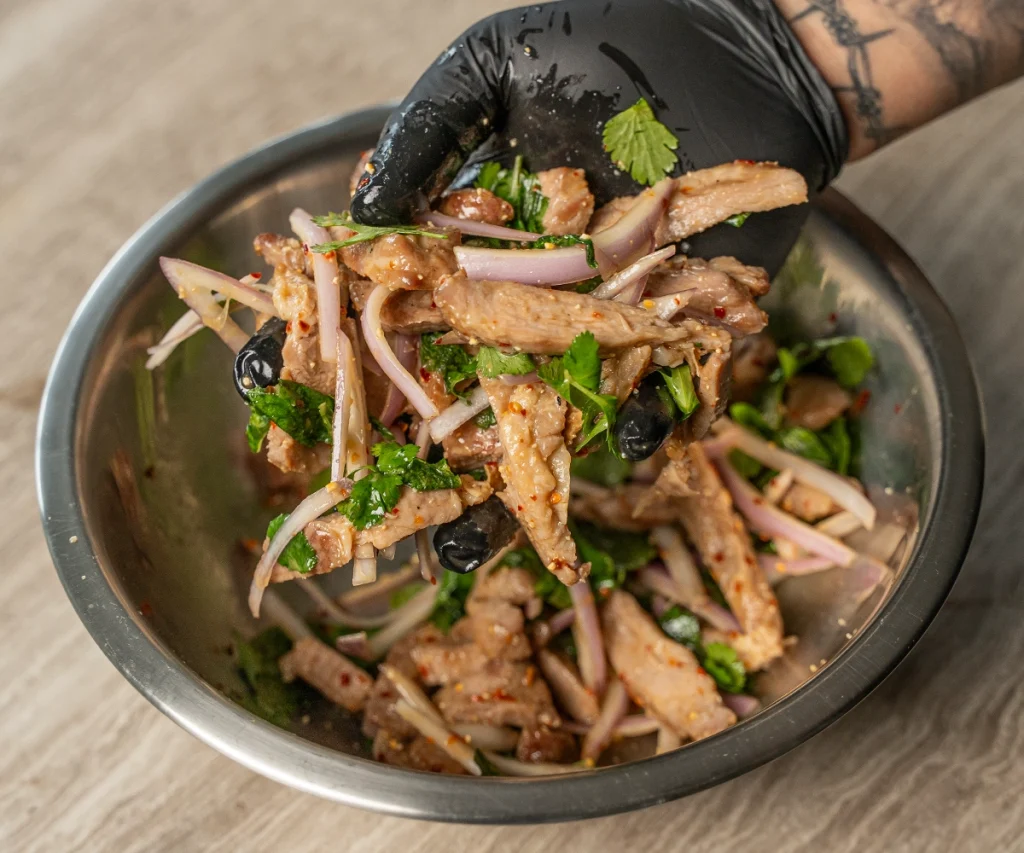
In a large mixing bowl, combine the sliced pork, shallots, cilantro, and mint. Pour the sauce over the top and toss until everything is evenly coated. Transfer to a serving plate and garnish with additional toasted rice powder. Serve immediately with white rice, sticky rice, lettuce leaves, or cabbage. Enjoy!

Air Fryer Moo Nam Tok / Waterfall Pork
4
servings30
minutes40
minutesIngredients
2 lb 2 Pork Shoulder
2 tbsp 2 Oyster Sauce
Salt and Pepper
- Herbs and Veggies:
1 Large 1 Shallot
1/4 cup 1/4 Cilantro Leaves
1/4 cup 1/4 Mint Leaves
- Sauce:
1 tbsp 1 Fish Sauce
1/2 tbsp 1/2 Sugar
1 1 Lime, Juice
1/2 tbsp 1/2 Crushed Dried Thai Chili
1 tbsp 1 Toasted Rice Powder, See Below
- Toasted Rice Powder:
2 tbsp 2 Uncooked Sticky Rice
4 4 Lime Leaves
Directions
- Prep the Pork:
- Preheat the air fryer to 400F, then cut the pork shoulder into steaks 1/2 to 3/4 inch thick. Rub evenly with oyster sauce, salt, and black pepper. Place the pork steaks in the air fryer basket in a single layer. Spray lightly with cooking spray. Air fry for 10 to 12 minutes, flipping halfway through. Let the pork rest before slicing against the grain into thin strips
- Herbs and Vegetables:
- Slice shallots along the grain into thin strips. Optionally, soak the sliced shallots in cold water for 5 minutes, then drain well
- For the cilantro and mint, pick the leaves from the stems. If the mint leaves are large, cut them in half or thirds so they roughly match the size of the cilantro leaves
- Make the Sauce:
- Start by making toasted rice powder. In a dry pan over medium heat, toast uncooked sticky rice along with a couple of lime leaves. Stir constantly until the rice turns golden brown and fragrant. Discard the lime leaves. Transfer the toasted rice to a spice grinder and grind it into a coarse powder. Set aside
- In a separate bowl, combine fish sauce, sugar, lime juice, crushed dried Thai chili, and toasted rice powder. Mix until well combined
- Assemble and Serve:
- In a large mixing bowl, combine the sliced pork, shallots, cilantro, and mint. Pour the sauce over the top and toss until everything is evenly coated. Transfer to a serving plate and garnish with additional toasted rice powder. Serve immediately with white rice, sticky rice, lettuce leaves, or cabbage. Enjoy!
Did you make this recipe?
Tag @feedthepudge on Instagram and hashtag it with #feedthepudge
If you like this recipe, make sure you pin it!

