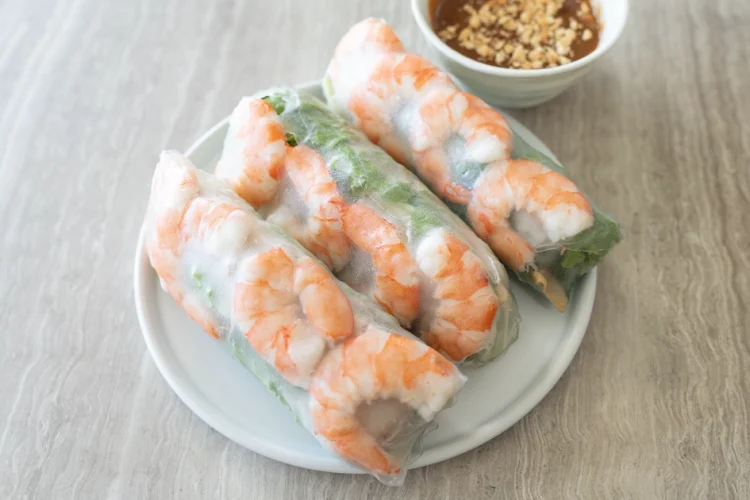
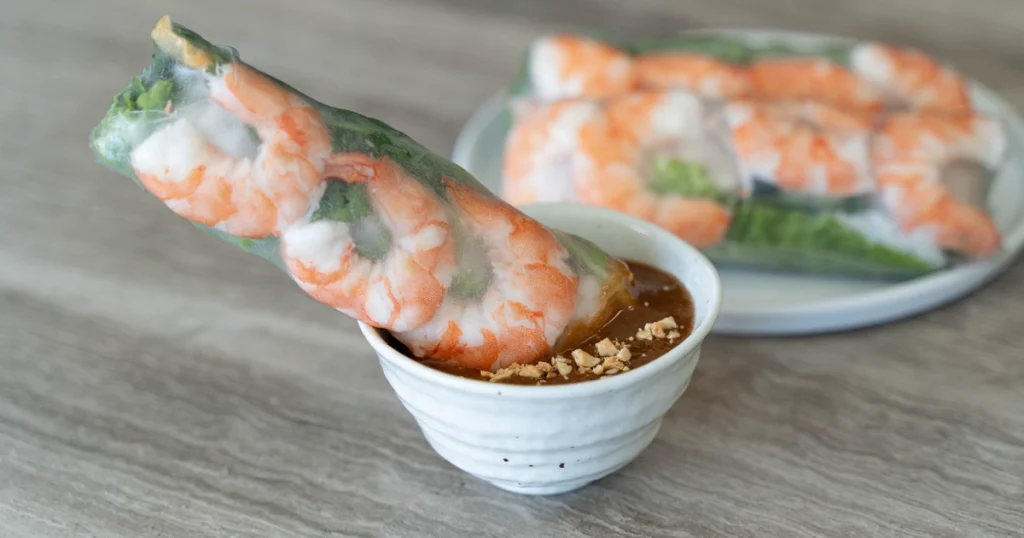
Spring rolls are one of the most popular Vietnamese street foods, and the pork and shrimp spring roll is probably the most common variety! These spring rolls are stuffed with melt-in-your-mouth pork belly, large shrimp, and tons of fresh herbs and veggies. These delicious spring rolls are typically paired with the Vietnamese Peanut Dipping Sauce, which really completes this dish.
What are Spring Rolls?
Spring rolls or Gỏi Cuốn is pretty self-explanatory – essentially, it’s translated into “salad rolls.” Different proteins and veggies are rolled in a thin and edible rice paper, served fresh instead of fried, showcasing the abundance of fresh ingredients wrapped inside.
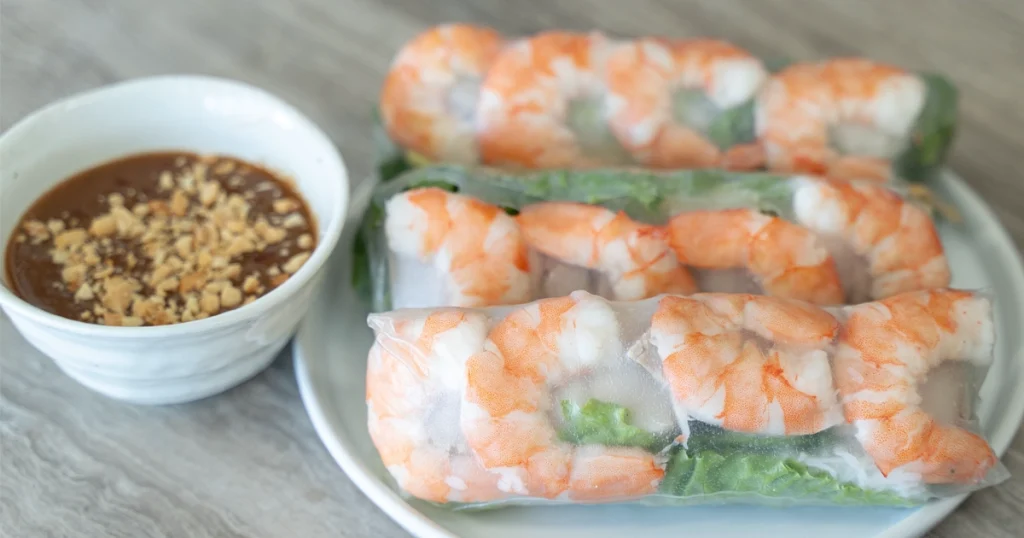
Spring rolls are not exclusively Vietnamese either, and there are variations across borders in Thailand, China, and the Philippines.
Preparation Method:
- Soften the Rice Paper: Briefly dip each rice paper in water to soften it, making it pliable for wrapping.
- Layer the Ingredients: Place a portion of the rice vermicelli noodles, herbs, vegetables, and proteins onto the softened rice paper.
- Wrap: Fold the sides of the rice paper over the filling, then roll it tightly from the bottom to the top, similar to rolling a burrito.
- Serve: Serve the rolls fresh with dipping sauce on the side.
Protips:
- Use cold water: Using cold water allows you more time to wrap each spring roll before the rice paper becomes too difficult to work with. It also gives the rice paper a chewier texture.
- Roll quickly: Before the rice paper can soften completely, start rolling the spring rolls up when the rice paper is stiff but still pliable.
- Put the shrimp in the middle: Adding the shrimp in the middle of the rice paper and away from the rest of the fillings allows you to show off the vibrant colors of the shrimp instead of getting lost in all the fillings.
Ingredient Variations:
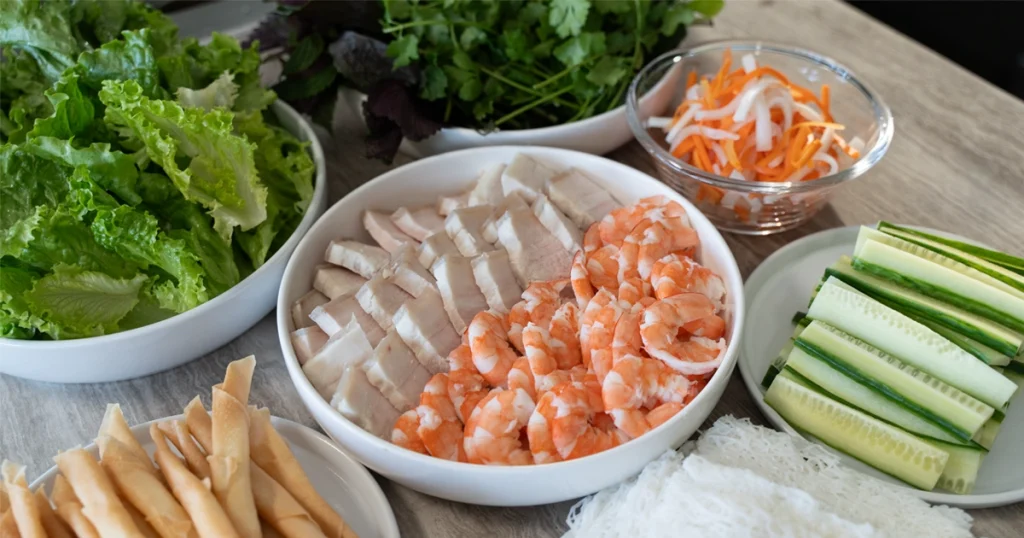
- Vermicelli Noodles: In my household, we personally like the Thin Woven Rice Vermicelli noodles as opposed to the traditional vermicelli noodles. The woven ones are easier to cook, and we like that they’re already pre-portioned, making it easier to assemble your spring roll!
- Rice Paper: The rice paper I’ve used my entire life is the round 22cm version, but they come in smaller and larger sizes and are square instead of round. There’s no real difference other than personal preference.
- Filling: For this recipe, I kept it pretty classic and traditional, but other typical fillings can include, but are not limited to, leaner cuts of pork, Vietnamese ham (chả lụa), different varieties of lettuce, beansprouts, pickled veggies, star fruit, mint, garlic chives, and honestly, the list goes on and on. Experiment, and find what you like best!
- Dipping Sauce: The two most common dipping sauces for these spring rolls are Vietnamese peanut dipping sauce or fish sauce dipping sauce (nước chấm). When I make spring rolls, I usually make both dips so my guests can choose which one they like better!
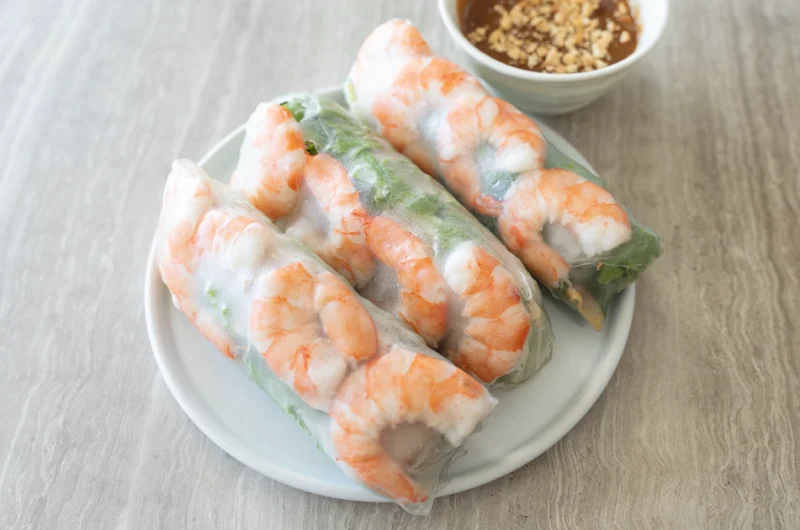
Pork and Shrimp Spring Rolls / Gỏi Cuốn
6-8
servings1
hour1
hourIngredients
- Fillings:
2 lbs 2 Skin-on Pork Belly
2 lbs 2 Large Shrimp
12 oz 12 Thin Woven Rice Vermicelli (Banh Hoi)
8.8 oz 8.8 Eggroll Wrapper
- Vegetables:
Green Leaf Lettuce
Persian Cucumbers
Cilantro
- Miscellaneous Ingredients:
Ginger
Water
Salt
Oil
Directions
- Pork Belly:
- Heavily salt a large pot of boiling water, add in a 1-inch knob of ginger, and add pork belly. Bring back up to a boil, lower the heat, and simmer covered for 30-45 minutes or until pork reaches an internal temperature of 155F. Remove from pot, and wrap in plastic wrap—place in the fridge to cool down before slicing.
- Shrimp:
- Rinse the shrimp in cold water and clean the shrimp. Boil shrimp in salted water until cooked through. Drain, rinse, then peel shrimp and cut in half length-wise.
- Noodles:
- Add thin woven rice noodles to a pot of boiling water with oil and salt and cook for 1-2 minutes. Drain, then rinse in cold water to stop the cooking process. Then, add a single layer of noodles to a container or plate and brush with oil to prevent the layers from sticking.
- Eggroll Wrappers:
- Thaw eggroll wrappers and separate each layer. Starting at one corner, loosely roll each wrapper and seal with water. Fry in 350F oil until golden brown.
- Vegetables:
- Cut cucumbers into strips
- Cut woodsy/thick stems from cilantro
- Separate green leaf lettuce
- Assembly:
- Soften rice paper in cold water
- Layer in fillings
- Roll spring roll starting at the bottom while tucking in the sides
- Serve with peanut sauce, and enjoy!
Did you make this recipe?
Tag @feedthepudge on Instagram and hashtag it with #feedthepudge
If you like this recipe, make sure you pin it!


How can I make this in advance to sell ? I have a freedge at the work kitchen that I could storage them.. it would be neat to make a few portions in thw morning so when k get the orders on lunch time they are already made.. how can keep them fresh without damage the rice paper texture so much? Thank you!
Hi Marianna, the only way to prep them ahead of time is to individually wrap them with some plastic wrap, but unfortunately there’s not a whole lot you can do to prevent the rice paper from hardening
I saved left over spring rolls by laying a damp cloth over the plate with the rolls then placing them in the fridge. They were still perfect the next day!
Good tip!
What is the purpose of this part of the recipe??
Wrappers:
Thaw eggroll wrappers and separate each layer. Starting at one corner, loosely roll each wrapper and seal with water. Fry in 350F oil until golden brown.
That’s for the crispy egg roll thats put in the spring roll as a crunchy element