
At the heart of Vietnamese cuisine lies the luxurious yet humble bowl of Pho. The two have become so synonymous with each other that you can’t even begin to think about Vietnamese food without thinking about pho. For me, pho is more than just a dish; it’s a cultural icon, a culinary symphony encapsulating Vietnam’s essence. This beef brisket pho recipe represents all of Vietnam’s rich history, all in one bowl.

History of Pho
The history of pho is as rich and flavorful as the dish itself, intertwined with Vietnam’s cultural tapestry. Although its exact origins are debated, we can trace pho’s evolution back to the early 20th century, amidst Vietnam’s colonial era and French occupation.
Before French colonization, Pho predominantly featured chicken because of the high value placed on cows. The shift to using beef occurred when the French demanded the slaughter of cows to suit their preferences better.
Today, Pho has evolved to become a national symbol, and depending on what region of Vietnam you have it in, there are some regional variations that really change the flavor profile. I’ll have a full recipe for northern pho down the line that has some critical differences from the southern pho I grew up eating.
How do I get a light and clean broth?
The hallmark of an excellent pho broth is having a clean broth that’s packed full of flavor. Here’s how:
Tip #1: Parboil and scrub your proteins!
Make sure that you parboil your beef bones and brisket for ~10-15 minutes. Then, thoroughly scrub and rinse under cold water to remove any scum before adding back to a clean pot of water.
Tip #2: Don’t let the aromatics and spices simmer in the broth for too long!
I typically pull my charred onion/ginger, daikon, and toasted spices out around the 1.5-2 hour mark. Anything longer than that, and you’ll start to notice the onion disintegrating and muddying up the broth. If the toasted spices simmer for too long, they impart too many earthy flavor notes that tend to give the broth a bitter finish.
Tip #3: Simmering on low is key!
After the broth comes up to the initial rolling boil, make sure to reduce the heat. Since we cook the broth for several hours, the goal is to prevent the bones from releasing excessive collagen and protein into it. Cooking the broth on high will result in a cloudy appearance.
Tip #4: Filter it!
This step, for me, is usually optional unless I’m entertaining friends and want to impress! Remove excess impurities by running it through a fine mesh strainer. One of my favorite spots in Seattle, Vinason – actually triple-filters their broth before serving!
If you’re still struggling to get your brisket pho broth light, add a comment, and we’ll figure out why!

Beef Brisket Pho / Phở Bò Chín
6-8
servings1
hour5
hoursIngredients
- Broth:
8 quart 8 water
4 lbs 4 lbs beef bones
4 lbs 4 brisket
1 1 yellow onion
2 2 inch knob ginger
1 medium 1 daikon
4 tbsp 4 fish sauce
2 tbsp 2 MSG
1 1 inch nub rock sugar
- Spice bag:
4 4 dried cloves
3 3 dried star anise
1 1 dried cardamom pod
1 1 dried cinnamon stick
1 tbsp 1 dried coriander seeds
1 tbsp 1 dried fennel seeds
- Garnishes:
Beansprouts
Green Onions
Cilantro
Thai basil
Jalapeno
Lime
Directions
- Prep:
- Parboil beef bones and brisket for 10 minutes. Thoroughly rinse and scrub under cold water
- Char whole onion, a knob of ginger under an open flame, a broiler on high, or a dry pan on the stovetop. Then peel and chop daikon
- Toast pho spices until fragrant, then add to a spice bag
- Thinly slice white onions and submerge them in cold water to remove the bite. Chop up cilantro, green onions, jalapenos, and lime
- Broth:
- To a clean pot of water, add cleaned beef bones and brisket. Add charred aromatics, daikon, and toasted spices
- Bring up to a rolling boil, skim off any impurities, and reduce heat to simmer on low for 1.5-2 hours
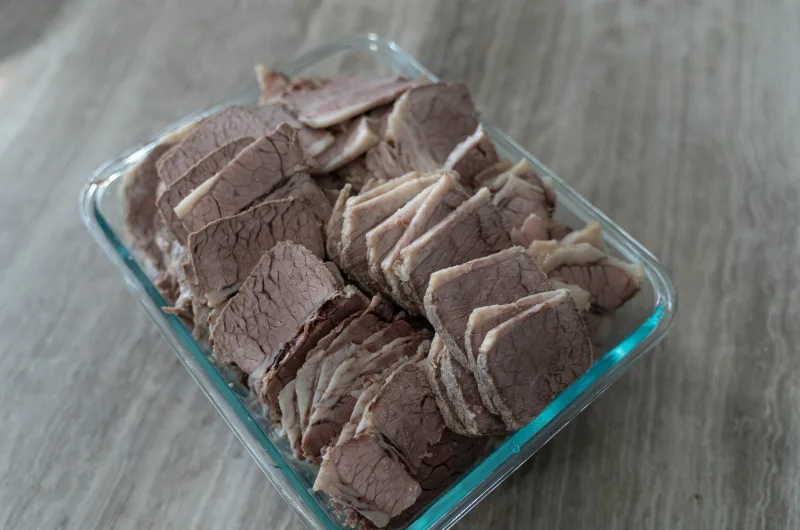
- Remove aromatics and daikon and let that simmer for another hour or until the brisket is tender. Remove brisket to cool down before slicing. Let the beef bones simmer for another 2+ hours
- Season broth to taste with rock sugar, MSG, fish sauce, and salt
- Serve:
- Cook rice noodles to the desired doneness
- Assemble the bowl by adding noodles and sliced brisket. Ladle in broth and garnish with green onions, cilantro, and white onions. Serve with beansprouts, Thai basil, jalapenos and limes
Did you make this recipe?
Tag @feedthepudge on Instagram and hashtag it with #feedthepudge
If you like this recipe, make sure you pin it!


Can you do a combo recipe of oxtail, brisket and beef balls pho? :)
I def have a pho dac biet recipe coming down the line!
I love this recipe. I can already tell this is great by how thorough and well thought out this is. I won’t name names but I just made a similar recipe by a very famous chef and so many steps, ie. parboiling the brisket, using a spice ball, filtering etc. were left out, that it was obvious not only had no one ever tested the recipe, but possibly never even made it in the first place. Conversely yours, tells me that not only have you tested it, you’ve made it yourself, and many times. Thank you so much for sharing a delicious, *well-written* recipe I KNOW I CAN TRUST. You’ve just earned a big fan, chef.
Thank you so much for the kind words Marlene! I’m so glad that you’re here. Hope you give my other recipes a try!
Sorry to be a pest but I have some minor questions. What kind of brisket do you recommend; flat, point or whole? Do you trim it of any fat? Should white onions be listed amongst the garnishes? Do you do anything with the charred veg pulled at the 2 hour mark? Okay that’s it. Thanks again!
Great questions! My preference is the point as I personally like the fattier cut, but either or/whole is completely fine too. I personally don’t trim the fat, but if there was excess, you can definitely take it out to help the lightness of the broth. White onions should def be listed and I’ll fix that. Charred aromatics should be discarded as they’ve served their purpose!