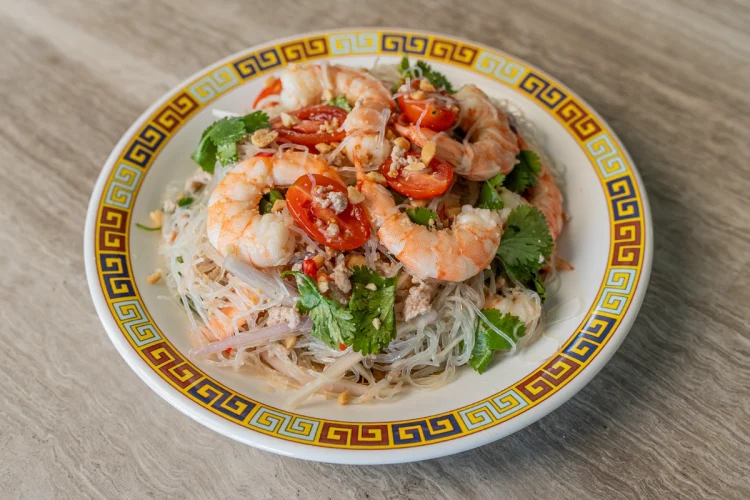
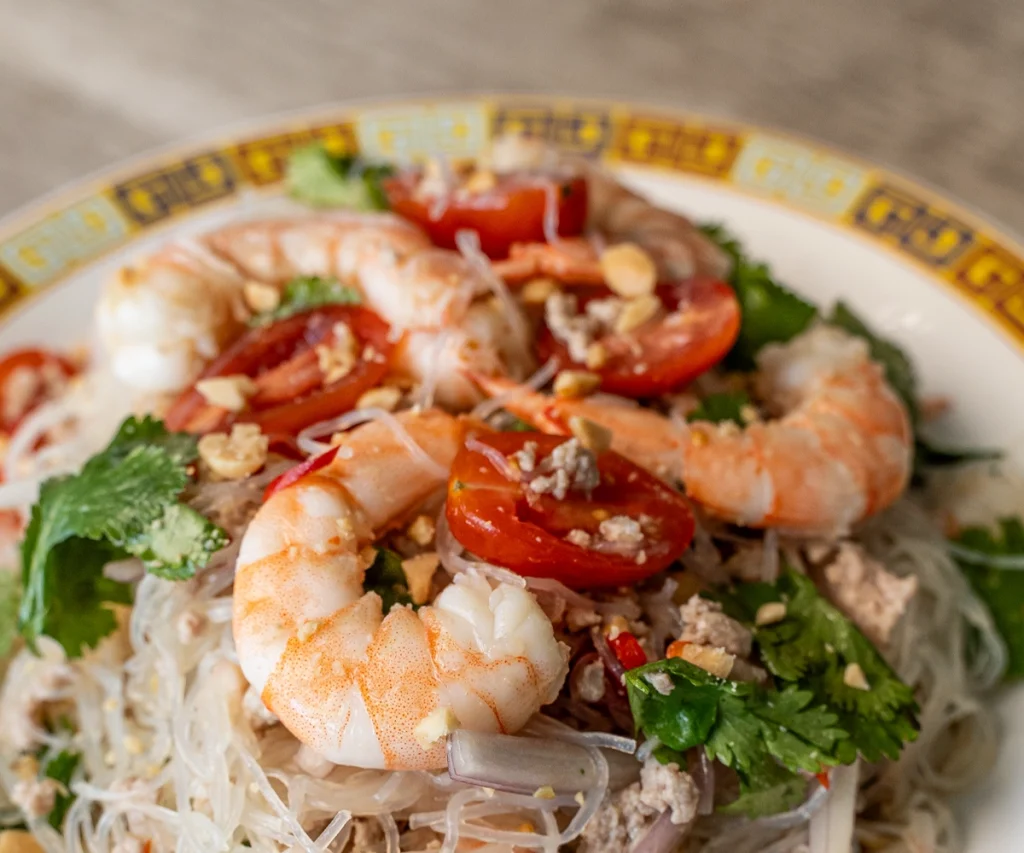
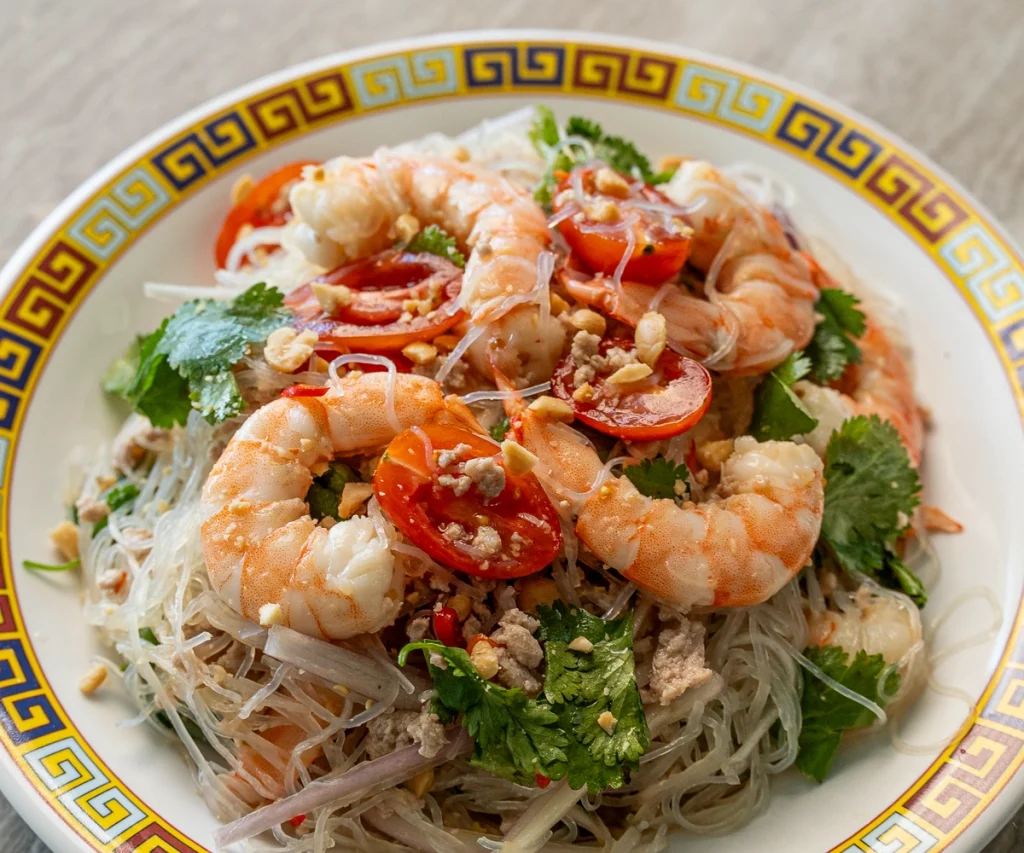
If you’re bored with eating the same old sad salads, you have to try this Thai glass noodle salad. This is a super easy recipe with no difficult techniques, no special equipment, just a little prep work, and the payoff is an incredibly bright, fresh salad that delivers a ton of flavor in every bite. The glass noodles bring this bouncy, slippery texture that I absolutely love, and the way they soak up that punchy lime and fish sauce dressing is, honestly, incredible. If you want your next go-to summer salad or a fresh dinner that you’ll crave all year round, give this Thai glass noodle salad a try!
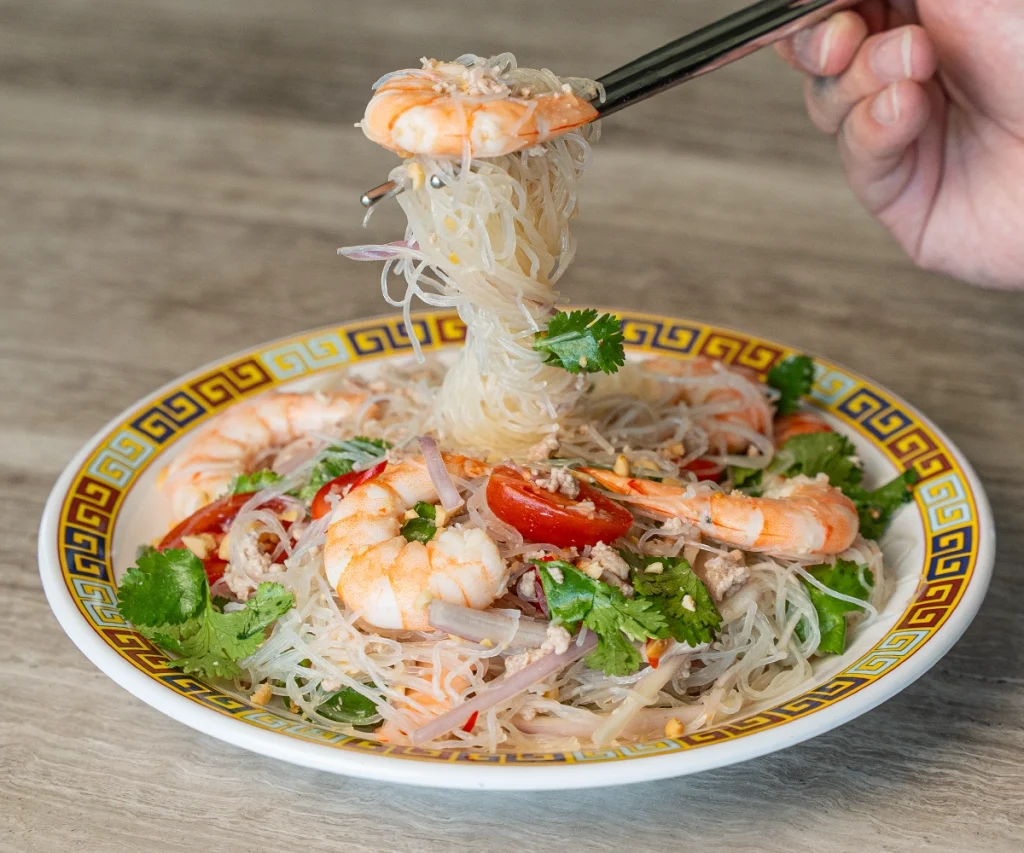
What Is Yum Woon Sen?
Yum woon sen (ยำวุ้นเส้น) is a classic Thai salad centered around glass noodles, also called cellophane noodles, bean thread noodles, or mung bean noodles. “Yum” points to the bright, tangy style of Thai salad, and “woon sen” simply means glass noodles. Across Thailand, you find it on home tables and street carts alike, tossed with herbs, a protein or two, and a dressing that hits all four corners of Thai flavor at once: salty, sour, sweet, and spicy. Perfect harmony and balance of flavors.
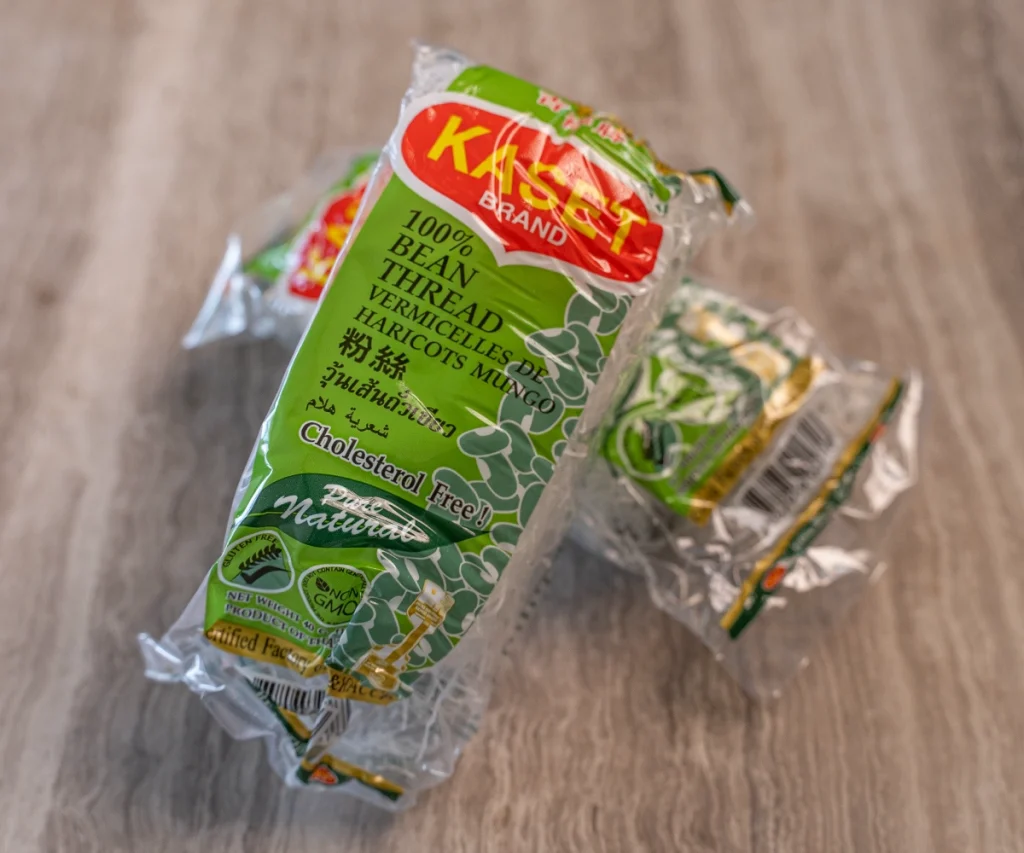
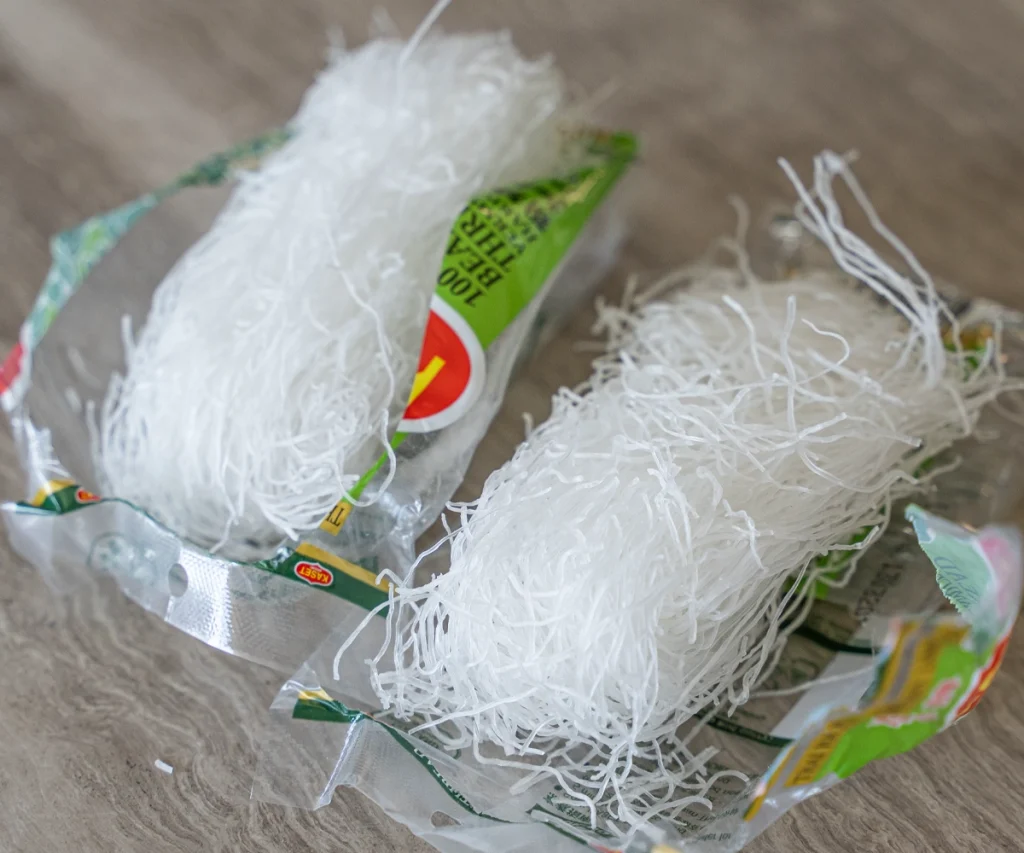
These noodles turn clear and glossy once cooked, which gives the dish its name. They carry almost no flavor on their own, so they act like little sponges that soak up everything you toss them with. That quality makes them perfect for a bold dressing like this one.
How to Make Thai Glass Noodle Salad (Step by Step)
The trick that keeps this recipe so simple is that you can blanch the glass noodles, shrimp, and ground pork in one pot of boiling salted water. Cook them in sequence, scoop each one out, and you save yourself a sink full of dishes. Follow these steps, and you’ll have the perfect lunch or dinner on the table in no time.
Make the dressing
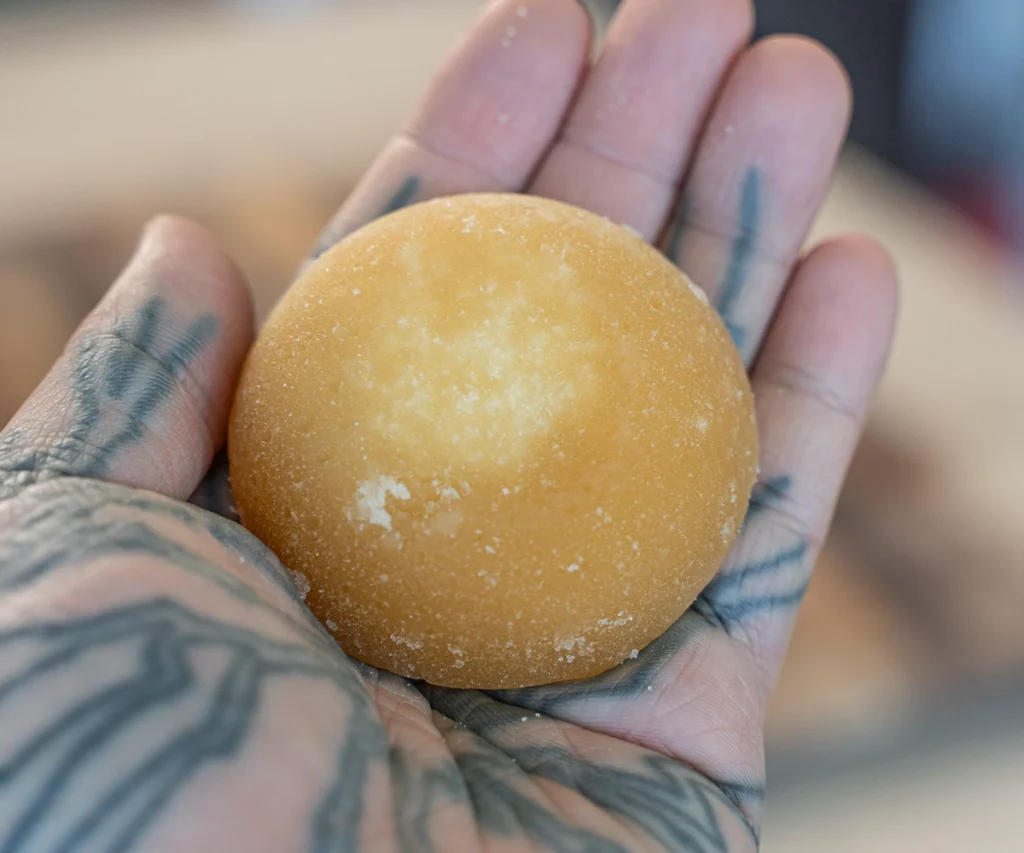
Thinly slice the Thai chilies and add them to a small mixing bowl. Palm sugar usually comes in a firm puck, so shave it thin with your knife and add it to the bowl. Pour in the Dear Mam fish sauce and the fresh lime juice, then stir everything together until the palm sugar fully dissolves. Set the dressing aside so the flavors can marry while you cook everything else. The longer it sits, the better it tastes.
Blanch the glass noodles first
Fill a medium pot with water, salt it generously, and bring it to a rolling boil. This single pot handles all three of your cooking items, one after the other.
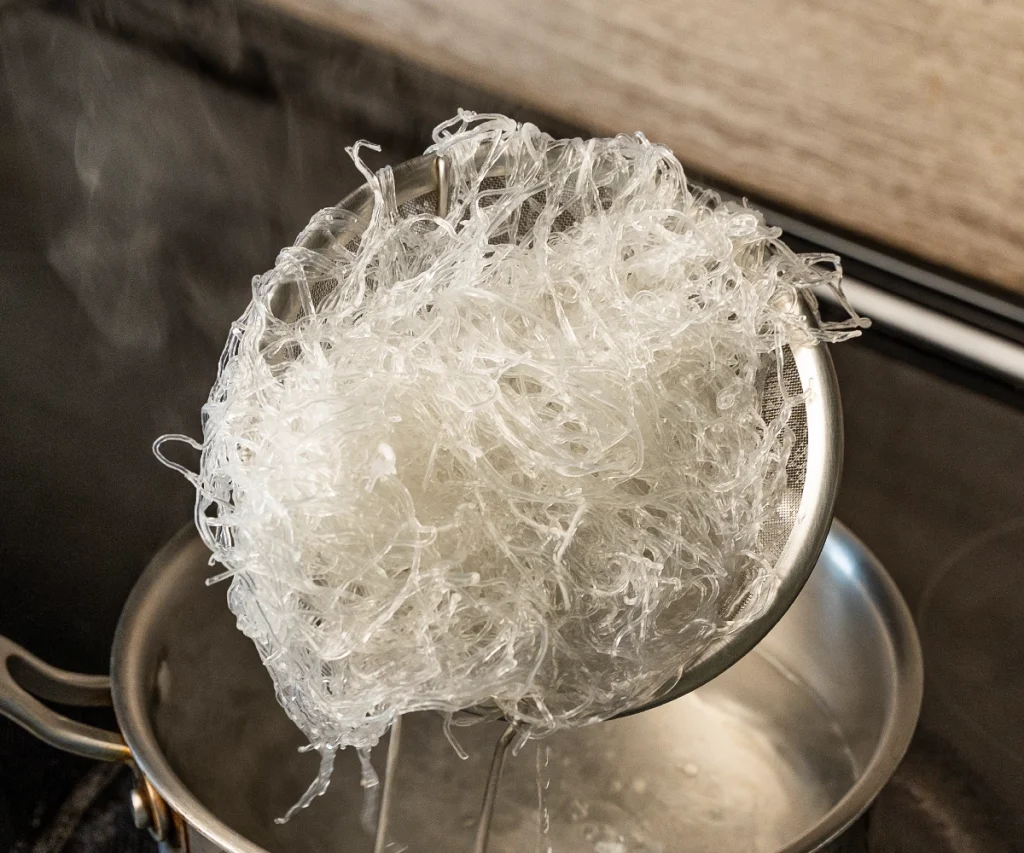
Drop the glass noodles into the boiling water. They cook fast, so watch closely. After about 30 seconds, they turn clear, soft, and bouncy. Scoop them out right away, rinse under cool water to stop the cooking process, and then set them aside.
Blanch the shrimp with the shells on
Add the cleaned shrimp to the same boiling water, leaving the shells on, so they hold their shape and stay plump. Cook for 2 to 3 minutes, just until they turn pink and curl, then scoop them out. Once they cool enough to handle, peel off the shells and set the shrimp aside.
Blanch the ground pork last
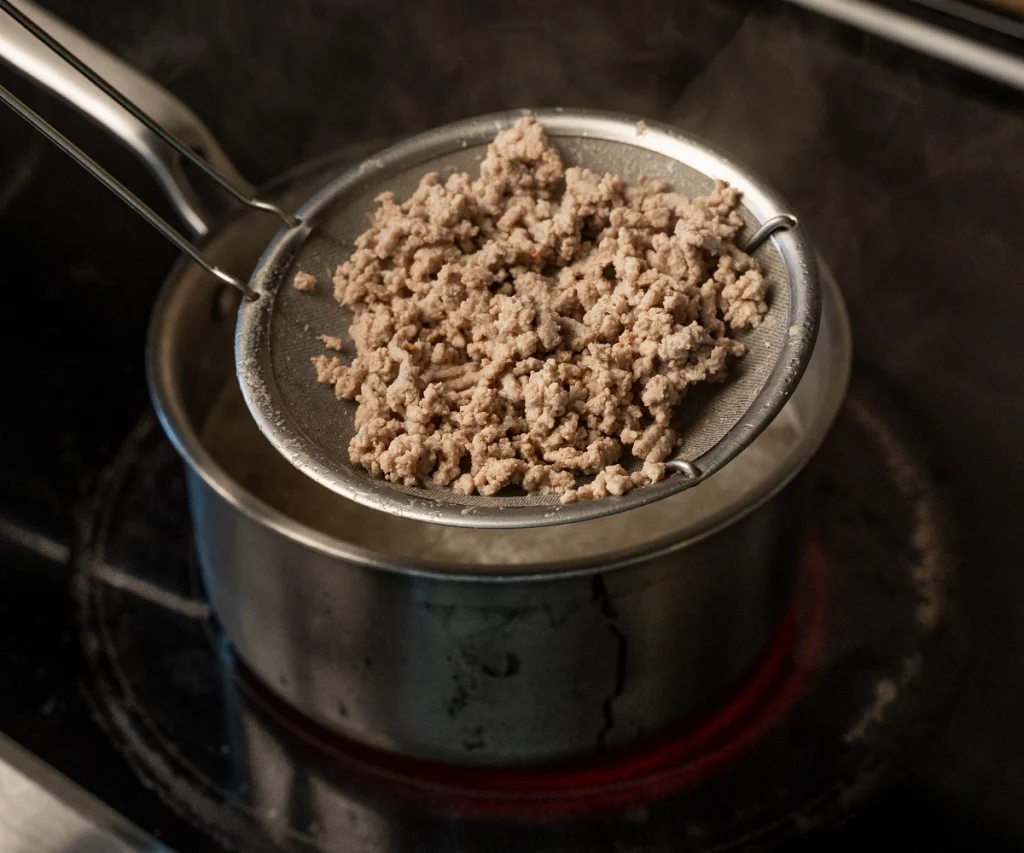
Save the pork for last, since it releases many impurities into the water. Drop it into the pot and break it up with a pair of chopsticks or a spoon so it cooks in small, even pieces. Cook for about 2 to 3 minutes, until no pink remains, then scoop it out with a slotted spoon and set it aside to cool.
Toss everything together
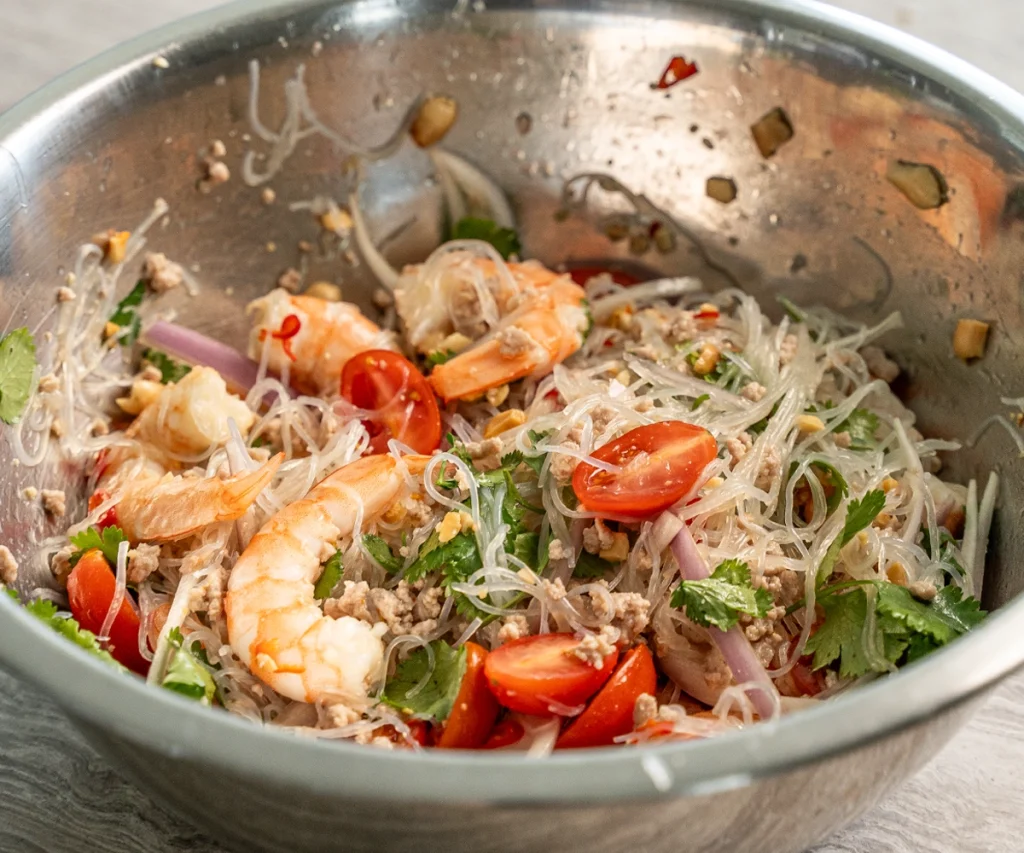
Add the noodles, peeled shrimp, and pork to a large bowl. Pile in the sliced shallot, halved cherry tomatoes, cilantro leaves, and the crushed peanuts. Pour the dressing over the top and toss thoroughly so every strand soaks it up. Taste and adjust with a little more lime or fish sauce if you like.
Finish and serve
Transfer the salad to a serving plate and scatter the crushed peanuts over the top. Serve and enjoy!
Tips for the Best Yum Woon Sen
Taste before you serve. Thai cooking lives on balance. If it leans too sour, add a touch of palm sugar. Too sweet, add a squeeze of lime. Ultimately, for any of my recipes, I recommend seasoning to taste because everyone’s palate is different!
Blanch in the right order: noodles, then shrimp, then pork. Cook the pork last, since it releases the most impurities into the water, and you do not want those clinging to your noodles or shrimp.
Keep the shrimp shells on while they cook. They protect the shrimp, lock in moisture, and help them hold their shape. Peel them after they cool.
Do not overcook the noodles. 30 seconds to a minute is plenty. Mushy glass noodles lose their signature bounce.
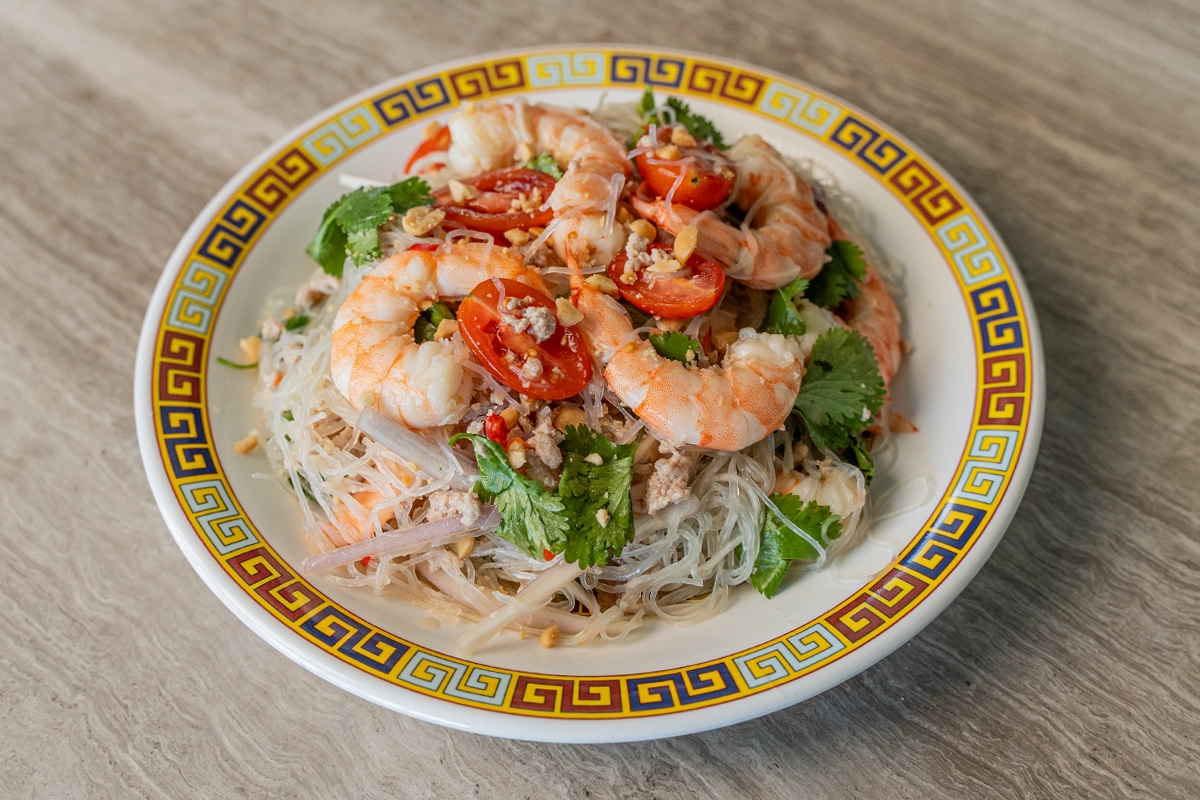
Thai Glass Noodle Salad / Yum Woon Sen
4
servings30
minutes40
minutesIngredients
3 oz 3 Glass Noodles
1/2 lb 1/2 Shrimp
1/4 lb 1/4 Ground Pork
1 Large 1 Shallot
1 cup 1 Cherry Tomatoes
1/4 cup 1/4 Cilantro Leaves
2 tbsp 2 Crushed Peanuts
- Dressing:
2 tbsp 2 Dear Mam Fish Sauce
1 1 Lime, Juice
2 tbsp 2 Palm Sugar
3 3 Thai Chilies
Directions
- Prep:
- Thinly slice shallots into strips along the grain. Cut cherry tomatoes in half. Remove the cilantro leaves from the stems and set everything aside
- Make the dressing:
- Thinly slice the Thai chilies and shave the palm sugar into thin pieces with your knife. Add both to a small mixing bowl with the Dear Mam fish sauce and lime juice, then stir until the sugar fully dissolves
- Blanch the noodles and protein:
- Bring a medium pot of generously salted water to a boil. Blanch the glass noodles for about 30 seconds until clear and bouncy. Scoop them out, rinse under cool water
- Blanch the shrimp, shells on, for 2 to 3 minutes or until cooked through. Scoop them out, cool, then peel
- Blanch the ground pork last for 2 to 3 minutes, breaking it up as it cooks, until no pink remains
- Assemble:
- In a large mixing bowl, add the noodles, shrimp, and pork with the thinly sliced shallot, tomatoes, cilantro, and crushed peanuts. Pour over the dressing and toss well.
- Plate the salad, top with a little more crushed peanuts, and enjoy!
Did you make this recipe?
Tag @feedthepudge on Instagram and hashtag it with #feedthepudge
If you like this recipe, make sure you pin it!
Frequently Asked Questions
What are glass noodles made of? Glass noodles, also called cellophane or bean thread noodles, come from mung bean starch. They turn translucent and bouncy once cooked, which gives the salad its name and its gluten-free quality.
Can I make this salad without shrimp or pork? Absolutely. You can use only one protein, swap in ground chicken or turkey, or skip the meat and load up on extra vegetables and herbs for a vegetarian version. Use a vegan fish sauce or a splash of soy sauce if you go meat-free.
Is Thai glass noodle salad gluten-free? Yes, as long as your fish sauce contains no wheat. The noodles themselves are made with mung bean starch, so the base of the dish is naturally gluten-free.
Can I use a different sweetener instead of palm sugar? Palm sugar gives the most authentic, mellow caramel flavor, but light brown sugar works in a pinch. Start with the same amount and adjust to taste.
Why blanch the shrimp with the shells on? The shells shield the shrimp from the boiling water, so they stay plump and hold their shape instead of curling up tight and tough. Peel them once they cool.

