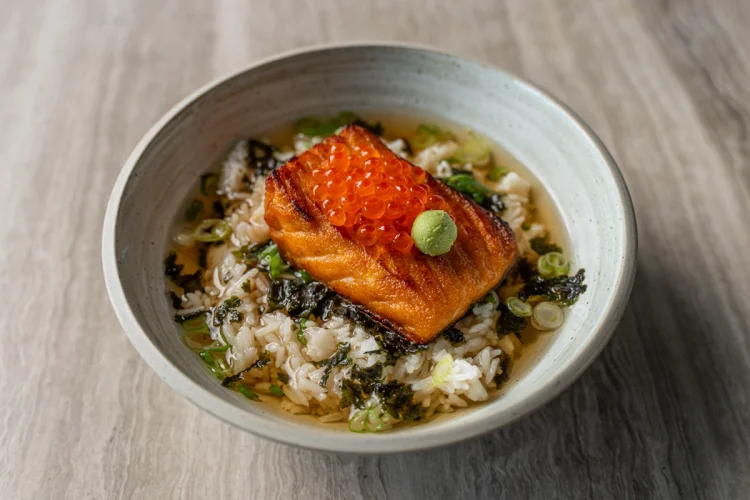
If you’ve spent any time on social media over the last year, you’ve probably noticed that “brothy rice” has become a full-blown viral sensation. Creators everywhere are pouring saucy, savory broths over bowls of rice, and millions of people are discovering just how comforting and satisfying that combination can be. I love that this is having a moment right now, because in Asian cultures, including Vietnamese and Japanese, eating soup and rice together has been a staple for a very, very long time, so while the trend is new, the tradition is ancient. One of my all-time favorite versions of brothy rice is this simple Salmon Ochazuke. It’s cozy, comforting, incredibly easy to make, and the flavors are so mild and gentle, that it’s one of the easiest dishes to eat and digest. Whether you’re brand new to the brothy rice world or you grew up eating soup over rice like so many of us did, this bowl just feels like a warm hug.
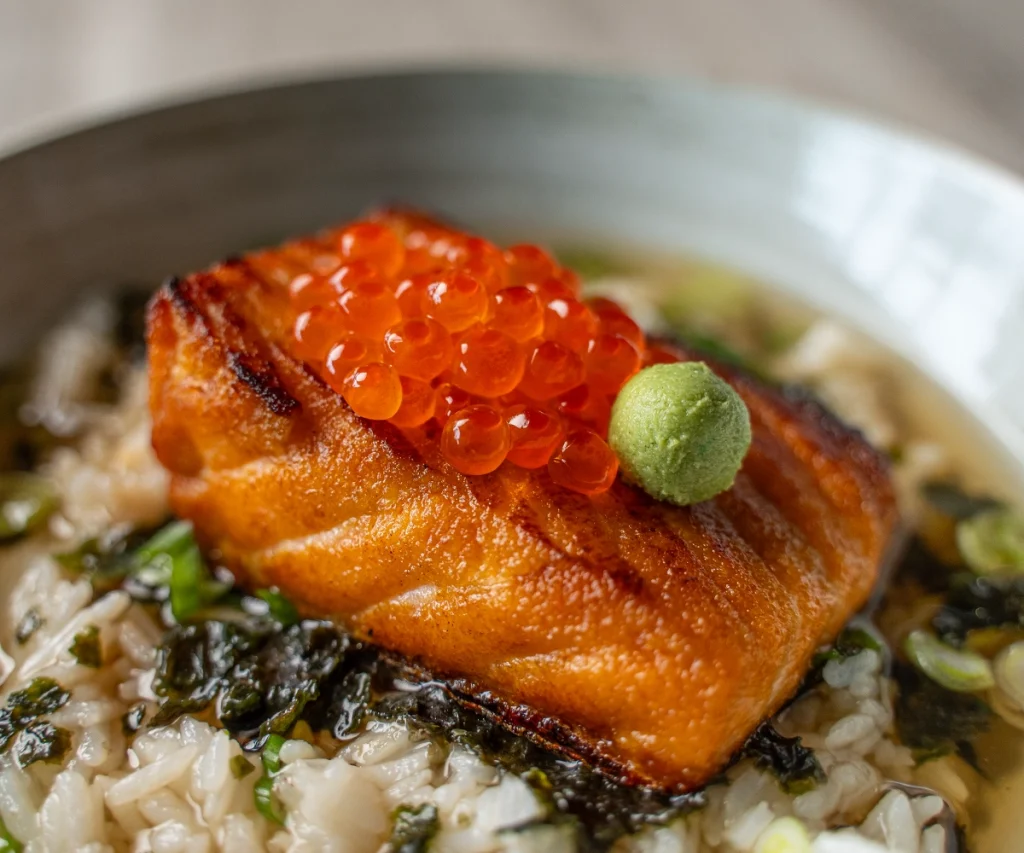
Now, personally, I didn’t grow up eating rice and tea together, but when Hanna and I started dating six years ago, she introduced me to variations of this dish, and I have been completely hooked ever since. The first time I tried it, I remember thinking, “Wait, that is it? Rice, tea, and a few toppings?” But the moment that warm, roasty broth hit the rice and everything melded together in the bowl, I understood. This is comfort food at its purest.
What Is Ochazuke?
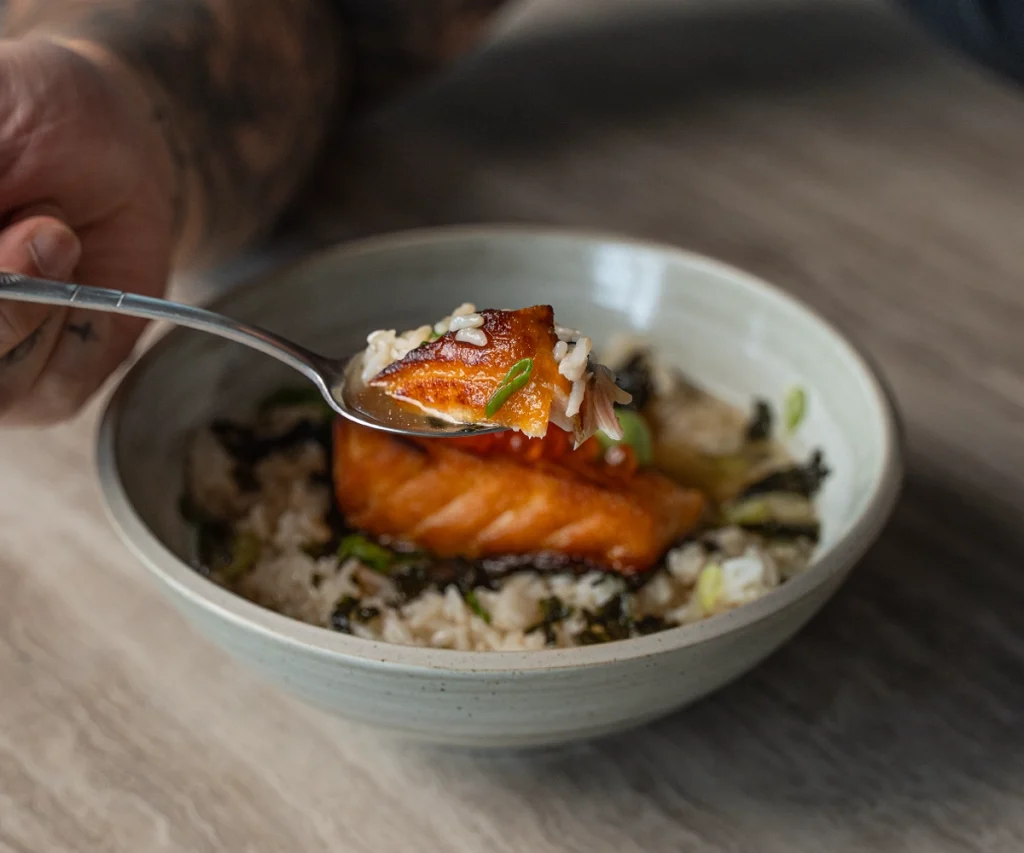
Ochazuke (お茶漬け) is a traditional Japanese dish built on a beautifully simple concept: pour hot tea or broth over a bowl of steamed rice, then finish it with savory toppings. The name itself tells you exactly what it is. “Ocha” means tea, and “zuke” means submerged. So ochazuke literally translates to “submerged in tea.” In Japan, ochazuke holds a special place as the ultimate quick comfort meal. It is the dish people reach for after a long day, late at night when hunger hits, or whenever they need something warm and easy to eat. You will find it everywhere from home kitchens to izakayas, and there are even instant ochazuke packets sold in every convenience store and grocery aisle across the country. But nothing compares to making it fresh at home with quality ingredients.
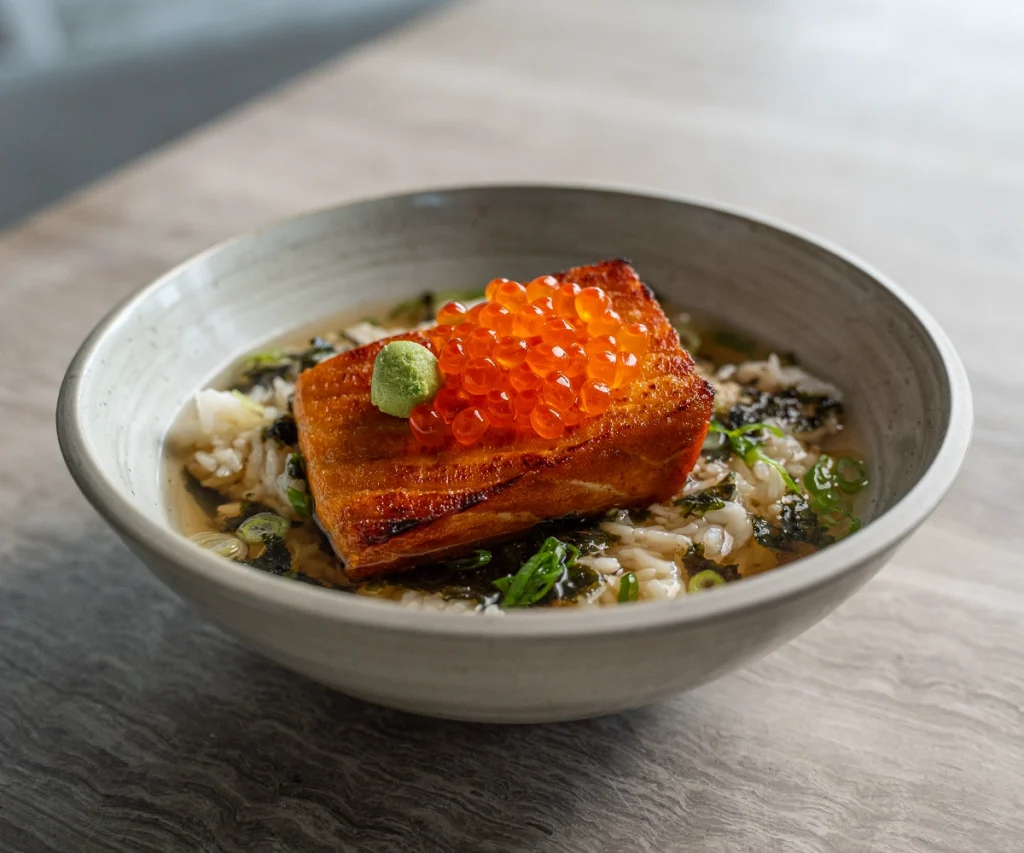
The most popular version is salmon ochazuke (also called sake chazuke or 鮭茶漬け), which pairs flaked salted salmon with green tea or dashi broth. My version uses hojicha (roasted Japanese green tea) as the base, which gives the bowl a toasty, nutty warmth that I absolutely love.
Why This Salmon Ochazuke Recipe Works
I have made a ton of ochazuke over the past six years, and this version is the one I keep coming back to. Here is what makes it special. The hojicha base adds a roasted, almost caramel warmth that you won’t get from regular green tea. The roasty depth of hojicha pairs incredibly well with the richness of salmon and the brininess of ikura.
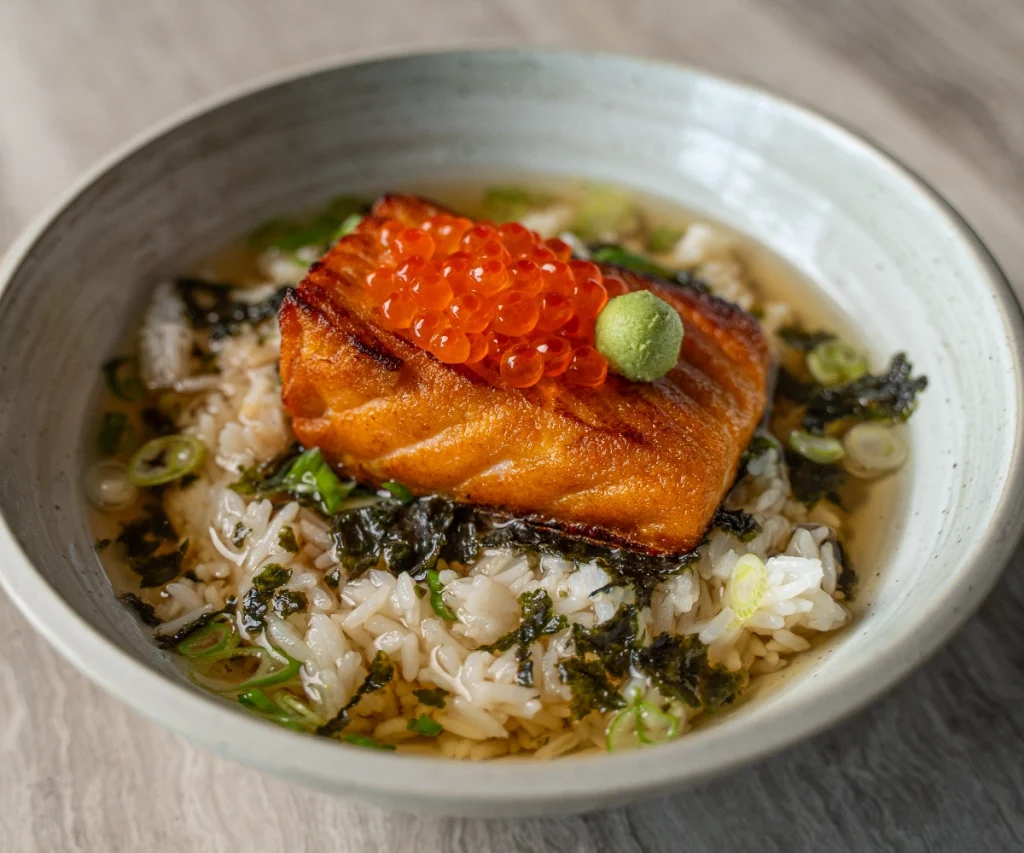
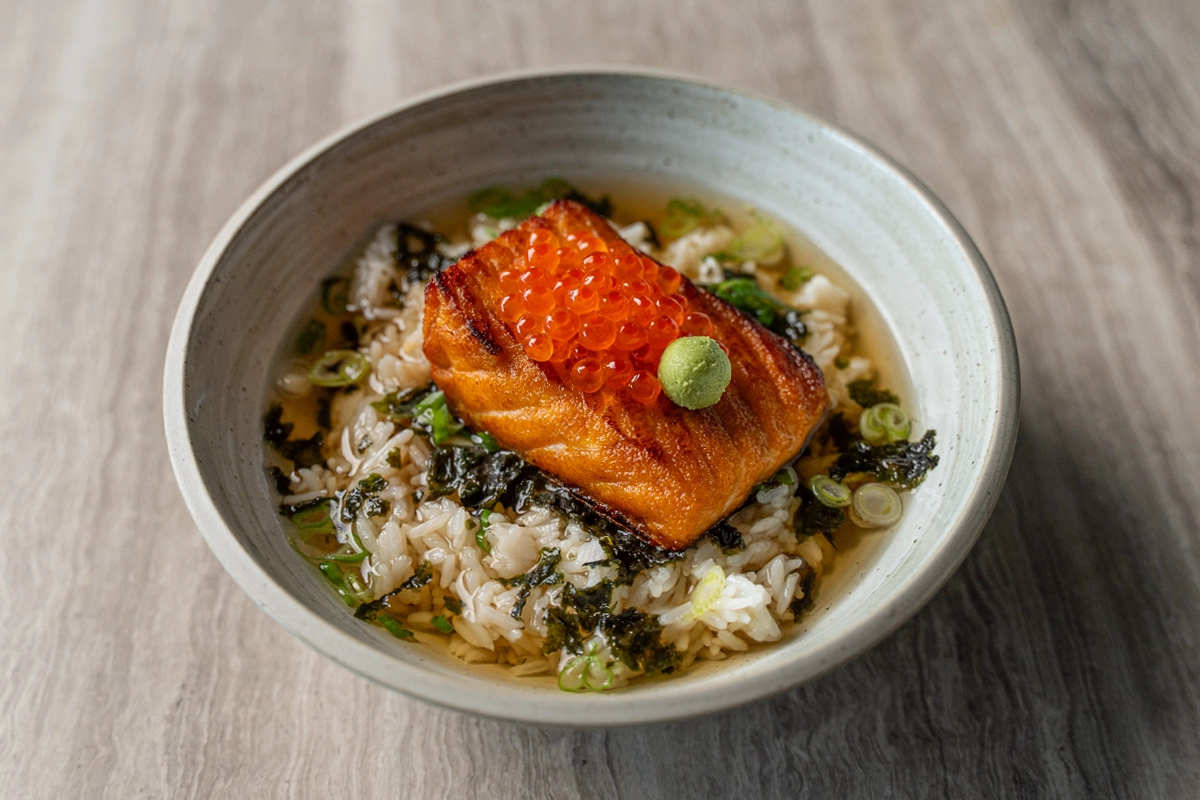
The toppings are intentional. Every component plays a role. The salmon brings protein and sustenance. The ikura (salmon roe) adds little pops of briny richness. Nori contributes that unmistakable ocean umami. Green onions bring freshness. And a small dab of wasabi ties everything together with gentle heat that opens up all the other flavors. The whole bowl comes together in about 15 minutes, and most of that time is just cooking the salmon. Once you have your rice ready and your tea brewed, assembly takes just a minute or two.
Key Ingredients for Salmon Ochazuke
Salmon
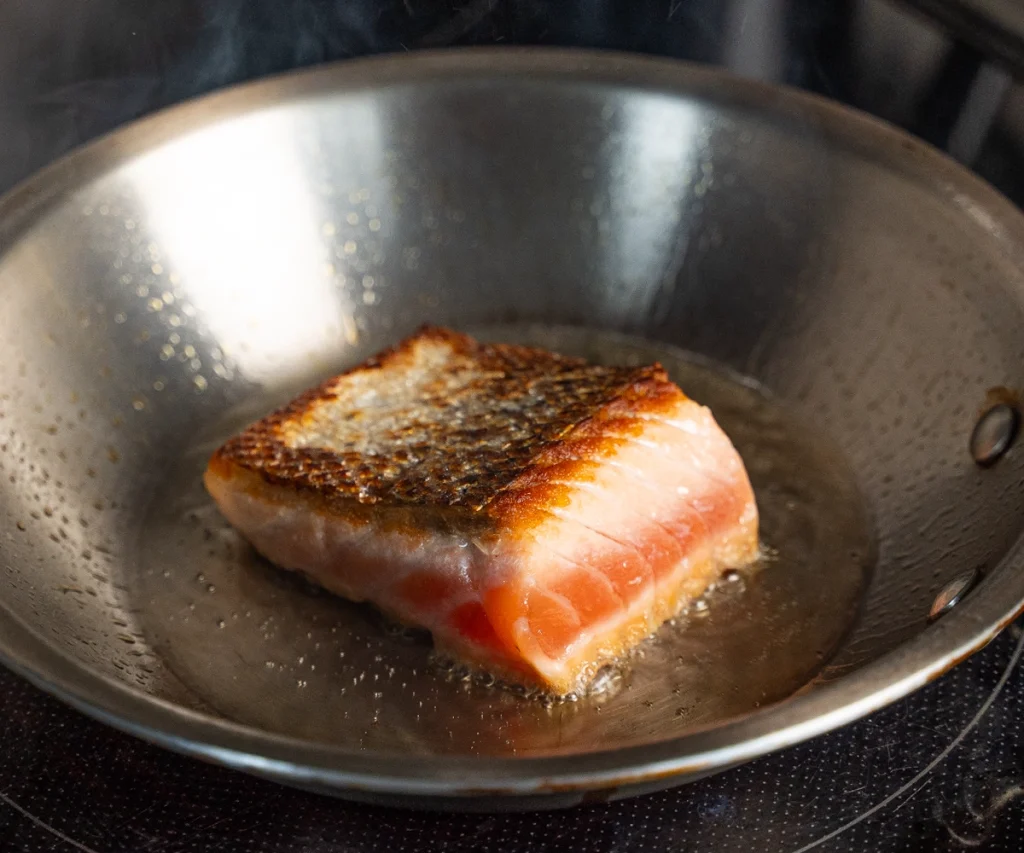
You have a few options here. Traditional ochazuke calls for shiozake (Japanese salted salmon), but a regular skin on salmon fillet seasoned with salt works beautifully. You can pan sear it, bake it, or broil it. If you have leftover cooked salmon in the fridge, this is a perfect way to use it.
Hojicha (Roasted Green Tea)
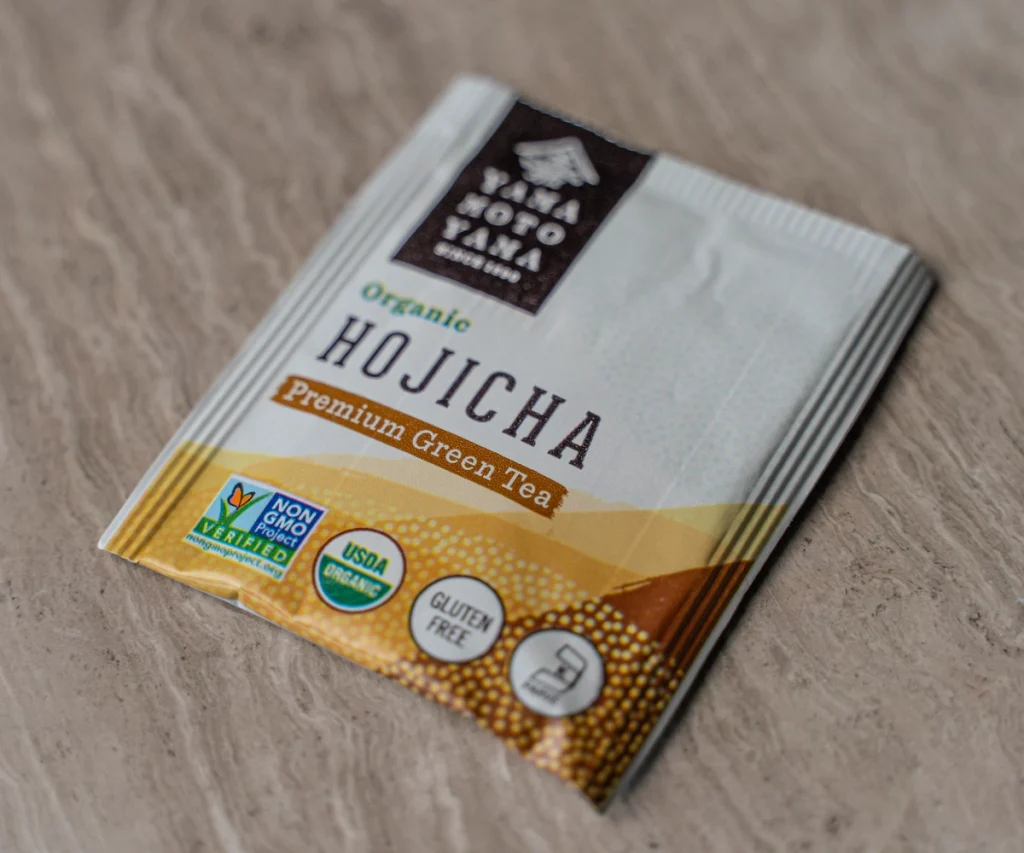
This is my preferred tea for ochazuke, and the one I encourage you to try first. Hojicha has a deep, roasted flavor with notes of caramel and toasted grain that feel incredibly comforting when poured over rice. Brew it strong so it holds up against the toppings. If you cannot find hojicha, here are some great alternatives that also work well:
- Sencha: The classic choice. Clean, grassy, and slightly vegetal. This is the most traditional option for ochazuke.
- Genmaicha: Green tea blended with toasted rice. It brings a warm, nutty flavor that feels tailor made for this dish.
- Mugicha (barley tea): Naturally caffeine free with a toasty, earthy flavor. A great option if you want to enjoy this late at night.
- Dashi broth: Not technically tea, but many ochazuke lovers use dashi instead of (or combined with) tea for a more savory, umami forward bowl.

Nori, Green Onions, and Wasabi
These three toppings round out every bowl. Tear or cut the nori into strips so it is easy to pick up with chopsticks. Slice the green onions thin on a bias for the best look and texture. And use real wasabi if you can find it, though the tube variety works just fine here. A little goes a long way.
Ikura (Salmon Roe)
The ikura is optional, but I highly recommend it if you can get your hands on some. Those little jewel toned eggs pop with briny, oceanic flavor and add a beautiful visual contrast to the bowl. You can find ikura at Japanese grocery stores, and many well stocked seafood counters carry it as well.
Salmon Ochazuke / Green Tea Over Salmon Rice Bowl
1
servings5
minutes10
minutesIngredients
1 cup 1 Cooked White Rice
1 cup 1 Brewed Hojicha Tea
- Salmon:
1/2 1/2 Salmon Filet
1/4 tsp 1/4 Salt
1 tbsp 1 Oil
- Toppings:
Soy Sauce
Nori
Green Onions
Wasabi
Ikura
Directions
- Cook the salmon:
- Salt both sides of the salmon fillet generously and let it rest for 5 minutes
- Heat a skillet over medium-high heat with the neutral oil. Place the salmon skin side down and cook for 2 to 3 minutes until the skin is crispy. Flip and cook for another 2 to 3 minutes until cooked through
- Serve the ochazuke:
- Pour the hot water over the hojicha tea and steep for 2 minutes
- Scoop rice into a bowl. Pour a couple dashes of soy sauce if desired. Top with nori strips and green onions. Place cooked salmon filet on top and the pour in the hot hojicha tea. Garnish with ikura and wasabi. Enjoy!
Notes
- Tea alternatives: Sencha, genmaicha, mugicha, or dashi broth all work as substitutes for hojicha
Salmon alternatives: Leftover cooked salmon, store bought shiozake (Japanese salted salmon), or even smoked salmon can be used
Make it more savory: Add a pinch of dashi powder to the tea for a more savory broth, or replace entirely with dashi stock
Did you make this recipe?
Tag @feedthepudge on Instagram and hashtag it with #feedthepudge
If you like this recipe, make sure you pin it!
Frequently Asked Questions
What does ochazuke taste like?
Ochazuke tastes like a warm, savory, lightly brothy bowl of rice. The flavor is gentle and clean, with the tea adding a subtle roasted or grassy note depending on which type you use. The toppings bring salt, umami, and brightness. It is comfort food in the truest sense.
Can I use regular green tea instead of hojicha?
Absolutely! Sencha and genmaicha are both excellent choices. Sencha will give you a more traditional, grassy flavor, while genmaicha adds a toasty nuttiness from the roasted rice blended into the tea leaves.
Can I make ochazuke with dashi instead of tea?
Definitely. Dashi based ochazuke (sometimes called dashi chazuke) is very popular in Japan. You can use standard awase dashi made from kombu and bonito flakes, or simply dissolve a small amount of dashi powder like hondashi in hot water. Some people even combine dashi and tea together for a hybrid broth that is extra savory.

