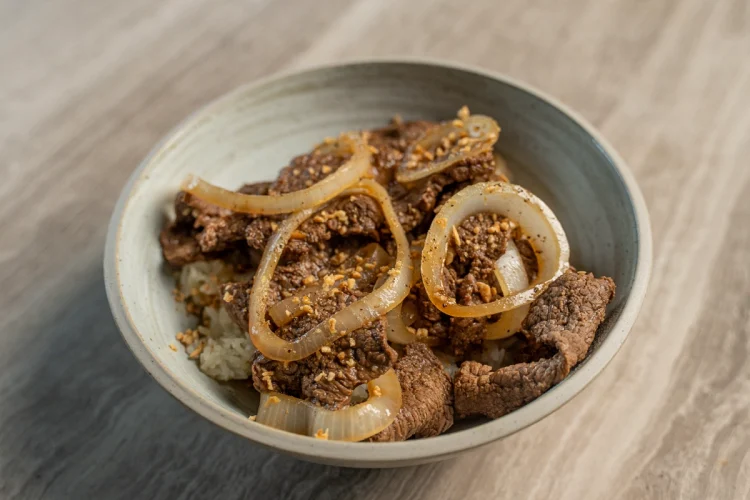
I genuinely have so much adoration for Filipino food and culture, and that love goes a long way back. Before I ever made it to America, my family and I lived in a refugee camp in Manila, so inherently, I think that created a soft spot in my heart. Now growing up, some of my closest friends were Filipino, and they were generous and warm in a way that I still carry with me to this day. The day that my friends introduced me to Bistek Tagalog for the first time, I was done for.
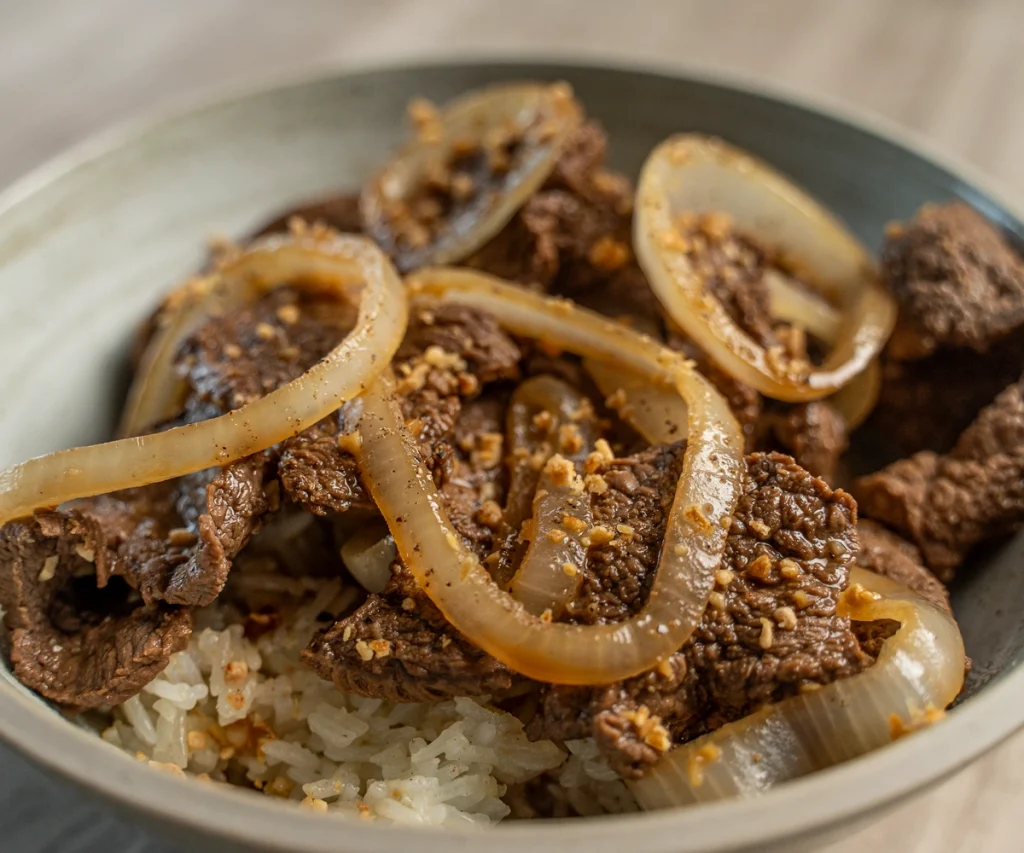
The beef was super tender. The sauce hit every note at once, savory from the soy, bright and citrusy from the calamansi, and the sauce just lingered in a way that was just perfect. Eating it over a bowl of steaming garlic fried rice was just bliss, and there’s really not much better than that. That meal left a lasting impression and never really left me. Filipino cuisine has been woven into my life ever since, and Bistek Tagalog has always had a permanent spot at the top of my list. So today, we’ll break down exactly how to make it, step by step, so you can bring this incredible dish into your own kitchen.
What Is Bistek Tagalog?
Bistek Tagalog (pronounced bis-tek tag-ah-log) is a classic Filipino beef dish from the Tagalog-speaking regions of the Philippines. The name actually comes from the Spanish word bistec, meaning “beefsteak,” reflecting the deep Spanish influence on Filipino food history.
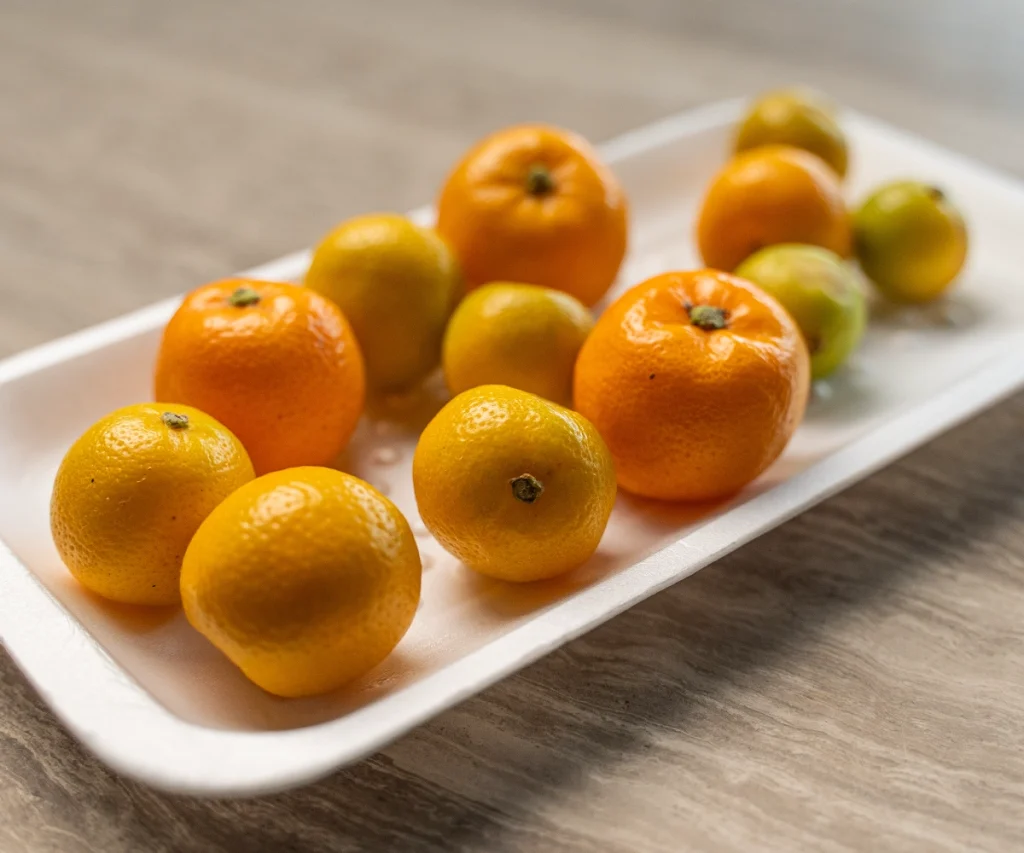
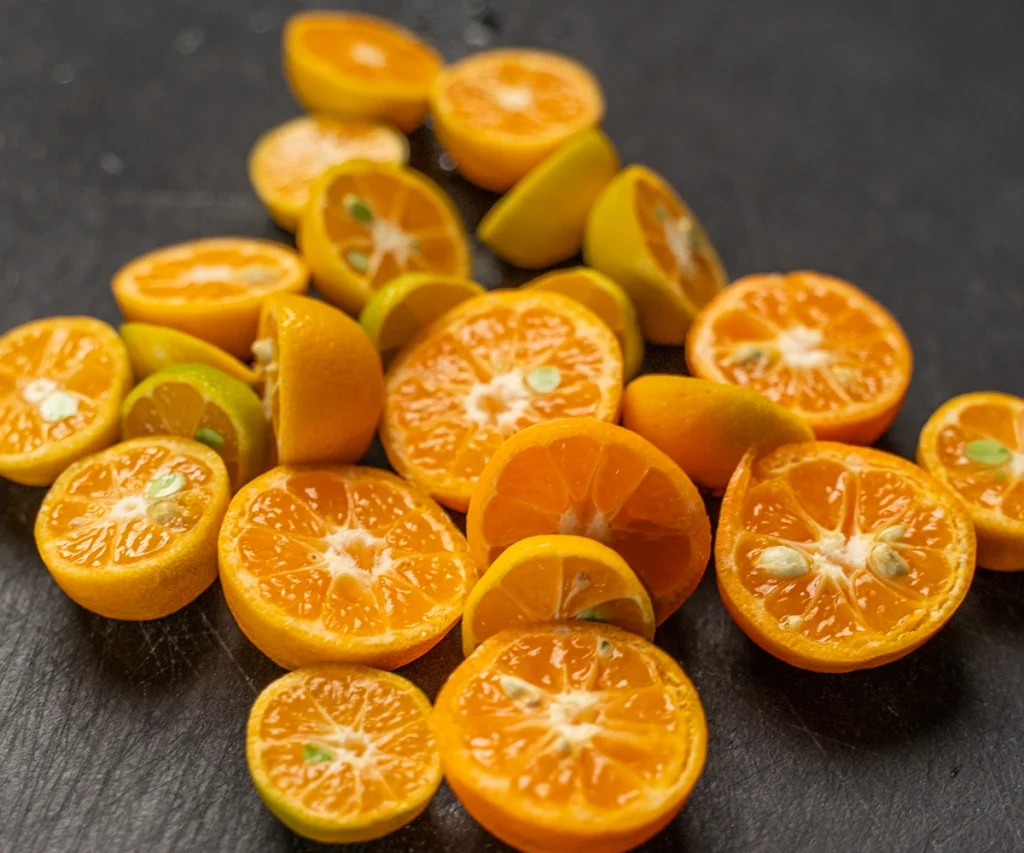
What makes Bistek Tagalog so special is the marinade and sauce: a combination of soy sauce and calamansi juice. Calamansi is a small citrus fruit native to Southeast Asia, and its flavor lands somewhere between a lemon and a mandarin orange. It is brighter and more floral than lemon, with real tartness that cuts right through the richness of the soy. Together, they create a sauce unlike anything else.
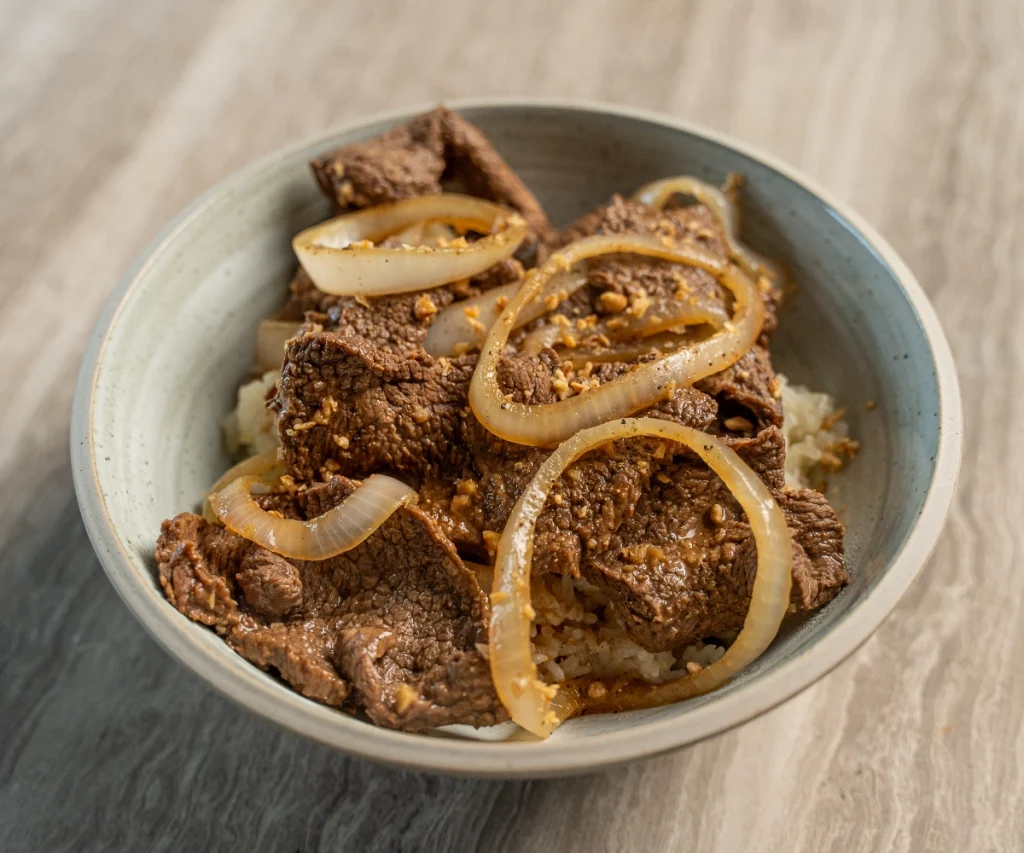
The dish traditionally features thin slices of beef topped with white onion rings that soften and sweeten as they cook. Served over garlic fried rice, it is a full and satisfying meal that hits every comfort food button there is. Plus, it’s really easy to make!
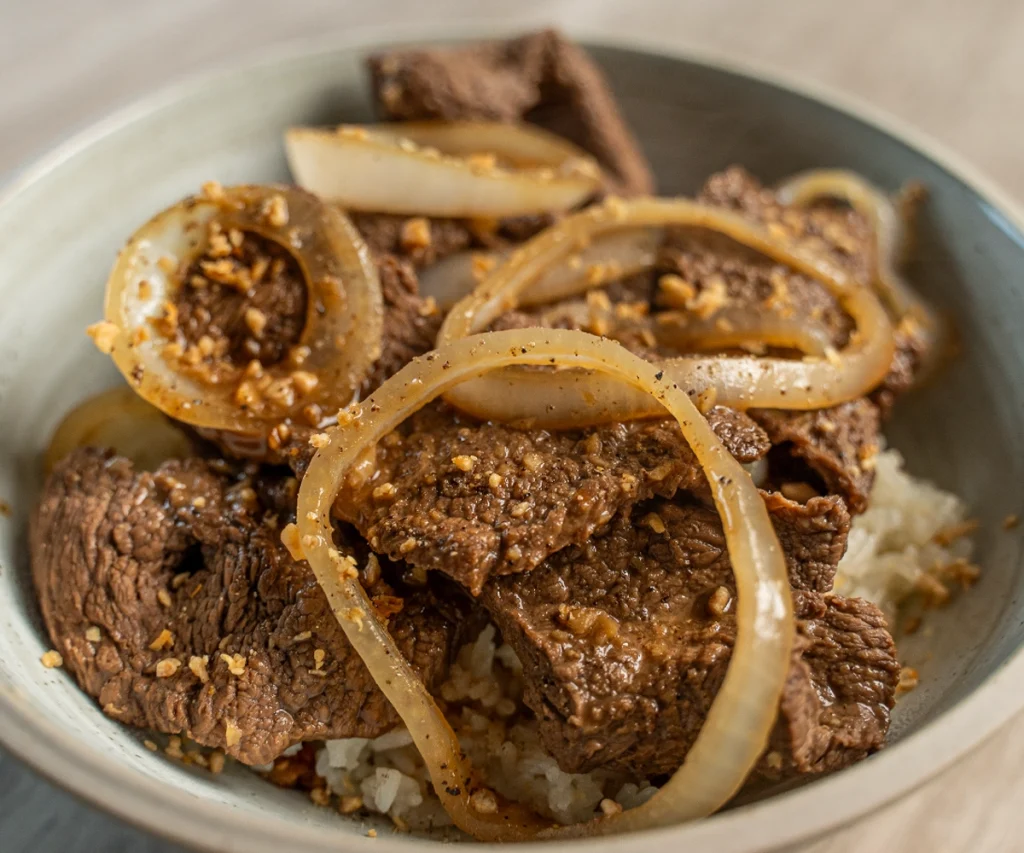
Why This Recipe Works
I’ve made this dish more times than I can count, and dialed in every detail to help you get it right the first time!
The marinade pulls double duty. Marinating the beef in soy and calamansi does two things at once: it tenderizes the meat and lays the foundation for your sauce. That same liquid goes straight into the pan as the braising liquid, so every drop of it ends up in the finished dish.
The onions go in at the end. One of the most common mistakes with Bistek Tagalog is adding the onions too early and letting them completely dissolve into the sauce. I hold them back and add them near the finish so they stay just slightly firm. You get that gorgeous visual of onion rings resting on top of the beef and a nice textural contrast in every bite.
The garlic rice is not optional. You could serve this over plain steamed rice, but garlic fried rice (sinangag) is the traditional pairing for a reason. The nutty, garlicky butter flavor of the rice balances the tangy, savory sauce in a way that just makes sense. Don’t skip it!
How to make Bistek Tagalog
Slice and Marinate the Beef
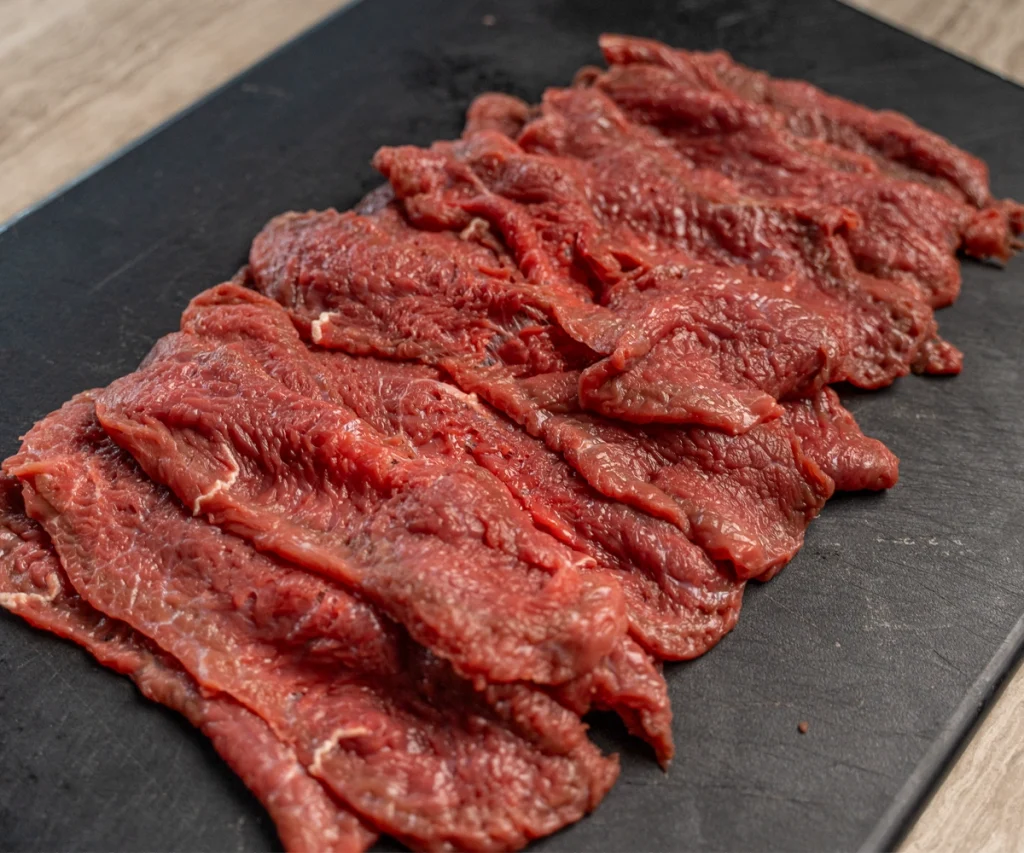
Grab your beef top sirloin and slice it thin, about 1/4 inch thick. Don’t worry too much if your cuts aren’t super-thin and uniform, as we’ll use a tenderizer to pound them out to ensure we get a really tender, juicy slice of beef. Just make sure you slice against the grain to get the most tenderness out of every piece.
In a bowl, combine the soy sauce, fresh calamansi juice, minced garlic, oil, and black pepper. Give it a good whisk, then add your sliced beef and toss everything together until each piece is fully coated.

Cover the bowl and let it marinate in the refrigerator for 30 minutes. Some people like marinating it for longer, but I find that, with the acidity, longer marinating often denatures the protein, giving the beef an off-putting texture.

Sear the Beef
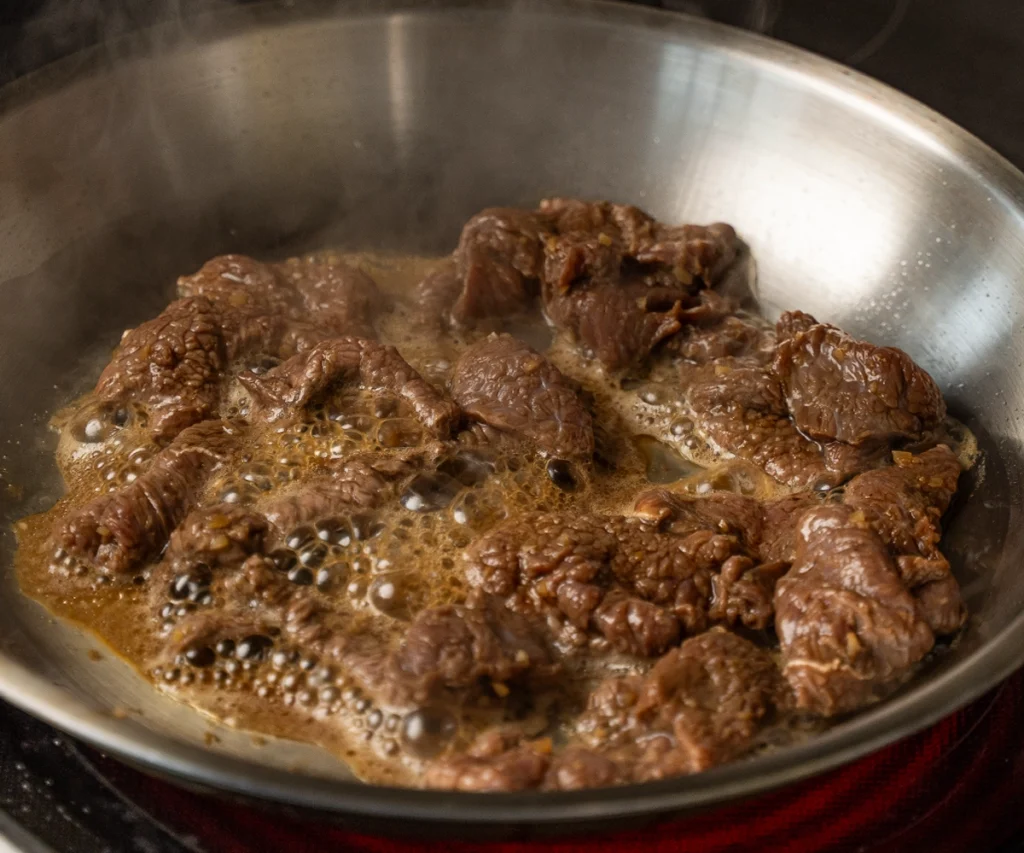
Pull the beef out of the marinade and set the marinade aside. You need that liquid for the sauce, so please do not pour it down the drain. Heat up oil in your skillet over medium-high heat. When the oil shimmers, add the beef in a single layer. If your pan is not big enough to fit everything without crowding, cook it in two batches. Crowding the pan traps steam, and you will end up with grey, boiled beef instead of a nice sear. Sear the beef for about 1 to 2 minutes per side until it picks up some color. It does not need to be cooked through yet. Remove it from the pan and set it aside.
Add the Onions
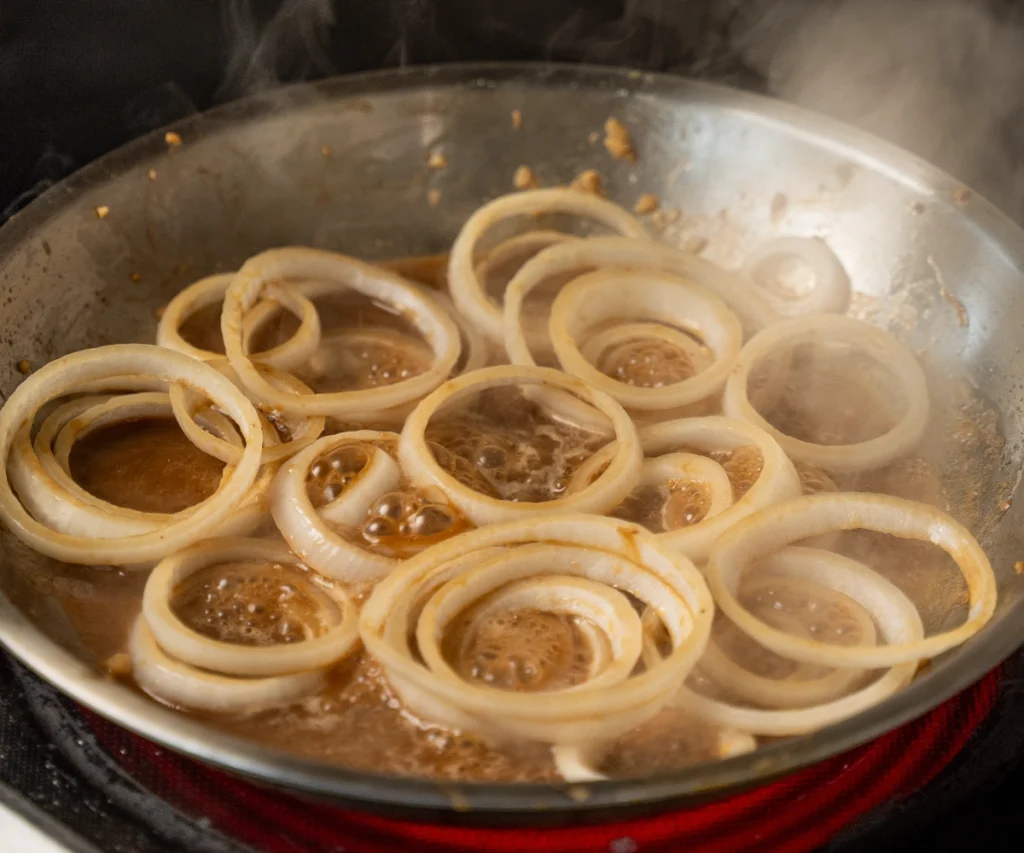
Add the sliced onions to the same pan, then pour in the remaining marinade. Cook the onions down for 2-3 minutes, or until they’re slightly softened. You still want them to hold their shape. That beautiful presentation of onion rings sitting on top of the beef is the hallmark of a proper Bistek Tagalog, and it also means you get a little burst of sweet onion in each bite.
Finish the Bistek Tagalog
Add the seared beef back in and stir to coat everything in the sauce. Cook the beef until it’s cooked through, the sauce has reduced slightly, and it glazes the beef and onions. Finish with fresh ground black pepper, and then it’s time to plate!
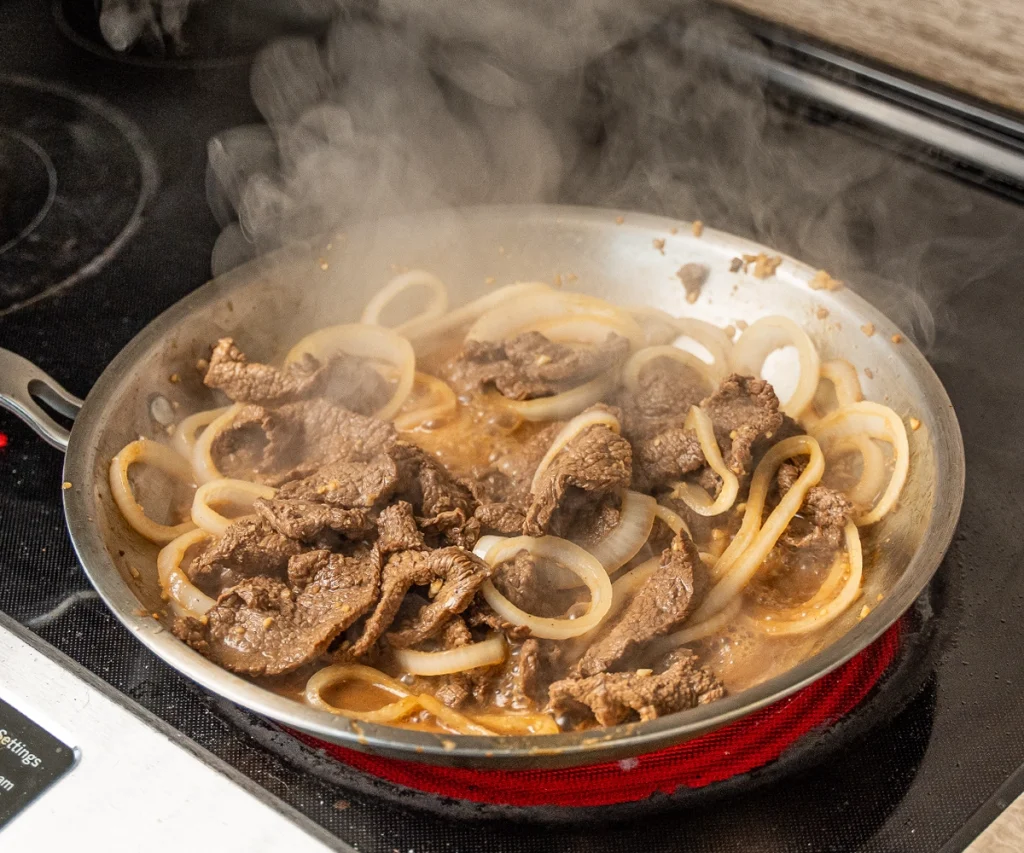
Plate and Serve
Scoop a big, generous mound of garlic fried rice into a bowl or onto a plate. Spoon the Bistek Tagalog right over the top and make sure to pour plenty of that sauce over the rice too. Arrange the onion rings on top. Garnish with fried garlic and fresh-ground black pepper, and serve immediately while everything is hot!

Bistek Tagalog / Filipino Beef Steak
2-3
servings30
minutes15
minutesIngredients
1 lbs 1 Beef Top Sirloin
1 tbsp 1 Oil
1 1 White Onion
- Marinade:
1/2 cup 1/2 Soy Sauce
1/4 cup 1/4 Calamansi Juice
1 tbsp 1 Minced Garlic
1 tbsp 1 Oil
1/2 tsp 1/2 Black Pepper
- Garlic Fried Rice:
3 cups 3 Cooked White Rice
1 tbsp 1 Oil
1 tbsp 1 Butter
2 tbsp 2 Minced Garlic
1/4 tsp 1/4 Salt
1/4 tsp 1/4 MSG
- Garnishes:
Black Pepper
Directions
- Bistek Tagalog:
- Slice the beef top sirloin about 1/4 inch thick against the grain, then pound each slice with a meat tenderizer until thin and even
- Whisk together the soy sauce, calamansi juice, minced garlic, oil, and black pepper in a bowl. Add the beef, toss to coat, and marinate in the refrigerator for 30 minutes. Avoid marinating longer, as the acidity will begin to denature the protein and affect the texture of the meat
- Remove the beef from the marinade and reserve the liquid. Heat oil in a skillet over medium-high heat until shimmering, then sear the beef in a single layer for 1 to 2 minutes per side until lightly browned. The beef does not need to be cooked through at this stage. Set aside
- In the same pan, add the sliced onions and pour in the reserved marinade. Cook for 2 to 3 minutes until the onions are slightly softened but still holding their shape.
- Return the seared beef to the pan and stir to coat everything in the sauce. Cook until the beef is cooked through and the sauce reduces into a glaze that coats the beef and onions. Finish with freshly ground black pepper
- Garlic Fried Rice:
- Heat the oil and butter together in a separate skillet over medium heat. Add the minced garlic and stir frequently for 1 to 2 minutes until it turns golden and fragrant
- Add the cooked rice and break up any clumps. Season with salt and MSG, then stir-fry everything over medium-high heat for 3 to 4 minutes until the rice is hot and fully coated in that garlicky butter.
- Serve:
- Scoop a generous mound of garlic fried rice into a bowl or onto a plate. Spoon the Bistek Tagalog over the top, making sure to pour plenty of sauce over the rice as well. Arrange the onion rings on top. Garnish with fried garlic and fresh ground black pepper. Enjoy!
Did you make this recipe?
Tag @feedthepudge on Instagram and hashtag it with #feedthepudge
If you like this recipe, make sure you pin it!
Tips for the Best Bistek Tagalog
Always slice against the grain. It sounds like a small thing, but it makes a huge difference. Slicing against the grain shortens the muscle fibers, making each piece significantly more tender and easier to eat. Then, further tenderizing it helps break down some of the fibers, ensuring a juicy, tender slice of beef.
Fresh calamansi juice makes a real difference. Bottled juice is a perfectly fine substitute, but fresh calamansi is brighter and more complex. You can usually find it at Filipino grocery stores, many Asian markets, and some Latin grocery stores as well.
Use day-old rice for the fried rice. Freshly cooked rice holds too much moisture and will steam and clump in the pan instead of frying. If you need to cook your rice fresh, spread it out on a baking sheet and let it cool completely before adding it to the pan.
Frequently Asked Questions
Can I use a different cut of beef? Top sirloin is my go-to because it has great flavor and great tenderness without breaking the bank. Beef tenderloin works beautifully if you want something a bit more luxurious. Flank steak is also a solid option as long as you slice it very thin and strictly against the grain.
What can I substitute for calamansi juice? The closest substitute is a 2:1 ratio of fresh lemon juice to fresh orange juice, so two parts lemon to one part orange. That combination mimics the tart, slightly floral quality of calamansi pretty well. Pure lemon juice alone will technically work, but you will miss some of the subtle sweetness that calamansi brings to the sauce.
Is MSG necessary in the garlic rice? It is optional, but I really encourage you to use it. MSG amplifies the savory depth of the rice in a way that salt simply cannot replicate on its own. It is safe, naturally occurring, and has been used across Asian cuisines for generations. If you prefer to leave it out, just add a little extra salt to taste.


Wow, this is the best!!! Way better than my recipe 😊
I’m honored!! I hope you give my other recipes a try too!