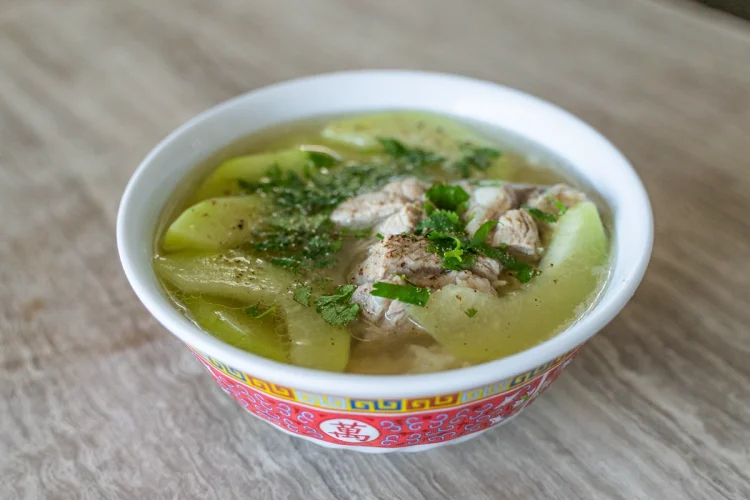
This is another Vietnamese at-home soup that you won’t typically find on a restaurant menu. This is the beloved soup Canh Sườn Sụ Sụ or Chayote Soup with Pork Spare Ribs. In a Vietnamese family meal or cơm gia đình, the side of soup is an integral part of the whole spread, as it provides healthy nutrients, sustenance, and rounds out the meal without demanding a lot of fuss. Today, we’re breaking down how to make canh suon su su, a simple yet deeply comforting soup that comes together in about an hour.
What is Chayote / Sụ Sụ?
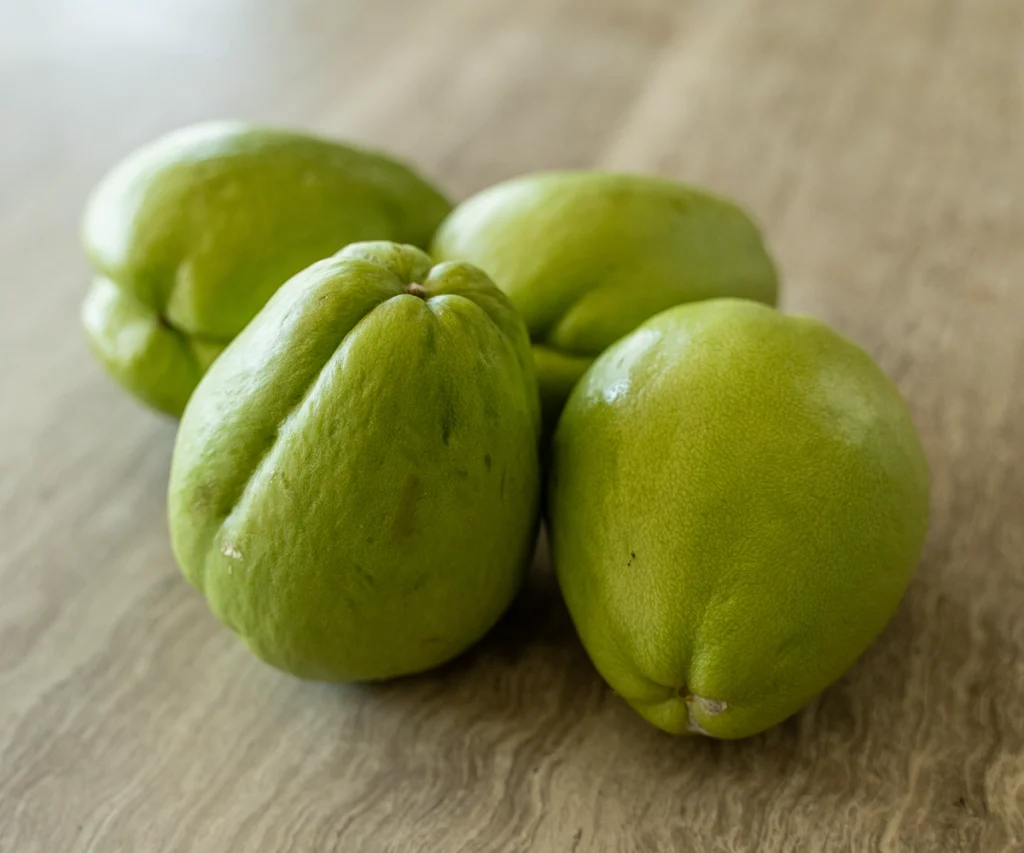
In this soup, we use the vegetable known in Vietnamese as sụ sụ, which is the same as the widely known squash/fruit called Chayote (Latin: Sechium edule).
Appearance: The fruit is typically light-green, pear-shaped, with ridges or puckers along the skin. The rind is thin and smooth (but some varieties are more textured or even spiny)

Flavor & texture: It has a very mild flavor, described as slightly sweet with light, cucumber-like notes. The texture is crisp when raw, softening when cooked
Culinary uses: Although technically a fruit, in Asian and Latin cuisines, it’s used like a vegetable, mostly boiled, steamed, stir-fried, or made into soups and stews
Nutrition & benefits: Chayote is a low-calorie vegetable that contains vitamin C, folate, dietary fiber, and potassium, contributing gentle nutrition to a soup without requiring heavy work
In the context of a Vietnamese family soup, sụ sụ adds a subtle sweetness, a soft but still toothsome texture, and helps round out the broth and spare ribs with greenery and volume without making the soup heavy

How to Prep the Chayote
Before adding the su su to the soup, here’s how to prep it properly:
- Wear gloves or peel the chayote under running water. The peel of chayote can release a sticky or slimy residue when you handle it, which may make your hands feel uncomfortable. According to specialty produce sources, the residue is non-toxic but can be annoying
- Once peeled, cut the chayote in half and use a spoon or melon-baller to scrape out the seed (the seed is edible, but for this soup we remove it for a smoother texture)
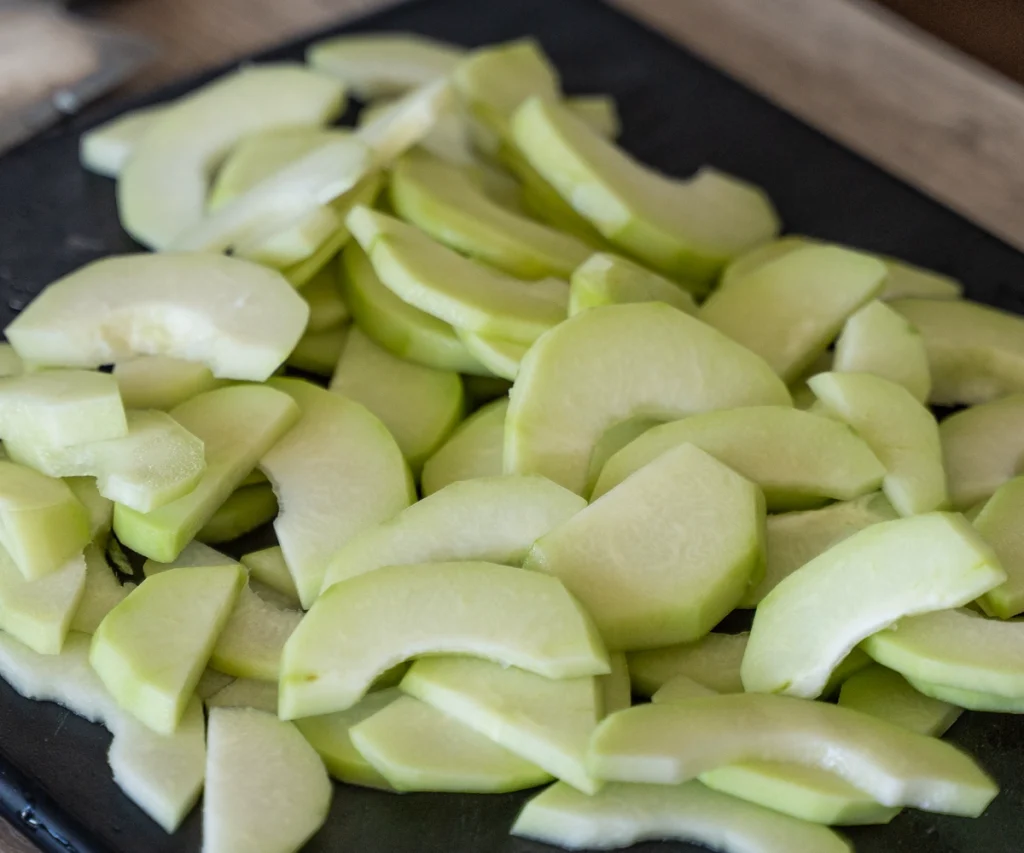
- After removing the seeds, cut the fruit into crescent-shaped slices (about ¼-½″ thick) so that when they simmer, they cook evenly and retain their shape. Keep the slices aside until you’re ready to add them to the soup.
How to Make Canh Suon Su Su
Parboil the spare ribs
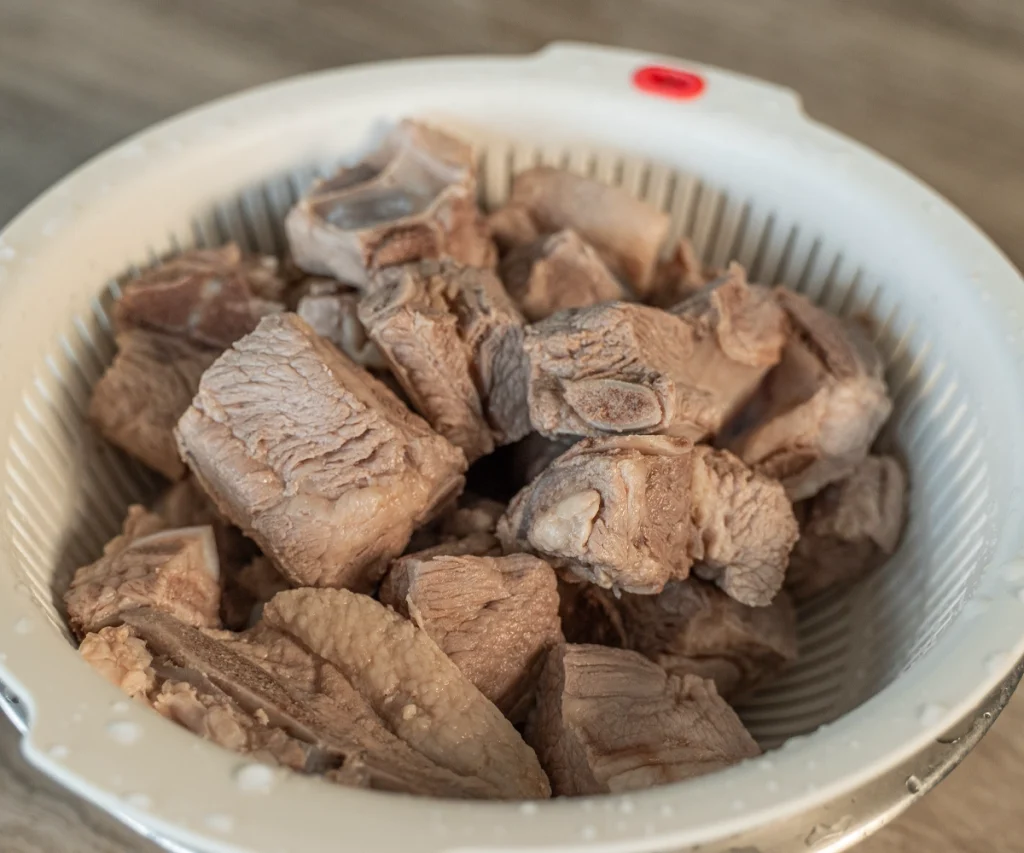
- Place the pork spare ribs in a pot of boiling water and parboil for about 5 minutes
- Drain the ribs, rinse, and scrub thoroughly under cold running water to remove any impurities, scum, or debris attached to the bones. This step helps keep the broth light and clean
- After rinsing, cut the ribs into the final serving size if needed (between the bones into manageable pieces)
Make the soup base & simmer the ribs
- In a large soup pot, add a splash of neutral oil and sauté about minced shallots and minced garlic until fragrant (about 1–2 minutes)
- Add 4 quarts of water, and bring it up to a rolling boil
- Add in the par-boiled pork spare ribs. Use a skimmer or spoon to skim off any scum/impurities that rise to the top of the broth
- Cover the pot and reduce the heat to low. Let the ribs gently simmer for about 45 minutes, or until they are tender but not falling off the bone
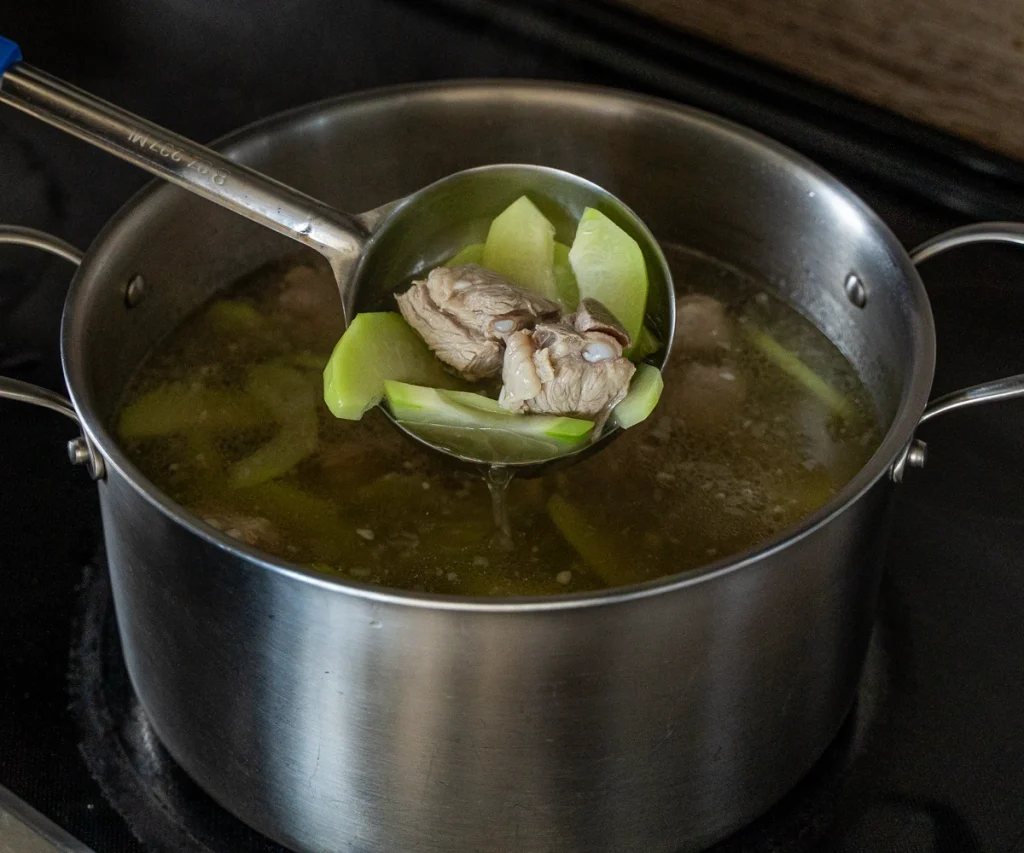
Add the chayote & finish
- While the ribs are simmering, prep the chayote as described above
- After about 45 minutes of simmering, add the sliced chayote to the pot. Simmer for about 10 minutes, or until the chayote is softened
- Season the broth with a little sugar, a pinch of MSG, fish sauce, and salt to taste. (The sugar helps balance the broth, and the fish sauce deepens the savory flavour typical of Vietnamese soups.) Taste and adjust to your own preference!

Why This Soup Works in a Vietnamese Family Meal
In a typical cơm gia đình, you’ll have rice, a protein dish (món mặn), a vegetable dish, and a simple soup (canh). The soup isn’t meant to steal the spotlight but to accompany and complete the meal. With canh suon su su, you get a light but satisfying protein from the tender pork spare ribs, a mild and welcoming vegetable in the chayote that soaks up all the flavor of the broth, and a clear, gentle soup seasoned simply but deliciously.
