
I recently shared a more modern variation on Bò Tái Chanh, a version that leans toward beef carpaccio, is cleaned up, elegant, and approachable. You all loved it as an introduction to Vietnamese drinking food (or đồ nhậu), and it was incredibly well received! So today, I’m taking it back to my roots and breaking down how to make the more traditional, rustic version of bo tai chanh, the version many Vietnamese restaurants serve as a snack to share among friends. It’s bright, bold, texturally interesting, and is truly a perfect Vietnamese drinking snack best shared family style, over laughter and clinking bottles of ice-cold beer.
What Is Bò Tái Chanh? (and Its Roots)
“Bo tai chanh” literally translates to “rare beef with lime” (bò = beef, tái = rare, chanh = lime). It’s essentially a cured-beef salad: ultra-thin slices of beef “cooked” (or cured) by citrus and acids, then tossed with herbs, onions, chilies, peanuts, and a tangy fish sauce dressing. In Vietnamese cuisine, bo tai chanh holds a place in the do nhau (drinking food) tradition: small bites, bold flavors, lots of contrast, eaten casually with beer or spirits among friends and family.

Historically, northern Vietnamese households and street joints likely developed such raw or lightly cured beef salads as a way to enjoy beef differently, especially in regions where fresh citrus, herbs, and fish sauce were already core ingredients. Some food historians note influence from broader Southeast Asian raw-meat preparations (similar in spirit to certain Lao or Thai dishes) and the Vietnamese penchant for bright, sour, herbaceous salads (gỏi). Over time, it evolved, some versions lightly sear or blanch the beef first for food safety or texture contrast. But in many traditional eateries, you’ll find it still quite raw/rare, relying on acid to firm it slightly.

What Type of Beef to Use
For bo tai chanh, you’ll want a lean, tender cut that can be sliced thinly: Avoid fatty or heavily marbled cuts, they’ll be chewy and overwhelm the bright flavors.
- Eye of Round: The most common cut used in Vietnamese restaurants. Lean, affordable, and ideal for ultra-thin slices.
- Filet Mignon / Tenderloin: Premium and buttery. Great if you want an extra-tender texture.
- Sirloin or Flank Steak: Flavorful and lean, perfect for at-home versions.

Pro Tip:
Partially freeze your beef for 2–3 hours before slicing. This helps firm it up, making it easier to cut thin and even slices.
Step-by-Step: How to Make Traditional Bò Tái Chanh
Below is the method I use. Please adjust quantities to your taste/servings.
Process the Beef
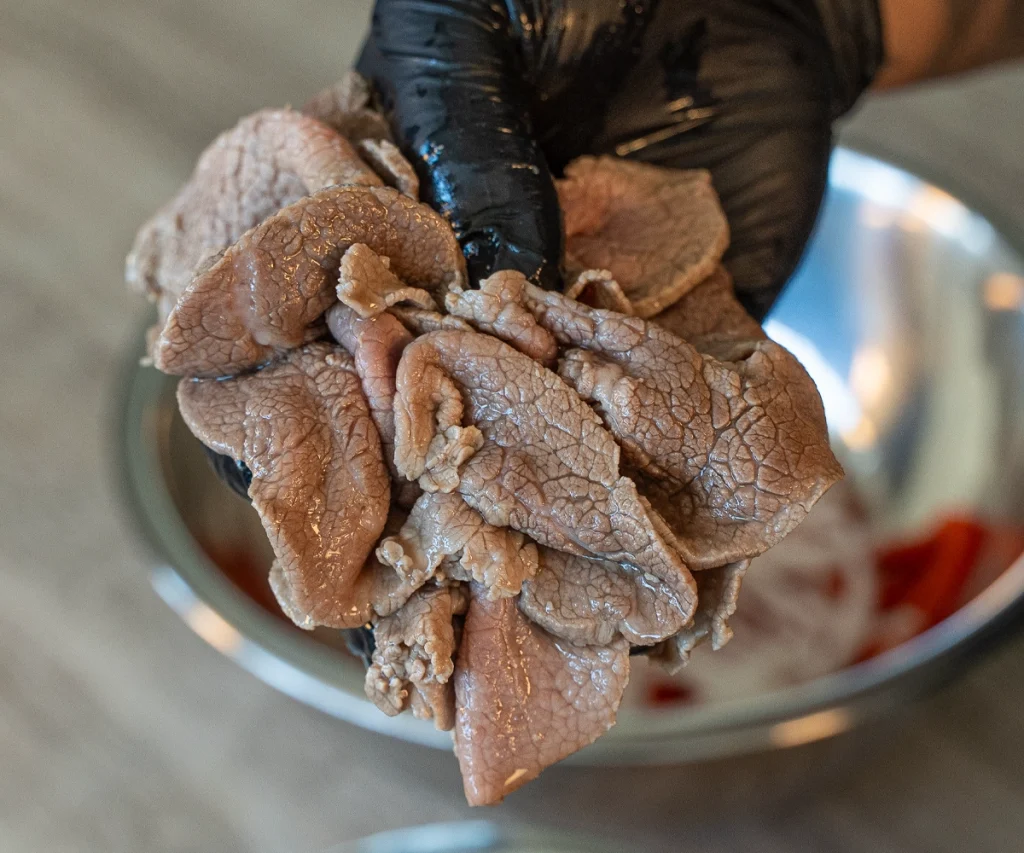
- Thinly slice the eye of round (or chosen cut) against the grain into as uniform and thin strips as possible. (Partially freezing helps firm it up so it’s easier to slice evenly.) If you want to speed things up, using pre-cut ultra-thin beef (e.g., from an Asian butcher) is okay, as long as it’s of good quality and fresh.
- Blanch: Very quickly dip or blanch the beef strips in boiling pineapple juice for 5–10 seconds. This step lightly firms the surface without fully cooking through, as you want the interior to remain rare. Immediately remove the beef and transfer it to a bowl.
- Squeeze over fresh lime juice and toss gently. The acid from lime will finish curing the beef, making it ready for consumption.
Prep the Herbs & Veggies
- White onion: Slice along the grain into thin strips. Optionally soak in ice-cold water for 5 minutes to reduce rawness and sharpness.
- Red bell pepper: Remove pith and seeds, then julienne into thin strips.
- Jalapeños: Thinly slice on a slight bias (angled) to get good surface area.
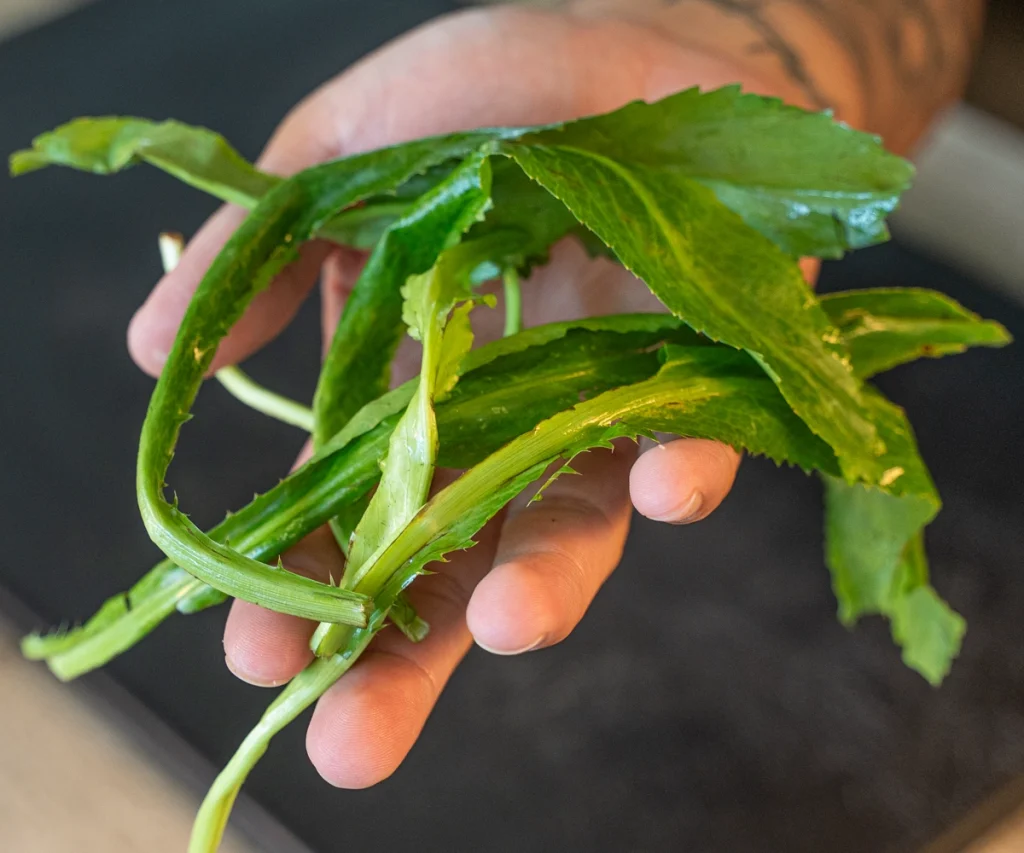
- Culantro / Thai basil: Rough chop.
- Green onions, cilantro: Finely chop.
Make the Sauce
In a mixing bowl, combine:
- Equal parts sugar, fish sauce, and filtered water
- Add minced garlic
- Crushed dried Thai chilis
- Fresh lime juice (to taste)
Mix well, ensuring the sugar dissolves fully, and that all ingredients integrate into a smooth, balanced dressing.
Assemble & Serve
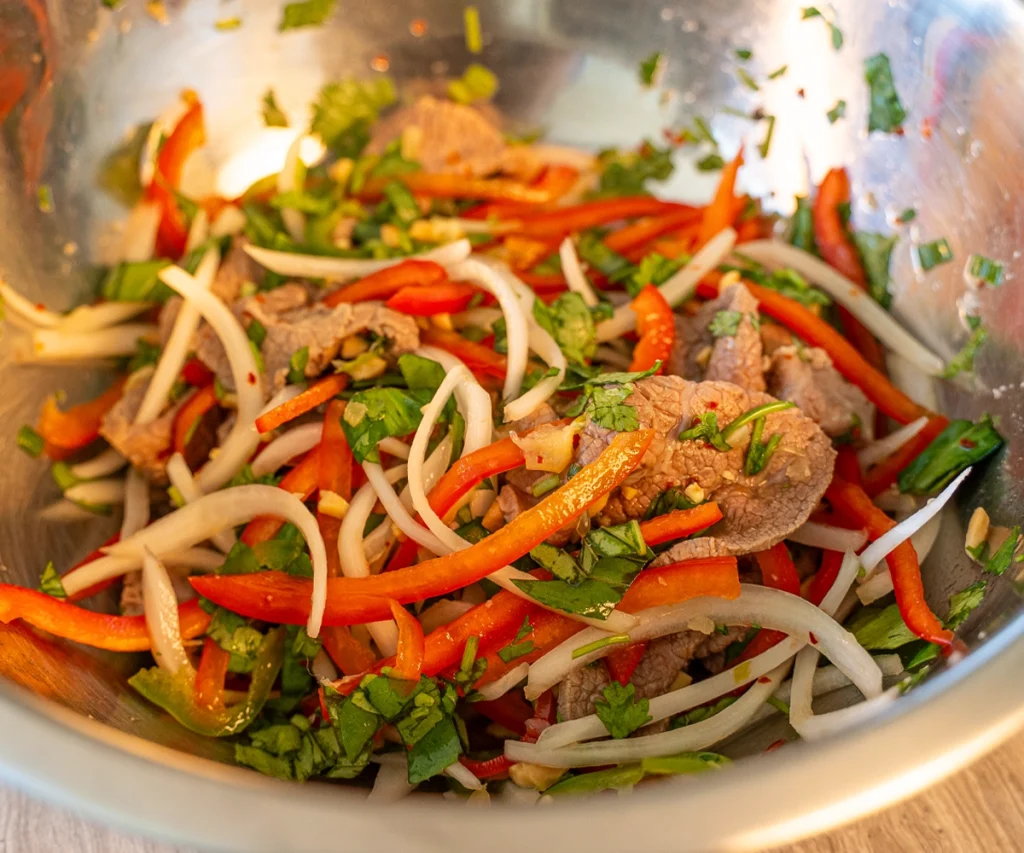
- In a large bowl, combine your beef with bell pepper, onions, Jalapeno, and herbs. Add crushed roasted peanuts for crunch.
- Pour over the dressing, then gently toss until everything is well coated and evenly distributed. Transfer to a serving plate.
- Garnish with fried shallots, additional peanuts, or herbs as you like! Optionally, serve with shrimp chips or black sesame rice crackers so guests can scoop bites and enjoy!

Bo Tai Chanh / Rare Beef Salad
2-3
servings20
minutes10
minutesIngredients
1/2 lb 1/2 Eye of Round
12 oz 12 Pineapple Juice, for blanching
1/2 1/2 Lime, Juice, for curing
- Accompaniments:
1 1 White Onion
1 1 Red Bell Pepper
1 1 Jalapeno
1/4 cup 1/4 Sawtooth Culantro
1/4 cup 1/4 Thai Basil
1/4 cup 1/4 Green Onion
1/4 cup 1/4 Cilantro
1/8 cup 1/8 Roasted Peanuts
- Sauce:
2 tbsp 2 Sugar
2 tbsp 2 Fish Sauce
2 tbsp 2 Water
1/2 tbsp 1/2 Minced Garlic
1 tbsp 1 Crushed Dried Thai Chili
1/2 1/2 Lime, Juice
- Garnishes:
Fried Shallots
Directions
- Process the beef:
- Thinly slice eye of round (or similar lean cut) against the grain. For easier slicing, partially freeze the beef for 2–3 hours beforehand
- Then, in a small pot, heat up the pineapple juice until it boils. Quickly dip slices in pineapple juice for 5–10 seconds, just to firm the surface. Transfer to a bowl, squeeze over lime juice, toss, and chill while prepping other ingredients
- Prep Accompaniments:
- Thinly slice onion, red bell pepper, and jalapeño. Rough-chop culantro and Thai basil; finely chop cilantro and green onion
- Make Sauce:
- In a small bowl, combine equal parts fish sauce, sugar, and water. Add minced garlic, crushed dried chili, and lime juice. Stir until the sugar dissolves and the sauce is fully combined
- Assemble:
- Combine beef, veggies, and herbs in a mixing bowl. Add crushed roasted peanuts and pour over the sauce. Toss gently until all the ingredients are evenly distributed
- Plate and garnish with fried shallots. Serve immediately by itself or with shrimp chips and an ice-cold beer. Enjoy!
Did you make this recipe?
Tag @feedthepudge on Instagram and hashtag it with #feedthepudge
If you like this recipe, make sure you pin it!

