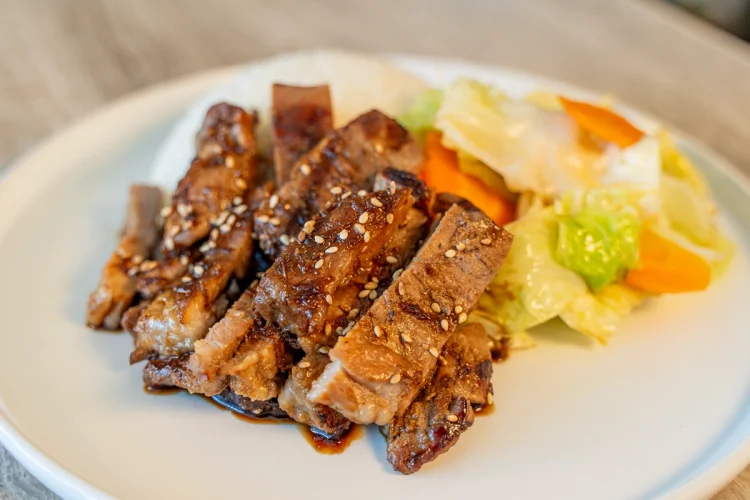
When most people think of teriyaki, it’s safe to assume that it’s usually chicken or beef teriyaki, and for good reason, too. With that said, though, I’ve always had a soft spot for pork teriyaki, and it’s such an underrated dish. When pork teriyaki is done right, it hits every note of savory, juicy, sweet, and smoky. For my recipe, I like using thinly sliced pork shoulder, as it’s packed with marbling and flavor. When you throw that on a hot grill and let it develop a nice char on the outside, you end up with something that is tender, juicy, and full of umami. It is pure comfort food. And once you try it, you might not go back to chicken teriyaki again.
How Seattle Put Teriyaki on the Map
Even though teriyaki is a Japanese word and technique, what most of us know as teriyaki in the United States, especially if you grew up eating seven-dollar combo plates with rice and salad, is something uniquely Seattle. The modern American-style teriyaki shop was born in the Pacific Northwest. It is said that Toshi Kasahara opened the first one, called Toshi’s Teriyaki, in the late 1970s right here in Seattle. The concept was simple. It offered quick, affordable grilled meats glazed in a sweet and savory sauce, always served with rice and sometimes accompanied by a small salad on the side.
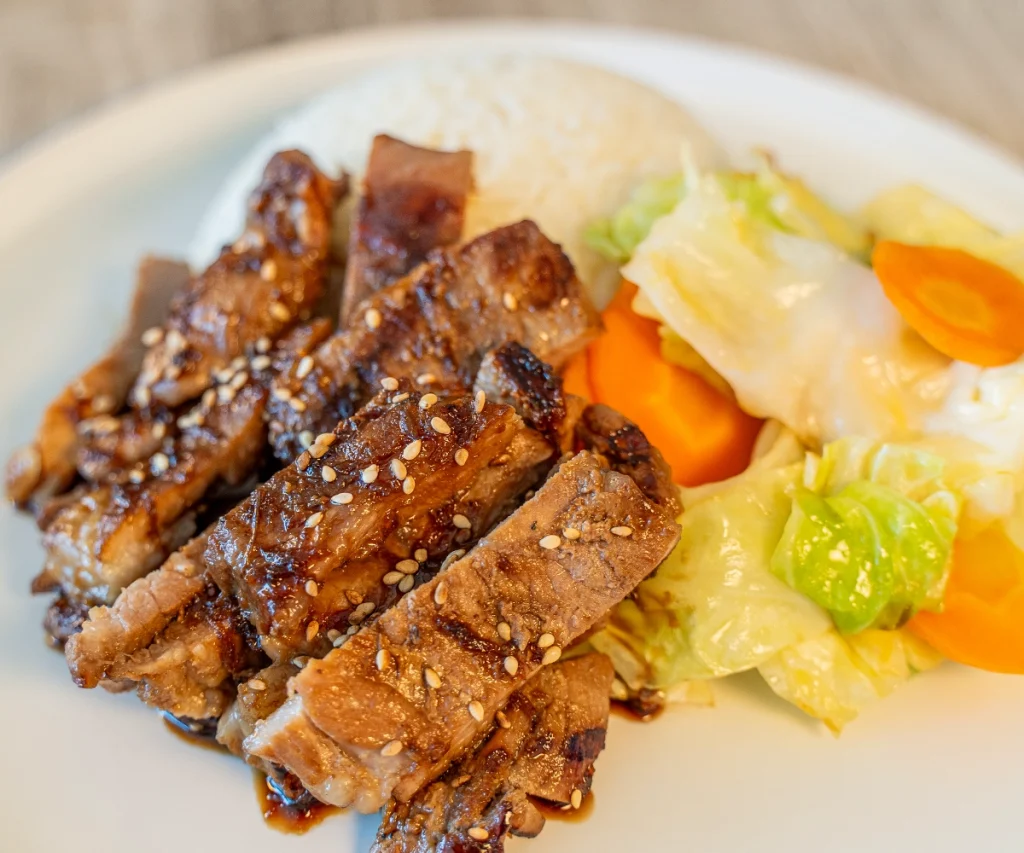
During high school and college, I probably ate teriyaki, no less than three times a week. It was cheap, filling, and it always hit the spot. It was the kind of meal you could count on between classes, after practice, or when your bank account was running low. For many of us who grew up in Seattle, teriyaki was more than just a dish. It’s part of our identity.
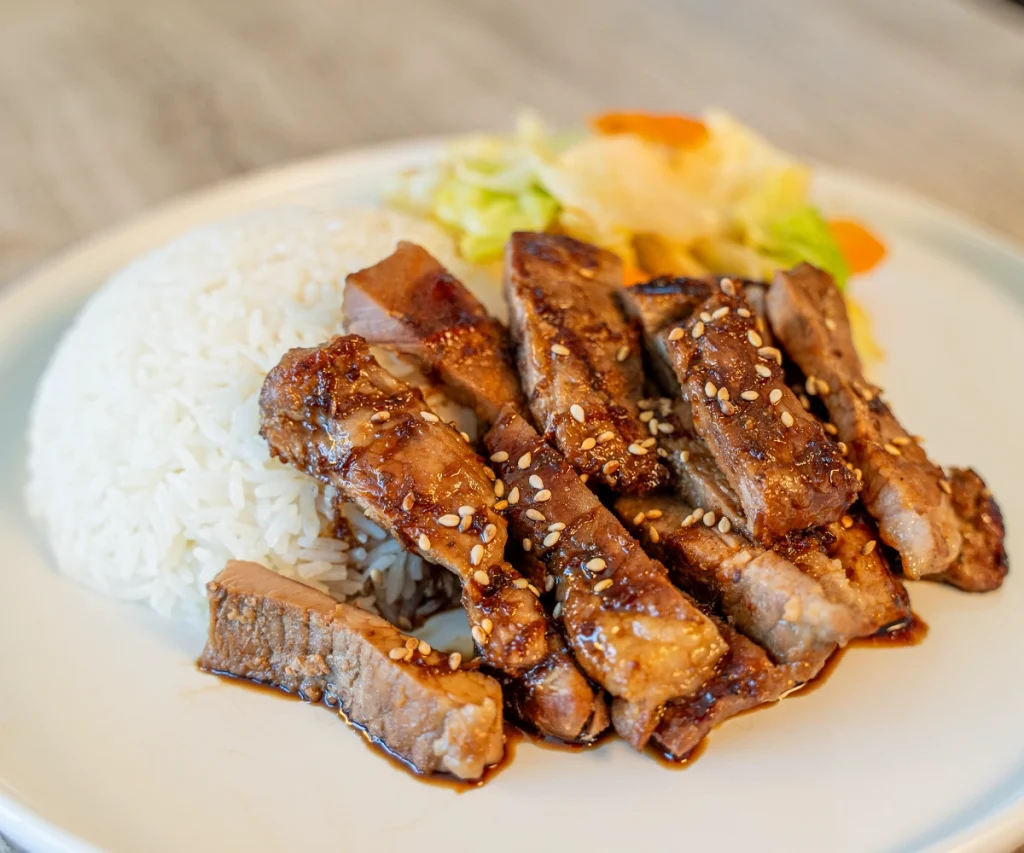
Why Pork Works So Well with Teriyaki Sauce
Pork shoulder might not be the first protein that comes to mind when you think of teriyaki, but it really should be. The magic of pork teriyaki starts with the cut itself. Pork shoulder, also known as pork butt, is rich in intramuscular fat. That fat doesn’t just make the meat juicy and tender, but it also acts like a sponge, soaking up the bold, savory-sweet flavors of the teriyaki glaze. When grilled or pan-seared, that marbling renders out, basting the meat from within and helping the sauce cling to every bite.
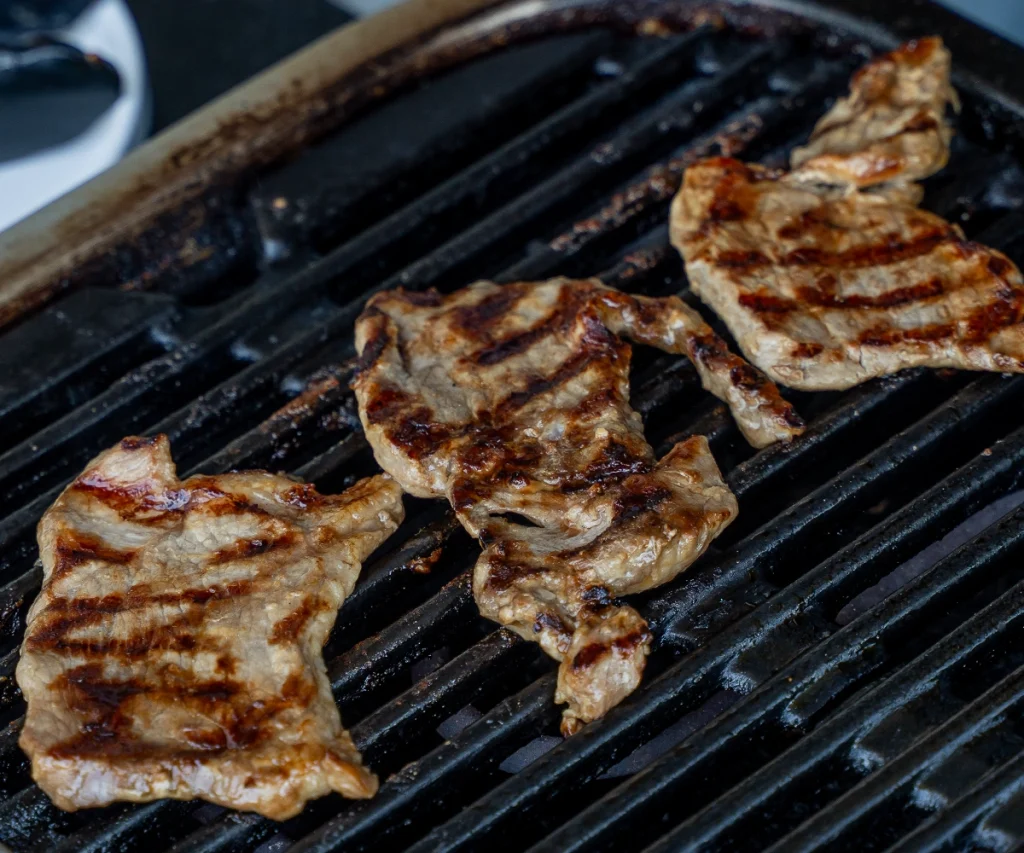
Compared to chicken or beef, pork has a more robust and slightly richer flavor. Chicken teriyaki is lean and approachable, while beef teriyaki boasts a deep, beefy savoriness. However, pork teriyaki strikes a sweet spot right in the middle. There’s also a subtle natural sweetness to pork that makes it a perfect match for the classic teriyaki trifecta: soy sauce, sugar, and mirin, as well as sake. That little bit of sweetness in the meat enhances the caramelization when it comes into contact with the heat, giving you those crispy, lacquered edges that are impossible to resist. Every bite feels perfectly balanced, with a combination of salty, sweet, juicy, and just smoky enough flavors that develop with a good char.

Pork Teriyaki
4-5
servings1
hour10
minutesIngredients
Directions
- Prepare the Pork Shoulder:
- Start by placing the whole pork shoulder in the freezer for 1 to 2 hours. This helps firm up the fat, making it easier to slice thinly and cleanly
- Once the meat is partially frozen but not rock hard, remove it from the freezer. Using a sharp knife, slice the pork against the grain into slices that are approximately quarter-inch thick. Place the sliced pork into a big mixing bowl and set aside while you prepare the teriyaki sauce
- Make the Teriyaki Sauce/Marinade:
- In a small saucepan, combine the soy sauce, sugar, mirin, sake, grated garlic, and grated ginger. Place the saucepan over medium-low heat and bring the mixture to a gentle simmer. Stir continuously to ensure the sugar fully dissolves into the liquid. Reduce the teriyaki sauce to your desired consistency, then remove it from the heat and allow it to cool to room temperature
- Pour half the sauce into a squeeze bottle and reserve for later, and then pour the remaining sauce over the sliced pork shoulder
- Mix well, ensuring that each piece of pork is evenly coated, and let it marinate in the fridge for at least an hour. For the best results, let the pork marinate overnight
- Grill the Pork Teriyaki:
- Preheat your grill to 400F. Once hot, place the sliced pork directly onto the grill grates. Grill the pork for about 3-5 minutes total, flipping halfway through the cooking time. Since the pork is sliced thin, it cooks quickly. Grill just until it reaches a safe internal temperature (at least 145F) and develops some nice charring
- Let the pork cool down slightly, and cut into strips
- Serve:
- Serve the grilled pork teriyaki over a bowl of white rice, accompanied by a teriyaki-style salad or sautéed vegetables. Garnish with sesame seeds and spoon additional teriyaki sauce over the top. Enjoy!
Did you make this recipe?
Tag @feedthepudge on Instagram and hashtag it with #feedthepudge
If you like this recipe, make sure you pin it!

