
One of my favorite Lao restaurants in Seattle, Sap Sap in White Center, makes some of the best Khao Piak (and Lao food in general) I’ve ever had. Every spoonful is packed with comfort, depth, and soul. It’s the kind of bowl that warms you from the inside out, and I wanted to capture that same magic at home, while making nearly everything from scratch, from the fried garlic to the delicious broth and even the handmade chewy noodles. While it might seem like there are a lot of moving parts to the recipe, it’s actually surprisingly easy to make at home!
What Is Khao Piak Sen?
Khao Piak Sen is an incredibly cozy and comforting traditional Lao noodle soup. Think of it as the Lao version of chicken noodle soup, but with thick, chewy handmade noodles and a broth that’s rich with aromatics like lemongrass and kaffir lime leaves. If you’re Vietnamese, you might compare it to Bánh Canh, and that’s a great starting point.

Both feature thick, slippery noodles that are made fairly similarly, but the big difference lies in the broth. Given all the aromatics used to make it, Khao Piak Sen tends to be more herbaceous. Both are equally delicious but unique in their own ways.
The Star of the Show: The Noodles
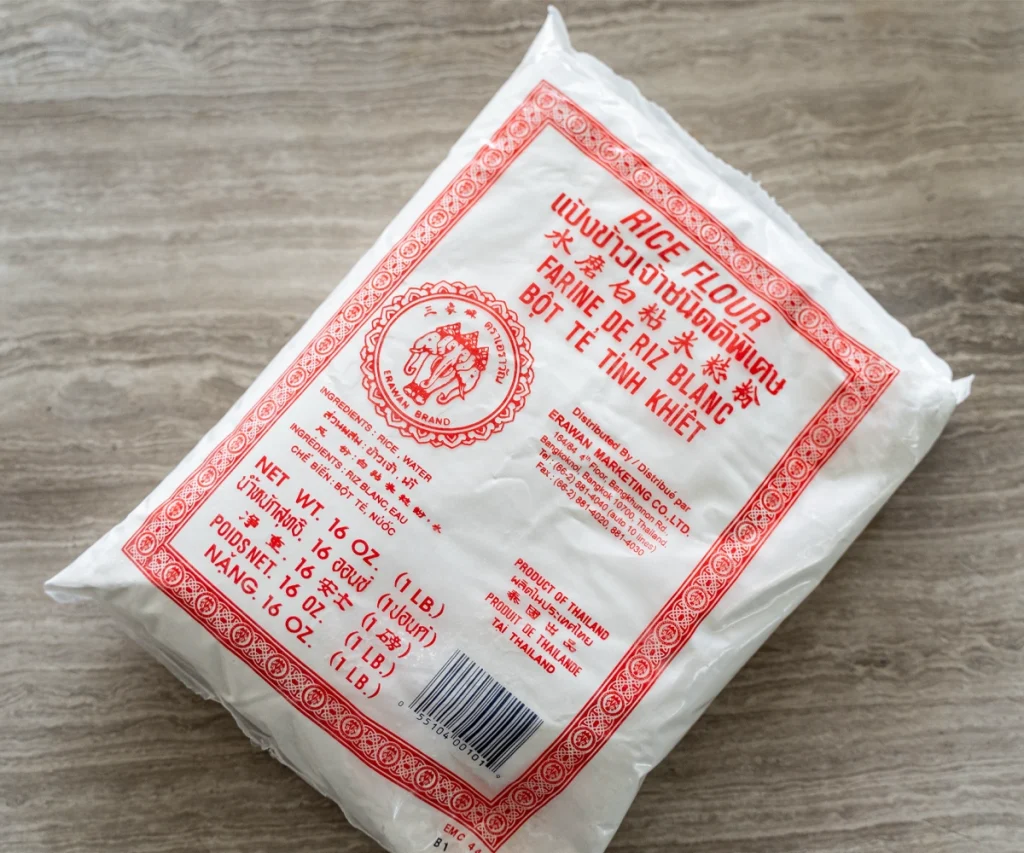
Let’s be real—the noodles are what make Khao Piak Sen so special. They’re thick, chewy, and have this incredible bounce that you can’t get from store-bought noodles. And the best part? You only need two ingredients to make them: rice flour and tapioca starch.

The ratio of those two flours makes a huge difference in the final texture:
- More rice flour = a softer, more tender noodle.
- More tapioca starch = a chewier, almost translucent, and stretchier noodle with more bounce.
After a few rounds of testing and tweaking, I found that a 1:1 ratio of rice flour to tapioca starch gives the perfect balance—tender but still satisfyingly chewy. Play around with the ratio yourself, starting with 1/8th increments, and find out what ratio works best for you!

Here’s how it goes down:
- Mix the rice flour and tapioca starch with hot water until a dough forms
- Knead it until smooth, then let it rest
- Roll it out (thinner than you think, as it will expand when it’s cooking) and cut into strips—no fancy tools needed, just a rolling pin and a knife
- Dust with starch to keep them from sticking

How to Cook The Noodles:
Once your noodles are ready, the next big decision is how you want your broth to turn out—do you like it thick and velvety, or light and clear?
1. Cook the Noodles Directly in the Broth (for Thick and Goopy Goodness)
This is the traditional way and my personal favorite. When you cook the noodles straight in the soup, the starches from the fresh noodles naturally release into the broth, creating a slightly thickened, almost gravy-like texture. The broth clings to the noodles and coats each spoonful in rich, cozy flavor. If you’re into comforting, stick-to-your-ribs soup, this is the way to go.

2. Boil Noodles Separately (for a Thinner, Clearer Broth)
If you prefer a lighter broth that’s cleaner and delicate, cook the noodles in a separate pot of boiling water. This way, the starch doesn’t cloud or thicken your broth. Once the noodles are cooked, transfer them into your bowl and ladle the broth over the top. You’ll get a brighter, clearer soup that still lets the broth shine on its own.

There’s no wrong choice here—it all depends on how you want your final bowl to feel. Whether you’re in the mood for something rich and cozy, or light and refreshing, you can tweak the cooking method to match your vibe.
Why You’ll Love This Recipe
If you’re looking for a recipe that’s comforting, homemade, and full of flavor, this is it. Here’s why this Khao Piak Sen should be your next weekend cooking project:
You can customize your bowl however you’d like—top it with shredded chicken, boiled eggs, fried garlic, bean sprouts, herbs, lime, or even a bit of chili oil for heat. It’s endlessly versatile and always delicious.

It’s an authentic Lao recipe that captures the essence of home cooking and tradition.
You’ll make nearly every component from scratch, from the noodles to the aromatic broth, which means it’s fresh and full of love. Even so, it’s surprisingly simple to make, even if it looks fancy.
It’s incredibly comforting and hearty, perfect for rainy days, cold nights, or just when you need a little hug in a bowl.

Khao Piak Sen / Lao Chicken Noodle Soup
6-8
servings1
hour1
hour30
minutesIngredients
- Fried Garlic Oil:
15 cloves 15 Garlic
1/3 cup 1/3 Neutral Oil
- Aromatics:
1 1 Whole Medium Yellow Onion
3 3 inch Knob Ginger
2 2 Stalks Lemongrass
15 15 Kaffir Lime Leaves
1 1 Bunch Cilantro Stems
- Soup:
4 lb 4 Whole Chicken
6 quarts 6 Water
4 tbsp 4 Fish Sauce
1 1 inch Nub Rock Sugar
2 tbsp 2 MSG
- Noodles:
1 cup 1 Rice Flour, (Plus Extra for Dusting)
1 cup 1 Tapioca Starch
⅛tsp Salt
2 cups 2 Boiling Water
- Garnishes and Toppings:
Fried Garlic
Cilantro
Green Onions
Beansprouts
Thai Chili
Chili Oil
Lime Wedges
Directions
- Fried Garlic Oil:
- Heat oil over medium heat and fry minced garlic for 2–3 minutes until golden
- Using a fine-mesh strainer, remove and place the garlic on a paper towel-lined plate to cool
- Reserve the garlic oil for the broth and set the fried garlic aside for garnish
- Prepping the Aromatics and Other Garnishes:
- Cut a whole onion and knob of ginger in half. To a dry pan on medium-high heat, place the onion and ginger on the pan to char for 5-7 minutes
- Cut the tops and bottoms off the stalks of lemongrass and remove the outer woodsy layer. Then, using the back of your knife, smash the lemongrass to help it release more of its aroma
- Take your Kaffir lime leaves, and gently crumple them in your hands, and set all the aromatics to the side
- Finely chop green onions and cilantro to use as a garnish. Reserve the cilantro stems to use in the broth
- Cooking the Chicken Soup:
- Scrub the whole chicken with kosher salt, and rinse with water to reduce chickeny odor
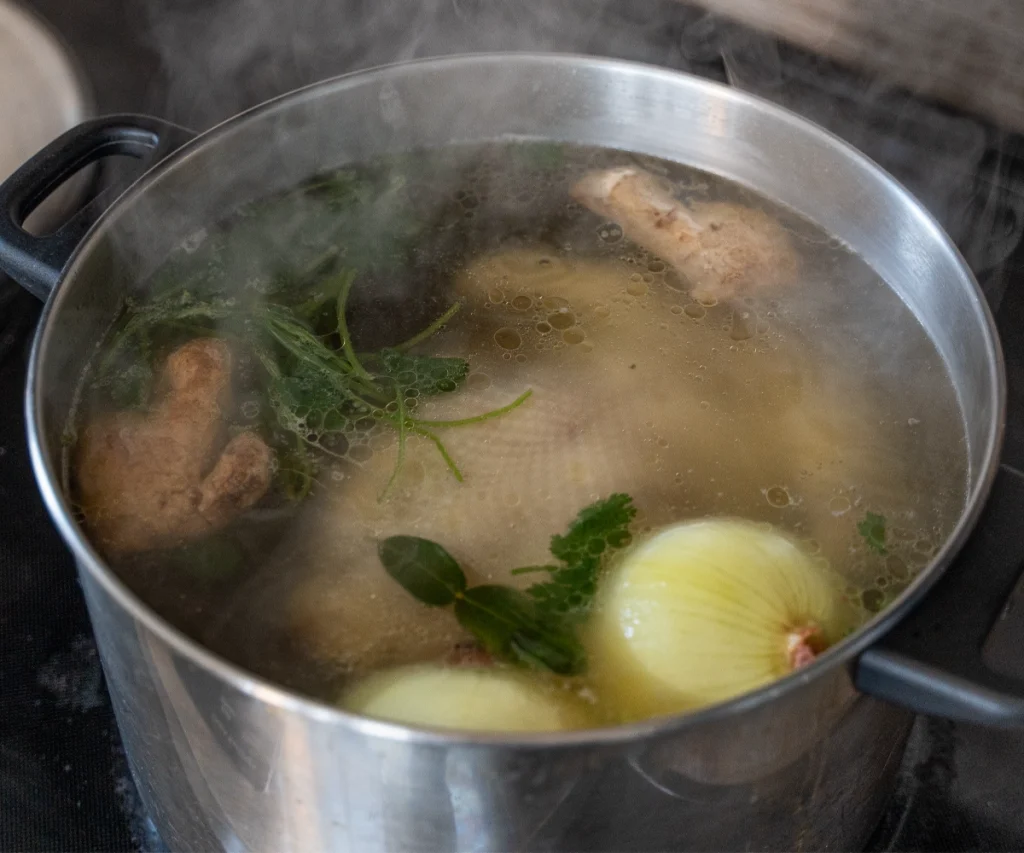
- In a large stockpot, combine water, chicken, garlic oil, onion, ginger, lemongrass, kaffir lime leaves, and cilantro stems
- Bring to a boil, skim off impurities, then cover (leaving a slight crack) and simmer on low for 60–90 minutes until chicken is fully cooked
- Remove the chicken and let it cool before shredding. Discard aromatics and strain the broth if needed
- Season with fish sauce, rock sugar, and MSG
- Making the Noodles:
- Combine rice flour, tapioca starch, and salt in a large bowl. Pour in boiling water and stir with a wooden spoon. Once cool enough, knead by hand until smooth. Cover and let rest for 10–15 minutes
- Flour your surface and roll out the dough thinly (it will expand while cooking). Cut into strips and dust with more flour. Cover with a damp towel until ready to cook
- Cooking the Noodles
- Option 1: In the Broth (Thicker & Velvety)
- Bring 2–3 cups of broth to a boil in a separate pot. Add fresh noodles and cook for 1–2 minutes until they float
- Transfer to a bowl, top with shredded chicken and garnishes. Finish with chili oil, if desired
- Option 2: In Water (Lighter Broth)
- Boil 2–3 cups of water, generously salt it, and cook noodles for 1–2 minutes. Strain and add to a bowl with hot broth, chicken, and garnishes
Did you make this recipe?
Tag @feedthepudge on Instagram and hashtag it with #feedthepudge
If you like this recipe, make sure you pin it!

